


 Shkruar nga Ben Andoni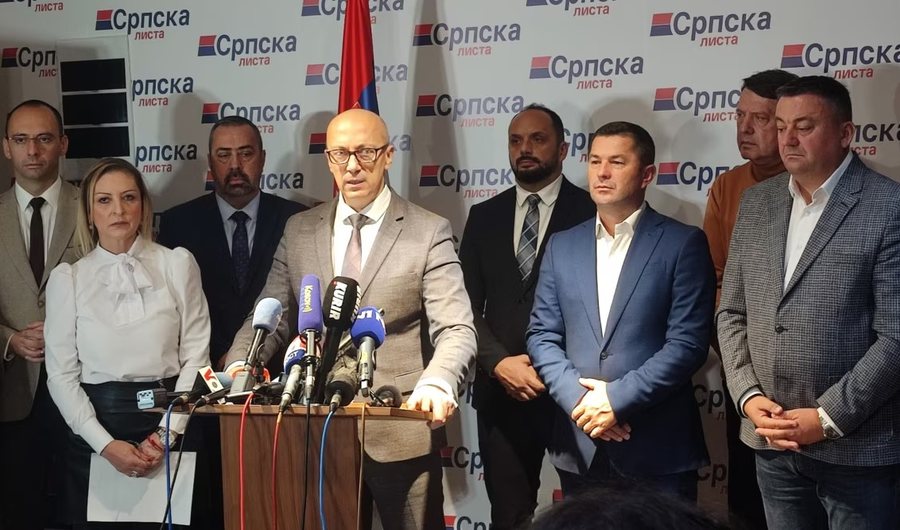
The "Serbian List" already overshadows any alternative Serbian engagement in Kosovo and is close to the Serbian Progressive Party of Serbian President Aleksandar Vučić. With the power of Belgrade, it is not only the only party that represents the Serbs in the institutions of Kosovo, but also that has participated in the work of the central and local institutions of Kosovo.
Yesterday's Serbian boycott of the elections in the North was quite visible and expected, but it left a big question mark: Should the "Serb List" be respected as an electoral subject?! On the other hand, as long as the Republic of Serbia is committed to obstructing any integration process of Kosovar-Serb citizens, it seems that no matter how the fate of the "Serbian List" unfolds, it will not be able to change anything for the citizens of its ethnicity. , but also for peace in Kosovo. At least in these times. From their approach to parliament and political life; from their informal conversations with the Kosovo officials (the terrible servility of the officials, revealed in the wiretapping); from the "Bajnska" case and Radojçiqi, its vice president, who took it over; as well as from the treatment that the authorities of the state of Kosovo themselves give to this subject, an observer truly understands what is happening with the new Republic. The Central Election Commission of Kosovo recently allocated budget funds with a total value of 4.8 million euros to political parties, among which the beneficiary is the "Serbian List", which received 360 thousand euros, according to the decision on the support of political entities for the period January 1–December 31, 2024! (It was on the list before AAK!) To think also after Bajnska, when the Kosovar sergeant Afrim Bunjaku was killed. If you abandon and constantly call for boycott, what help do you need, when you are not represented?! This has divided Kosovo today, while yesterday with the next boycott, the public saw the paradoxes of how they live in the new Republic. Can such an entity be deregistered? This is the topic that engages in arguments connoisseurs of electoral rights, but also those who have sense for the change. When you don't engage why should you support?!
The "Serbian List" already overshadows any alternative Serbian engagement in Kosovo and is close to the Serbian Progressive Party of Serbian President Aleksandar Vučić. With the power of Belgrade, it is not only the only party that represents the Serbs in the institutions of Kosovo, but also that has participated in the work of the central and local institutions of Kosovo. The justification in the last hours was the repetition that the non-participation in the votes for the dismissal or not of the Albanian mayors was related to two demands: the formation of the Association of municipalities with a Serbian majority and the withdrawal of all special units of the Kosovo Police from the North.
Lista Serbe initiated the boycott of the 2023 elections in the North, which previously had its members as chairmen, and organized violent protests that resulted in the injury of 30 KFOR soldiers and dozens of Serb protesters. In the North, the "Serbian List" formed in 2013, has always won over 90 percent of the votes. It is understood that Belgrade is playing jealousy through this force, where it is declared that, thanks to the turning a blind eye by the international factor: "the regime in Pristina", it received visa liberalization, increased cooperation with NATO and is joining the Council of Europe! Without knowing that Kosovo has paid with great sacrifices for every single step.
In these conditions, what remains to be seen is the confrontation with the not at all friendly approach of this formation, not apologizing to Bajnska and accepting the responsibilities of punishment for him. The Kosovar public was stunned when it heard a wiretapping of a current high official (even the predecessors were dictated in these relations) with one of its high officials. This explains to some extent the determination of the state of Kosovo not to declare it unconstitutional, since the Serbian List is registered in Kosovo and must adhere to its obligations and not interfere already in the dialogue of the two subjects, which are above the tag of its organizational, respectively Kosovo and Serbia. Sunday's chronicle, which was related to the number of voter turnouts for the dismissal or not of the four mayors of the northern municipalities, was bitter. The Central Elections Commission announced that by 15:00 in the four municipalities in the north of Kosovo, only 203 people participated in the voting. Until then, 122 people had voted in Leposaviq, 17 in Zubin Potok and 64 in North Mitrovica, while in the announcement of the CEC, it was mentioned that for the same hour in Zveçan, no one showed up to vote.
As with the request for a boycott of the votes in the North, months ago, as well as with the boycott of the impeachment votes of the same presidents, "Lista Serbe" has shown its power of influence through Belgrade, but also the way the Serbs are managed in the North. . A few weeks ago, the Minister of Internal Affairs of Kosovo, Xhelal Sveçla, confirmed that the authorities on February 2 closed three parallel Serbian municipalities in Peja, Istog and Klina.
It should be known to the public that Serbia exercises its "aid" for the Serbs of Kosovo through the office with the same name, to which they add the religious term "Metohi". The Ministry used to be the same structure. Serbia's budget allocations for the "Kosovo Province", according to them, increased after 2016. Through various ministries and for various purposes, 853.2 million euros were allocated from the budget for the "other Kosovo", which can be read as the Northern Municipalities on the Iber and the other six in the South, where they have spread their structures. More precisely, 80 percent of the total payments for Kosovo, presented in the final accounts from 2008 to 2021, went through the so-called Office for Kosovo, by the authority of the Ministry for Kosovo, according to REL.
The financial support of the Serbian state goes to the education and health system of the Serbian-majority municipalities in Kosovo (they even work with Serbian programs), but they regularly receive funds from the Kosovo budget for salaries of workers in the education and health system. In a recent investigation, REL found that, in some cases, the Kosovo budget allocated to them was spent in questionable ways. In short, the Serbs are paid with the contracts of the state of Kosovo and without a contract from the state of Serbia. The salary increase meant that the employees who, in addition to the basic salary in Kosovo, had a supplement from the Serbian state, which means that their income went from 900 to 1,300 euros per month (the salary in Kosovo was up to 600 euros).
Here, as in everything else, the power of the "Serbian List" entered the field, but in February 2018, it stopped the Serbs from receiving income from the Kosovo budget and even without any justification. It is understood that the government of Kosovo has had difficulty monitoring its funds, but the "Serb List" did not stop there, as with its directive: Serbian employees of the institutions of Kosovo in the north, including the courts, resigned in November of the year 2022, due to a decision of the Kurti Government to re-register cars with Serbian license plates with Kosovo license plates.
The pressure of the "Serbian List" was applied to the structures, which are divided into two groups: those that operate in the health, education and culture system, on one side, and those of security and justice, on the other side, that make the protests. Thousands of Kosovo Serb citizens continue to work in parallel institutions, funded and managed by Belgrade, since the post-war 1999, for which Serbia has a fund that is difficult to control. It is understood that there is already a fallout, since the Serbs have boycotted municipalities, companies and public enterprises, kindergartens, primary and secondary schools, as well as public universities, financed directly by the Government of Serbia, there are in many cities of Kosovo, where members of the Serbian community.
The pressure of these structures has not stopped since the declaration of independence in 2008.
The first attempt to extinguish them was made 11 years ago in April 2013, within the Kosovo-Serbia dialogue for the normalization of relations, but its full implementation on the ground leaves much to be desired. A part of the community has been integrated only in some institutions, such as the police or the judiciary, but now they also abandoned their work in the state of Kosovo. It is precisely these that have weakened Kosovo and make it difficult to control it on the ground.
At any moment, the anti-constitutional hand of the "Serbian List" seems open. In the Assembly of Kosovo, this list has the ten guaranteed seats for the Serbian community.
And yet, "Lista Serbe" has shown that it is a formation that will not cooperate and systematically does not respect the constitutionality of Kosovo, showing that it is a problematic electoral subject. The facts disprove the arguments, in their case.




Lini një Përgjigje