


 Shkruar nga Eduard Halimi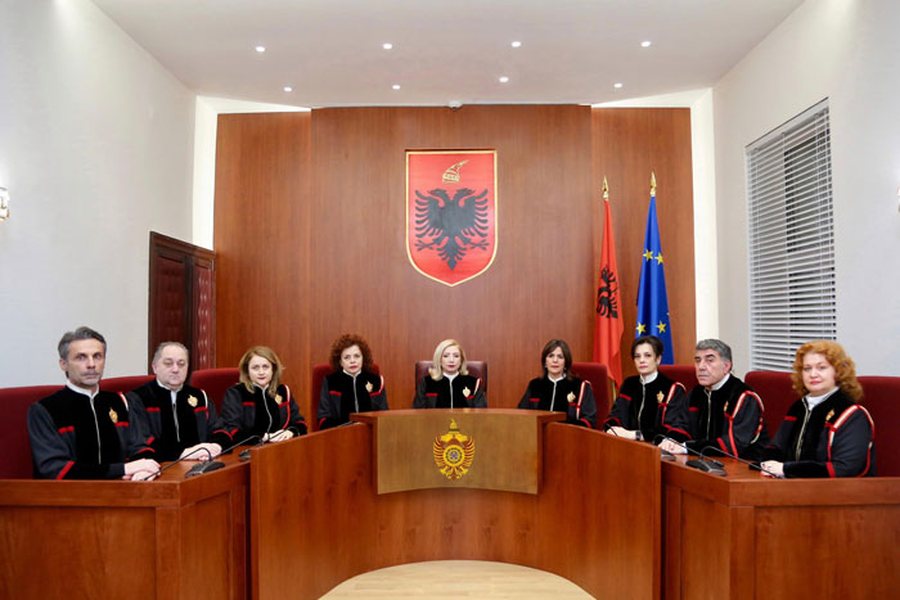
Can a body that does not even have the minimum protection to operate freely set standards?
Let's talk about justice.
Is the restoration of the immunity of Supreme and Constitutional Court judges a necessary step towards restoring constitutional balances and guaranteeing an independent judiciary?
There is a deep public frustration from all sides and the media: why don't the Constitutional Court or the Supreme Court set some European standards, (computing/final decision) when human rights violations in the name of investigation or order are so obvious? Why don't they have the courage to stand up to the government? Why do they often decide what the ordinary prosecution or SPAK requests?
Massive wiretapping, controversial arrests, seizures without transparency, wild interventions by the investigative police, tax police, ordinary or special prosecutor's office.
Against a systemic fear that has affected everyone from ordinary people who will sell milk today, to the highest levels of business, against a systemic fear that even the lowest judges themselves may be wiretapped, persecuted with preliminary or procedural methods, with or without judicial permission by prosecutors who have a party or the government, expectations are high for the Supreme Court Judges and they point the finger at them, because their decisions can establish unifying European standards for a functional legal state!
But before we point the finger at them, perhaps we should take a step back and remember. In 2012 we reduced parliamentary immunity but maintained procedural and functional immunity for judges. But 9 years ago, even in defiance of the Venice Commission's final report CDL-AD(2016)009 (and mine), we maintained parliamentary immunity but removed 100% of judges' immunity and institutional control filters.
Now before we point the finger at these senior judges, we should ask ourselves:
Are these high courts themselves protected?
In Albania, a judge of the Constitutional Court or the Supreme Court may:
– is being monitored,
– prohibited,
- to be arrested
– to publish personal data, either of him or his family,
by a prosecutor who is often a party to the proceedings himself,
or even by state police, intelligence services, or "preventive" structures.
Often – without permission from the court itself. Without any filter. Without any protection.
Meanwhile, MPs, ministers, and the Prime Minister enjoy the aforementioned immunity from detention/arrest, procedural protection, which is denied to senior judges precisely when they need it most: when they are reviewing the actions of those powers.
Before publishing a more extensive analysis on this topic, I am sharing some questions for reflection:
Can a body that does not even have the minimum protection to operate freely set standards?
Do we really have the "Rule of Law" when the senior judge himself is a victim without minimal protection from arrest?
Is this an inequality of arms between the powers when senior judges can be wiretapped by the prosecution itself as a party or the government with "preventive" means?
Is fear a means of justice, or is it an instrument of pressure?
When a judge feels that a decision “against” the prosecution or government could place them under surveillance or investigation — is the decision-making freer or dictated by fear?
Is this the real risk of justice being seized today: not just through appointments, but through systemic fear and lack of institutional protection?
Has the judiciary become the third branch of government only formally - but in reality the most vulnerable?
Without compromising the fight against corruption in the judiciary, without debating the names of those who are there today, should we restore the following for the Judges of the Supreme and Constitutional Courts:
Functional and procedural immunity, limited but real?
Internal institutional filters for the prosecution of senior judges?
The prosecution's exclusion from wiretapping when the very judges who will be trying him are the party prosecuting him?
Real equality of powers, minimum immunity for female MPs and not just formal ones?
I invite fellow lawyers, human rights experts, and representatives of national and international institutions to reflect and contribute to this debate.



Lini një Përgjigje