


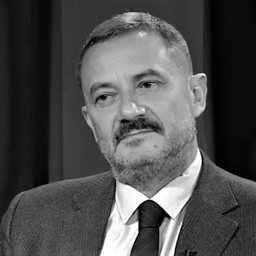
 Shkruar nga Goffredo Buccini
On the path to power, intolerant movements often violate the principles of the rule of law. And that is exactly where, according to philosopher Karl Popper, they must stop...
The British paradox speaks of all liberal democracies as a typical case study. Within ten years, Brexit has reduced the growth potential of the British economy by about 10%. According to the National Institute of Economic and Social Research, its negative impact could gradually increase, reaching 5-6% of Gross Domestic Product by 2035, or about 2,300 pounds per capita. While Bloomberg Economics estimates that Brexit has cost the British economy from 100 to 200 billion pounds per year. The citizens of the United Kingdom have directly felt this self-destructive act in their economic lives. At the time, the separation from Brussels was also supported by Vladimir Putin's Russia, through covert financial channels, as part of its neo-imperialist strategies against the West.
"We defeated the British, they are on their knees and will not get up for a long time," declared the former Russian ambassador to London, Alexandr Yakovenko, after on June 23, 2016, the "Leave" camp won the referendum by only 650,000 votes.
However, it so happens that Nigel Farage, the most well-known promoter of leaving the European Union, ten years later leads the polls, exerts strong pressure on Keir Starmer's Labour government and has recently scored a major success in local elections with his new party, Reform UK.
“The best is yet to come ,” he declared with the same defiant smile with which in 2016 he promised Britons £350 million a week for the National Health Service if Britain would stop paying into the European Union. A promise that turned out to be untrue. When, after the referendum victory, he was asked to explain the statement, he reacted again with a smile.
Today the question is simple: how is it possible that a political figure built on fake news continues to seriously aim for power even after the catastrophic consequences of its propaganda have become apparent? This question is not only relevant to the United Kingdom, but to Western democracies as a whole. The answer is twofold. On the one hand, the traditional parties that have governed have failed to solve the economic and social problems that push many Britons towards political extremism. Another rising figure in the local elections was the eco-populist Zack Polansky. As the researcher Paul Taggart says, populism fills an emotional and social void, while people, disillusioned and desperate, are ready to follow any “snake charmer”.
On the other hand, there was a lack of political courage to clearly correct the course towards Europe and to constantly remind Farage of his responsibilities and contradictions, including a recent five million pounds in cryptocurrency funding. The fear of reopening the wounds of the deep division in the country has limited Keir Starmer. Although the Labour prime minister has shown a willingness to get closer to Europe, including cooperation on common defense, he has consistently rejected any idea of a return after Brexit and could pay for this hesitation with the loss of power. In several interviews, the mayor of London, Sadiq Khan, has urged the Labour Party to place the return to the European Union at the center of the electoral program for 2029, even without holding a new referendum. An act that he considers political responsibility and long-term vision, not lukewarm bureaucratic management.
Here the British paradox becomes a Western issue. Since the mid-2010s, sovereignist populism has fed collective fears related to globalization and the multiple crises of our time. It has pitted the weakest against each other, the natives against the immigrants, and has built a narrative without real solutions, but with constant appeals to “the people” as a single, homogeneous entity and bearer of absolute truth, as Marc Lazar and Ilvo Diamanti point out. Such a logic can lead to the dictatorship of the majority, or even to open autocratic forms.
Ten years later, what is left of liberal democracies must show that it has learned to defend itself and fight for its survival. History is not built on “ifs,” but even “ifs” help to understand reality. If the US Congress had shown the same determination towards Donald Trump after the attempted coup in 2021, as the Constitutional Court of Bucharest did towards Calin Georgescu, the world today might not be facing a deep crisis of instability that some political scientists compare to the period before World War I. Likewise, if the German Federal Office for the Protection of the Constitution manages to act to the end against the most extremist elements of the Alternative für Deutschland, Europe could avoid the risk that by 2030 the most powerful army on the continent will be controlled by a force with neo-Nazi leanings.
On the path to power, intolerant movements often violate the principles of the rule of law. And that is precisely where, according to philosopher Karl Popper, they must stop. But reaction alone is not enough. An alternative narrative is also needed. A collective feeling. A discourse that restores faith in democracy, which today seems to be lacking in what was once called the West.
A well-known saying is attributed to the Catholic writer Gilbert Keith Chesterton: it is not true that the man who no longer believes in God no longer believes in anything; on the contrary, he begins to believe in everything. By the same logic, democracy also works in a similar way: when people lose faith in liberal institutions, they can believe in any populist or demagogic figure. But to rebuild a belief, someone must first defend it and proclaim it loudly. / Adapted from "Pamphlet" by "Corriere della Sera"



Qe te kuptimi i fjales Demokraci (pushtet i popullit) therritini mendjes sa genjeshtare fjala greke Dqmokracia.