


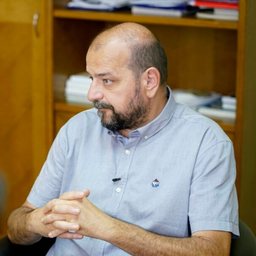
 Shkruar nga Dragan Sormaz
Vučić's continued efforts to destabilize Kosovo, Bosnia and Herzegovina, Montenegro, and North Macedonia have had the opposite effect: strengthening military cooperation between countries in the region. This is pushing Serbia towards even deeper isolation and a position that increasingly resembles that of Belarus, with the difference that Serbia is surrounded by EU and NATO member states...
The Munich Security Conference shattered the dreams of all those who imagined and convinced themselves that the alliance between the United States of America and Europe was over. In a speech in the Bavarian capital, US Secretary of State Marco Rubio clearly emphasized that transatlantic ties are unbreakable and constitute a key force in the defense of contemporary civilization and the democratic values on which it is based.
Many may see this as a new approach from America, namely from President Donald Trump. However, it should be noted that the process that is taking place today is simply an acceleration of a strategy that was launched earlier, now intensified by the new American administration. Over the past 20 years, I have personally participated in many assemblies, summits, seminars and meetings where it has been discussed within NATO how European countries would gradually take responsibility for the alliance's eastern borders, while the US would focus more on the Pacific region, especially towards the challenge of China.
Concrete steps were not taken until President Trump won a second term. Meanwhile, Europe was focused on the economy, trade and social issues, leaving defense and security on the back burner. Then came Vladimir Putin’s aggression against Ukraine, which in a matter of days shook the European order and caused chaos in the continent’s energy market. Whatever one may think of President Trump, his demand for an increase in defense investment to 5% of GDP in NATO member states, as well as for a greater commitment by the European Union to finance Ukraine’s defense, turned out to be right. Europe became aware, understood the mistakes of the past and began to change. This is expected to strengthen the Euro-Atlantic world and restore the security of one of the greatest civilizations in history.
In an effort to strengthen NATO's eastern flank and free up American capabilities to counter China's growing ambitions, Germany, under Chancellor Friedrich Merz, has undertaken the most profound transformation of its security and industrial sectors since World War II. The record defense budget of 108.2 billion euros and a trillion-euro package for infrastructure and defense are part of a broader European turnaround, which foresees total investments of 6.5 trillion euros over the next decade. The aim is to make the Bundeswehr the most powerful conventional army in Europe, while intensive talks are underway with France on a joint nuclear deterrence strategy.
It has been proven that more European independence and strategic autonomy create a fairer balance of responsibilities with the US and essentially strengthen the alliance of Western democracies, not what various dictators and supporters of authoritarianism around the world hoped for.
Not coincidentally, this group also includes Aleksandar Vučić, the president of Serbia in the final year of his last term. Unlike what the whole world saw in Munich, the media under Vučić's editorial direction have been trying for days to convince their followers that the US and Europe have finally parted ways and that this constitutes a "historic opportunity" for the repositioning of the state and the leader himself, who does not hide that his political dream is to be a factor of concern for the Western powers.
By convincing himself of false narratives about the division and decline of the West, about Russian tanks on the Danube and Chinese generals drinking water in the Morava, Vučić has also severed the last ties he had with European Union leaders. European media reports that the European Commission is very close to a decision to officially freeze the 1.6 billion euros dedicated to Serbia under the Western Balkans Growth Plan, due to the arbitrary adoption of anti-European laws, are a clear indication that Brussels and the main EU states no longer see Vučić as a constructive partner.
On the contrary, it is increasingly perceived as part of regional problems and as a destabilizing factor, linked to the organized crime and endemic corruption that prevails in Serbia.
Vučić’s continued efforts to destabilize Kosovo, Bosnia and Herzegovina, Montenegro, and North Macedonia have had the opposite effect: strengthening military cooperation between countries in the region. This is pushing Serbia towards even deeper isolation and a position that increasingly resembles that of Belarus, except that Serbia is surrounded by EU and NATO member states.
Për ta përkeqësuar situatën për Vuçiçin, kontrolli i tij mbi udhëheqësit kryesorë serbë në rajon, të cilët më parë i shërbenin si monedha negociuese në negociatat me vendet perëndimore, ka filluar të dobësohet. Kjo e ka bërë të pamundur për të që ta bëjë këtë, duke ndjekur taktikën e Slobodan Millosheviçit për të krijuar kriza të reja rajonale dhe më pas duke i përdorur ato si monedha negociuese në tryezën diplomatike.
Përpjekjet e fundit për të nxitur incidente të armatosura në veri të Kosovës, që datojnë që nga viti 2023, sot i qëndrojnë Vuçiçit mbi kokë si një kërcënim i vazhdueshëm, me rrezikun e përballjes me një fat të ngjashëm me atë të mikut të tij ideologjik nga Venezuela, Nicolás Maduro. NATO po i kujton gjithnjë e më shumë Serbisë detyrimin për të sjellë para drejtësisë ata që morën pjesë në sulmin ndaj KFOR-it dhe aktin terrorist në Banjska.
Me përshkallëzimin e tensioneve midis fuqive të mëdha në arenën ndërkombëtare, strategjia e mëparshme e Vuçiçit për të “luajtur me shumë letra” në pozicionimin gjeopolitik të Serbisë më në fund ka dështuar.
Është e qartë se as ai dhe as rrethi i tij nuk e kanë kuptuar rëndësinë e ngritjes së një “perdeje të re të hekurt” në Evropë, ashtu siç nuk e kuptuan rënien e Murit të Berlinit në fund të shekullit të kaluar. Pretendimet e përhapura në median e tij, se Rusia po bën marrëveshje trilion dollarëshe me SHBA-në, pavarësisht se ka një PBB disa herë më të vogël, ose se në Alaska Vladimir Putin dhe Donald Trump kanë ndarë sferat e tyre të ndikimit në botë, pritet të shemben shpejt. Edhe më absurde janë pretendimet se Kina është gjithashtu pjesë e kësaj “marrëveshjeje globale”. Pikërisht për këtë arsye, fjalimi i Sekretarit Rubio në Mynih përbën një goditje të fortë politike për Vuçiçin. Mund të ketë dallime midis Amerikës dhe Evropës, por ato do të zgjidhen përmes dialogut, jo përmes përplasjeve.
I udhëhequr nga botëkuptime radikale, antidemokratike dhe antiperëndimore, Vuçiç ka zgjedhur edhe një herë anën e gabuar të historisë, duke e vënë veten dhe Serbinë në një rrugë pa krye, nga e cila nuk duket i aftë ta nxjerrë vendin. Duke refuzuar të vendosë sanksione ndaj Rusisë, duke mos avancuar procesin e normalizimit me Kosovën dhe duke mos e orientuar qartë Serbinë drejt anëtarësimit në BE dhe NATO, ai ka zgjedhur rrugën e izolimit, pa aleatë dhe pa perspektiva zhvillimi, ndryshe nga vendet e tjera në rajon.
Although he often builds his political stance in opposition to the regime of the so-called “yellow thieves”, which Aleksandar Vučić and his supporters wrongly classify all the governments of the period 2000–2012, he has continued to carefully inherit two main mistakes of that time. The first is the decision on military neutrality, which, although strategically harmful for Serbia, he accepted as if it were carved in stone. The second is related to the handover of the Naftna Industrija Srbije (NIS) company to Russia, a decision that he had the opportunity to correct in Serbia’s favor, but which, due to fear and servility to the Kremlin structures, he did not do.
As is usually the case with servants treated as consumable goods by their masters, the false Russian “brothers” paid off their debt to their Balkan vassal by offering the NIS to a third party at a lower price than the one offered by the “self-proclaimed owner of Serbia”.
Relying on flawed and amateurish assessments of global processes, Vučić has found himself in a situation similar to that of Slobodan Milošević in the 1990s. Internationally isolated and increasingly irrelevant, and facing declining support within Serbia itself, he is increasingly resorting to open violence, losing any legitimacy he might have had before. The attack on a small group of students on February 16 in Novi Sad testifies to his cowardice, malice, and political weakness. It is a shame on the police that did not react to protect its citizens - its neighbors - from such acts. Such a shame remains a stain for life.
The end of such a form of government is always the same. By making the classic mistake of dictators who believe they are smarter than their predecessors and will avoid their fate, Vučić seems to have condemned himself to the same end. Whether his end will be marked by the arrival of unknown helicopters or by a less spectacular scenario, it matters little in the face of the inevitability of such an epilogue. The year of the final showdown has only just begun.


Lini një Përgjigje