


 Shkruar nga Preç Zogaj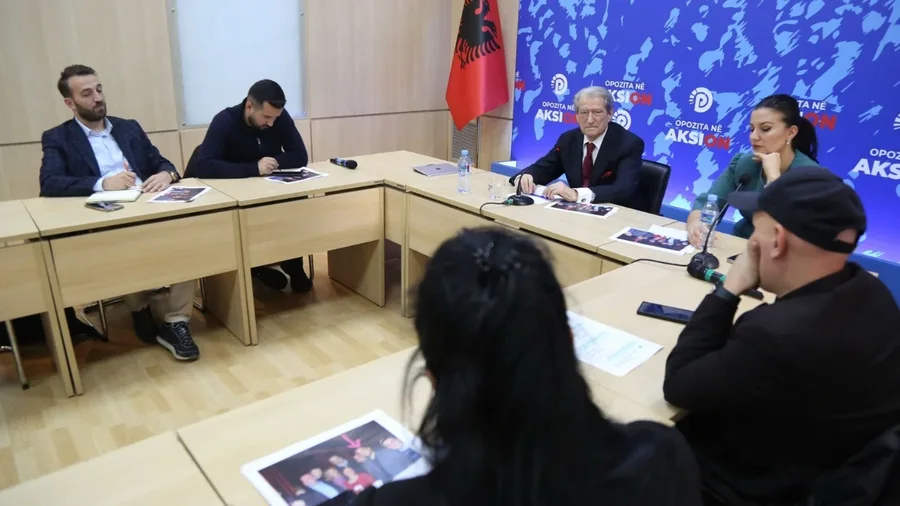
In the past, thanks to the electoral code and negligible programmatic changes, the electoral union under an umbrella of the DP and its satellite parties has made sense.
In response to a routine question, the chairman of the DP, Sali Berisha, repeated that his party will form a coalition with all the parties that want the removal of Rama's government. If only the opposition was the issue, the problem would have arisen solved. Opposition parties located on the right, in the center or even on the left of the spectrum are in opposition because they want the government to leave. Otherwise they would be her allies.
In the past, thanks to the electoral code and negligible programmatic changes, the electoral union under an umbrella of the DP and its satellite parties has made sense. The votes of each subject were counted and went without firo into a bag. The minors received their share of representation in the Assembly. Or in the Government when they won the elections.
From the 2021 elections onwards, this type of union has some new obstacles that it did not have. The first is the constitutional prohibition of party coalitions, a diabolical enterprise of Prime Minister Rama to condition opposition coalitions with the renunciation of small parties. Thus dictating a one-on-one match with the main opponent, which benefits the SP, which alone covers almost the entire left spectrum. Meanwhile, the fragmentation in the opposition spectrum is quite large.
Recently, several new parties have appeared on the scene, such as "Albania is becoming" by Adriatik Llapaj, "Mundësia" by Agron Shehaj, "E djathta-1912" with initiator Enkelejd Alibeajn and some others. Meanwhile, Dashamir Shehu's LZHK, which has distanced itself from Berisha's PD, Endri Shabani's "Thirrja" movement, which has competed alone in 2021 as well, Arlind Qorri's "Together" Movement, as well as Lulzim's "Euro-Atlantic Democrats" are active. Basha, not yet formalized as a political force. There are other even smaller entities in alliance with the aforementioned.
This political archipelago pictures the plural opposition in Albania, where each party has something specific distinct from the other. Consequently, it has its own constituents who identify with these differences.
Can there be a formula that brings about their union around the common objective of rotation of power? In principle yes. As the leader of the largest opposition party, Berisha has the burden of being the first to come up with such a project. Rotation of power requires that the opposition parties, from the largest to the smallest, take to the ballot box the anti-government electorate that is significantly larger than the shrunken pro-government electorate. With the difference that while Rama and SP lead their voters one by one in the elections, the opposition ensemble leads only a part, even the small parties lose through the tricks of the electoral law even from the contingent they lead. All this makes the minority of socialist voters come first in the ballot boxes and the majority in the calculation of representative votes.
To stop this complex electoral trap, the first idea that comes to mind is the union of opposition entities. Easy to say, but not so easy to do. Berisha talked about unification without saying how. I do not believe that the new parties would agree to deny themselves for a deputy seat, if a concrete offer was made to them. Let's add here the fact that mechanical-pragmatic unions do not take all voters with them. Especially this time, when the high divisions, for the well-known reasons, have come down to ordinary voters like never before.
But even if the Ustallars managed to dodge the constitutional hurdle, they would face other, much more difficult obstacles. The first obstacle, insurmountable in my opinion, is programmatic incompatibility on a major issue such as the attitude towards SPAK and justice reform.
Berisha did not stop threatening their undoing. As soon as he comes to power! He knows very well that two-thirds of the members of parliament are needed to undo the justice reform, while periodic polls show that his DP is clearly far from a simple majority and no longer has two-thirds. Unless he has SP votes in mind and is also speaking on behalf of Edi Rama. Without having to have formal permission from the latter. Which he has caught in the air, as long as the SP has thrown the idea of "a new reform in justice" into the ether, waiting for the conditions to mature!
No matter how many dreams they see, even if they were to get to work, Turkish and brave, as they say in the word, they would be absolutely unable to undo the new justice in its pillars. It does not leave the USA and the EU. I do not leave the Albanian electorate. It does not leave SPAK's much-appreciated consolidation and success. Berisha has a rhetorical and communicative trick, his promise-threat. He wants to appear very strong in front of his followers. Kill high up to catch as much as possible below.
His threat promise is clearly anti-electoral. The vast majority of Albanians support and encourage SPAK. Its head, Altin Dumani, is the most popular man in Albania and wherever Albanians live. The minority that does not support him is what Berisha has formed with his rhetoric, perhaps even the relatives of officials and people of the underworld in the new justice network.
Making his case as an accused person waiting to be judged a criterion of vindictive attitude towards SPAK and the new Justice, Berisha does not add any allies from the ranks of small parliamentary parties that are not his satellites. On the contrary, it teaches them even more of an impassable dividing line with them. He even puts some of his new supporters, who joined him in "diversity", in a difficult position. His project of canceling the Justice Reform is the project of disuniting the opposition. As far as I can see, none of the new opposition parties would think of embracing the return of impunity in the upper echelons, the gangrene that has done colossal damage to our democracy.
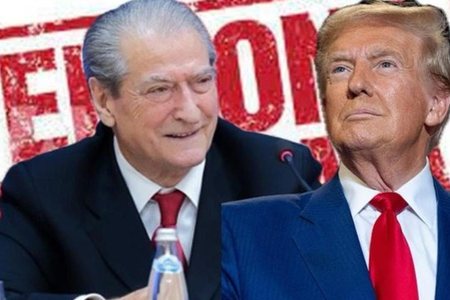
This dividing line can be removed if Berisha withdraws from his anti-SPAK positions, leaving the turn for the removal of the other dividing line, that of sanctions by the USA and Great Britain. In the hands of President Trump's Administration first and the Court of Strasbourg second.
In these conditions, the opposition parties that unequivocally support SPAK and the new justice will have to organize themselves as a second opposition pole to give life to the plural opposition that interacts in diversity, each in its own house. As in the example of the Italian right.





Lini një Përgjigje