


 Shkruar nga Pamfleti

Albanians have a predisposition to accept myths. They are used to them and thus this dramatic story could be easily absorbed...
Fred Abrahams is a researcher, publicist, human rights expert and consultant at Human Right Watch in Berlin.
His book "Modern Albania - from Dictatorship to Democracy in Europe" offers a deep look into the new history of the fall of the communist regime in Albania and the trials and tribulations the country went through. It is based on the author's personal experience, on more than twenty years of research work and the analysis of hundreds of documents, once secret, from Albania and the USA, as well as on interviews with key personalities, Albanian and foreign, who have played a role in politics of the country since 1990 - among them former members of the Political Bureau, opposition leaders, secret service agents, diplomats, or the founders of the Kosovo Liberation Army.
The book is published by New York University Press.
In this interview published by DITA newspaper, he says that his book is a criticism of Albania's intellectuals, who, in general, have failed to challenge dogmas and serve as an independent voice.
"The Americans reached a Faustian agreement with Berisha: Do whatever you want in Albania, but..." - says Abrahams. He also interviewed Ramiz Alina and Sofokli Lazri about the "revolution" of the 90s.
They aimed to realize what Sophocles Lazri calls "transfer of influence" - he says.
The title of your book is "Modern Albania" - is this an adjective with two meanings? Do you think that Albania is a modern country?
The title of the book "Modern Albania" is used in the sense of a "contemporary" or contemporary history, in contrast to the history of Albania before the war or under the Ottoman Empire. With the title, I do not want to suggest that Albania is a modern country, in the sense of a progressive, forward-looking and progressive country. On the contrary, a constant theme in the book is how much Albania continues to be burdened with the burden of its past.
A much-loved refrain of political rhetoric in Albania is that of the revolution to overthrow the communist regime. For this new type of bloodless revolution that took place in some of the other former communist countries, historian Timothy Garton Ash uses the term "Refolution", that is, reform and revolution. Has there been an anti-communist revolution in Albania?
Albania has not had a revolution. But there is a very strong myth about such a revolution.
After the fall of the Berlin Wall, Ramiz Alia realized that Albania had to change, because it could not survive alone. This view intensified after the assassination of Ceausescu in Romania. Ramiz Alia and people from his close circle told me in the interviews I conducted with them, that they wanted to democratize Albania. I do not think that they were democrats, but that they were worried and looking for a way, how they could avoid for themselves the fate that Ceausescu suffered. However, they initiated some reforms. All the changes made were from above and all within the parameters of the party, such as the infamous pluralism of thought. They liberalized the economy and reduced sentences for some political prisoners. They allowed the media to publish some critical views. Slowly they began to loosen the chains, but did not remove them.
Instead they aimed to achieve what Sophocles Lazri calls "the transfer of influence". So they wanted the power to pass into the hands of a group of trusted people, who were either members of the ALP, or enjoyed the embrace of its warm hand. It was therefore about trusted intellectuals, who should take control and power.
However, there were also some impulses of real revolt from below. In January 1990, the protest in Shkodër to bring down the bust of Stalin, for example, is one such example. Or in March 1990 protests in Kavaje. The seizure of embassies in July 1990 was a clear moment when Albanians took matters into their own hands, frustrated by the slow pace of reform. And of course the student movement of December, when young people bravely said "enough!"
But, after each of these moments, the party managed to bring the situation under control. So, I think that No, in Albania there has not been a revolution in the sense of a radical interruption of the threads of the past. But I also think that this was probably a good thing. Because given the level of repression and violence in the country, or the destruction of so many families during the dictatorship, a real revolution in Albania could have been very bloody.
You say that in Albania, even though there was no revolution, there is a "myth about the revolution". What are the reasons for this?
Although there was no revolution in Albania, there is a general view, both in Albania and abroad, that the dark communist regime was overthrown by a democratic movement. I see several reasons for this.
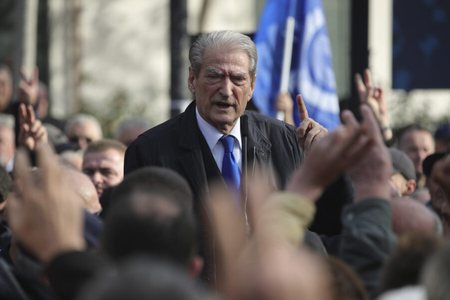
First, the Democratic Party has used this fable for its political purposes. This was quite a fascinating story to tell – especially for the West: we stood up and smothered the beast. Sali Berisha used the myth of the revolution. Albanians have a predisposition to accept myths. They are used to them and thus this dramatic story could be easily absorbed.
Krijimi i mitit nuk është ndonjë gjë e papritur, për shkak se liderët e rinj politikë kërkonin të mbështesnin dhe fuqizonin pushtetin e tyre. Por ajo që më duket interesante është, se sa e gatshme ishte bashkësia ndërkombëtare për ta pranuar mitin dhe madje edhe për ta promovuar atë. Sidomos qeveria e Shteteve të Bashkuara të Amerikës e përqafoi mbi të gjitha idenë se pas kthesës në Shqipëri ekzistonin ish-komunistët e poshtër përballë demokratëve mendje hapur.
Si e shpjegoni ju faktin që bashkësia ndërkombëtare e pranoi këtë mit?
Fred Abrahams: Unë shoh disa arsye. Së pari, Shtetet e Bashkuara dhe qeveritë e tjera perëndimore dinin shumë pak për Shqipërinë në atë kohë. Uashingtoni nuk kishte marrëdhënie diplomatike dhe nuk kishte burime të shërbimeve sekrete. SHBA me të vërtetë nuk e njihnin as vendin apo as popullin. Një detaj i vogël, edhe pse në pamje të parë skajor, që dëshmon për këtë është që kur u vendosën marrëdhëniet diplomatike në mars të vitit 1991, Departamenti i Shtetit nuk kishte madje as edhe flamurin shqiptar për ceremoninë.
Së dyti, politikë-bërësit amerikanë u verbuan nga drama e fuqishme e rilindjes së Shqipërisë. Kur James Baker vizitoi Tiranën në qershor të vitit 1991, njerëzit u përpoqën ta mbanin në krahë makinën e tij nga aeroporti. Pritja ishte tejet e përzemërt dhe madhështore dhe diplomatët amerikanë u ngashënjyen fort prej kësaj fitoreje të madhe të Luftës së Ftohtë.
Po ashtu ata ranë gjithashtu pre e një analize të thjeshtëzuar pra njeriu i mirë përballë njeriut të keq, apo kauboji dhe indiani, në një kohë që realiteti shqiptar ishte shumë më kompleks. Si mund ta shpjegonin ata për shembull, që Ilir Meta dhe Pandeli Majko shkuan me socialistët, ndërsa Gramoz Pashko, Sali Berisha dhe shumë anëtarë të tjerë të PPSH-së themeluan PD-në? Ndarja e politikanëve të Shqipërisë në politikanë të nderuar blu dhe politikanë mashtrues të kuq ishte për të krijuar një ndarje artificiale nga e cila Shqipëria vuan ende dhe sot.
Arsyeja e tretë ishte më shumë praktike, dhe lidhej me rajonin. Në atë kohë, shqetësimi kryesor në Uashington ishte lufta në Jugosllavi dhe, sa u përkiste shqiptarëve, që konflikti të mos përhapej në Kosovë apo Maqedoni. Në këtë mënyrë SHBA mbështeti me të gjithë forcën dhe ndikimin e saj Berishën dhe PD-në, sepse mendonin se kjo forcë do të kishte një ndikim të moderuar tek shqiptarët jashtë vendit.
Nëse ju shikoni deklaratat e para të PD-së, ato flasin për bashkimin e territoreve të banuara nga shqiptarët. Por kjo ndryshoi shpejt në “respektimin e të drejtave të vëllezërve dhe motrave tona.” Në këtë në mënyrë nga dokumentet që kam marrë nga Departamenti i Shtetit për këtë libër duket pra qartë: Uashingtoni ishte shumë i shqetësuar në lidhje me retorikën nxitëse. Dhe në fund ata arritën një marrëveshje faustiane me Berishën: Bëj çfarë të duash në Shqipëri, por mos shkakto rrëmujë përtej kufijve të vendit.
What I don't understand is why Western governments gave him such uncritical support. When he began to display his authoritarianism and thirst for revenge, the US remained silent. When he abused a journalist, the US was silent. When he put the leader of the opposition in prison, the US was silent. Fatos Nano may have been guilty, but his trial was a farce.
I've asked Ryerson and, more importantly, Chris Hill, why they haven't said anything. And they told me that after Albania's difficult past they expected its road to be bumpy. Hill also spoke about Albania's cooperation in the region.
I think their silence was a big mistake. Of course, Berisha was their man, but they should have put some limits on him.
Has the US policy towards Albania changed today?
She has changed a lot. Today they understand that more needs to be done to build institutions.
What do you expect from your book?
I expect that many people will not like the way I have portrayed them in the book. And this is not only Berisha and other DP members, but also Nano, Meta, Rama and other politicians, who often see their positions as opportunities rather than responsibilities. The book is a criticism of the political elite in Albania.
It is also a criticism of Albania's intellectuals who, in general, have failed to challenge dogma and serve as an independent voice. Albania will be "modern" in the other sense of the word, when the word "intellectual" in Albanian will have more the meaning of a critical and influential thinker in the country, than of a person who has graduated from the university, as used today.




Lini një Përgjigje