


 Shkruar nga Ylli Pata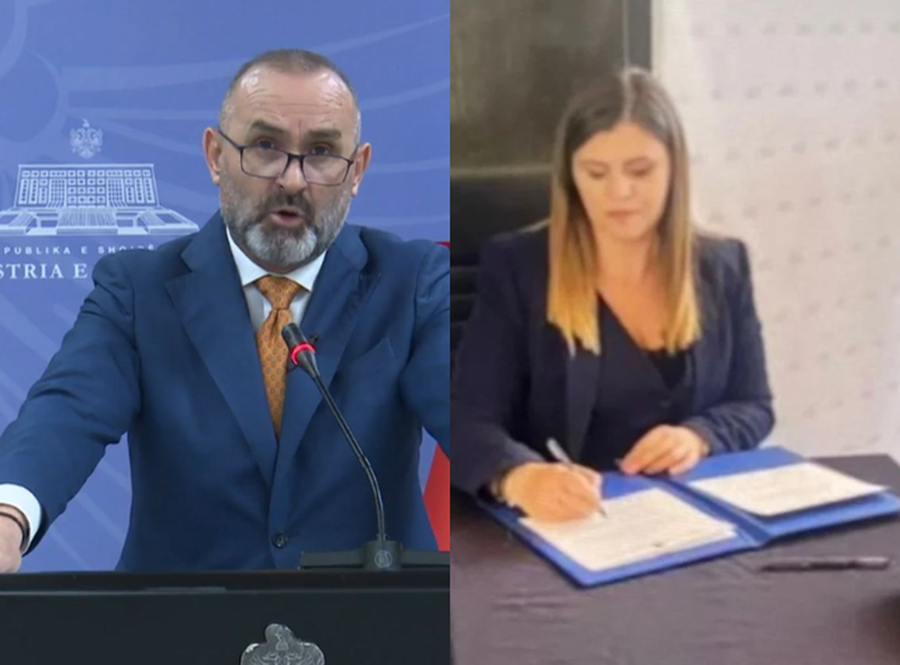
This conflict is unlikely to be a short summer storm, but a marathon that could produce a precedent.
The request for inspection against Shkodra prosecutor Elsa Gjeli is the first case of an official clash between the current government, as an executive branch, and the judiciary after the installation of the justice reform.
After a long détente, where, as Edi Rama said after the Veliaj case, "we have been deliberately silent to let it grow, but now we will state our position," a new phase begins.
Where it is not simply a relationship between the executive, but also between Parliament, which is dominated by the governing majority.
The Theth case will most likely only be the incentive for a broad debate that can be inclusive and open, regarding the reactivation of justice, which is actually paralyzed for the most part.
Because apart from SPAK and GJKKO, even with controversies and problems, the entire rest of the justice system is out of public attention. Meanwhile, on the ground the situation is worse, because the prosecution and normal courts are a machine that almost doesn't function.
What could the case of the duel between Justice Minister Ulsi Manja and prosecutor Elsa Gjeli bring to the High Prosecutorial Council and the High Inspector of Justice?
First, opening a debate on the role on paper and the role in the field of a prosecutor. According to the justice reform, a prosecutor is independent in the decision he makes.
Neither the head of the relevant Prosecutor's Office, in this case Shkodra, nor the Prosecutor General, nor the head of SPAK, as a separate constitutional unit, have the right to order or instigate an investigative action by the prosecutor. This is a constitutional right and exclusivity of the prosecutor.
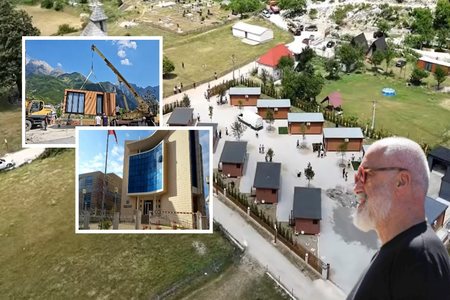
Prosecutor Gjeli has decided not to initiate investigations into the construction of the tourist village in Theth, with full conviction, and she wrote this in the disposition, which Edi Rama read in public, to make him think.
For better or worse, with elegance or directness, sophistication or sophistry, the Shkodra Prosecutor in this case has made her autonomous decision, which is given to her by the Constitution and the law.
But the issue here lies at the core of the doctrine. Since the prosecutor is autonomous in launching an investigation, not in making it omnipotent, but independent.
Independent does not mean that it is the final, dry seal. If a prosecutor makes a decision on a file, he must definitely face it in court. Which, according to the justice reform, is the authority that decides on a case that has two or three parties. The prosecutor, the defense and the civil party of the victims.
The prosecutor is therefore an institutional voice that defends an accusation that he officially raises and takes to court. In this case, prosecutor Gjeli has decided not to open an investigation into a case that the other party, in this case the government, says has not even been examined at all. A prosecutor is like that, he works and is paid to investigate a case, and to file charges, or not.
Should the prosecutor have brought his case before the Shkodra court, in order to obtain a more legally binding decision from the judicial body? Should the Shkodra prosecution, in order to further strengthen the professional opinion, after the decision of prosecutor Gjeli, have delegated another prosecutor to review the Shkodra police complaint?
It seems that we are facing a case where the High Council of the Prosecutor's Office cannot make a "union" decision, that is, to side with their colleague and that's it. We are facing a situation where the "Gjeli" case is not isolated, but a phenomenon of a development that is happening throughout the country, where prosecutors make decisions that for many seem like an overstepping of competences. As the real action of what is increasingly being called a "Republic of Prosecutors".
Who do not feel themselves a party to a process that is ultimately judicial, but rather a privileged party to the investigation of people with or without state positions.
The current law gives the prosecutor autonomy of action, but it has set a limit. Before the reform, a prosecutor could sign off on an arrest, a wiretap, and a home search. Today, any drastic and prohibitive action must be approved by the court before the act is carried out.
This conflict is unlikely to be a short summer storm, but a marathon that could produce a precedent. Which, if resolved with balanced acts of the KLP and ILD, which is unlikely to happen, could be resolved either by the Constitutional Court, with its exhaustive decision, or by Parliament with a strong intervention in the law on the prosecution.
The latter is likely to happen, as the problems are not necessarily minor and the current Constitution, as it has proven, has complicated them even worse.



Lini një Përgjigje