


 Shkruar nga Ilir Çumani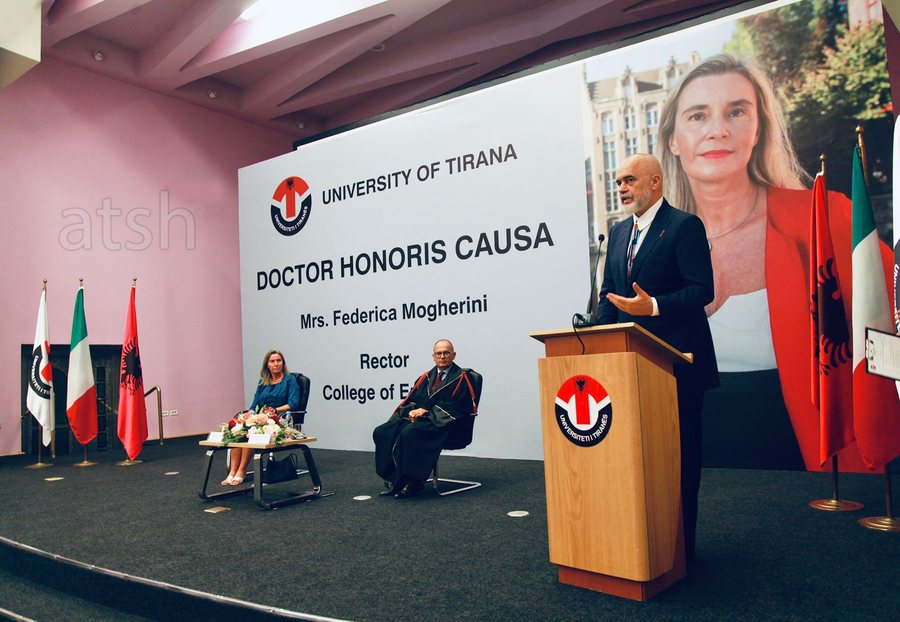
The Mogherini case made it clear how damaging this distance is between what actually happens in the process and the emotional way the news is interpreted.
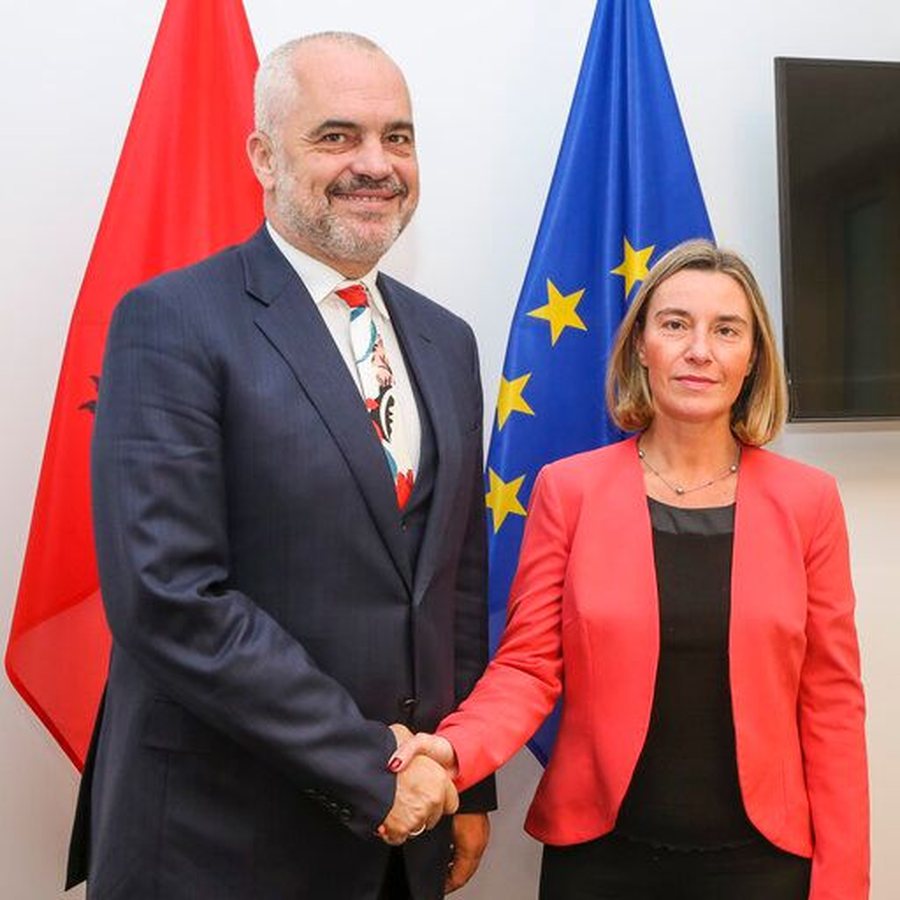
The case involving former EU High Representative for Foreign Affairs and Security Policy Federica Mogherini in an investigation by the European Public Prosecutor's Office regarding the tender for the diplomatic training program (where manipulation in procurement procedures is suspected), has highlighted a deeper phenomenon than simply a misinterpretation of the news: the way Albanian public opinion perceives international justice through the filter of a media ecosystem that often produces shocking headlines, but not explanatory analysis.
Criminal procedures in the European Union operate with clear standards and rigid legal divisions, but as soon as these standards are conveyed in the Albanian public debate, they are transformed (according to conjunctural political interests) into a simplified black-and-white narrative, disconnected from procedural reality.
The Mogherini case made it clear how damaging this distance is between what actually happens in the process and the emotional way the news is interpreted.
The decision to allow her to attend the trial at liberty cannot be confused with the dismissal of the charges. In the doctrine of European law, the security measure is simply a procedural instrument to guarantee the proper conduct of the investigation and not an assessment of criminal responsibility. This principle is often repeated in the jurisprudence of EU countries.
For example, in 2021, former Italian minister Luca Palamara was investigated for unlawful influence on the justice system, but was released throughout the process, after the court ruled that he did not pose a risk of flight or tampering with evidence.
Likewise, in France, former Prime Minister François Fillon followed the process at large until the first decision, on the same procedural grounds: lack of risk and guarantee of appearance at trial.
Even in the Mogherini case, the “acquittal” is a purely technical measure, not a declaration of innocence. Although the legal literature clarifies this distinction (as scholars such as Mirjan Damaška or Kai Ambos emphasize in their analyses of accusatory and warrant procedures in Europe), as soon as the news enters the Albanian media, the distinction is lost.
The news and social media reduce the process to a dramatic scenario, attributing to the release measure what legally does not exist: an assessment of the charges.
Thus, the public is faced with a double misunderstanding: first, the idea is created that a public figure "escaped" justice; second, the impression of a final decision is created, when in fact we only have an intermediate stage of the criminal process.
In the European legal system, charges remain in effect until they are reviewed by the court, while the prosecution continues to work on evidence, documents, and statements.
No interim decision on security measures affects the assessment of evidence. This is a fact that is rarely articulated in Albanian public debate.
Other cases in the EU illustrate this dynamic just as clearly. Former Austrian minister Ursula Rauch was investigated for corruption, but the Vienna court released her during the trial for the same reasons as in the Mogherini case: no flight risk and guarantees that she would not tamper with evidence.
In Germany, former MEP Georg Mayer also followed the investigative process without coercive measures, even though the reasonable suspicions and accusations against him were considerable.
The standard remains unchanged: the release measure is a technical assessment of the safety of the process, not of morality or criminal responsibility.
The distortion occurs when the legal context is removed from these details and replaced with an emotional narrative, which creates ground for unnecessary suspicions towards European institutions and transforms the media debate into a sensationalism contest, where citizens lose their proper orientation.
For a country aspiring to EU integration, misunderstanding the Union's own procedural principles is not simply an information problem, but also a cultural problem.
Until the court issues its final ruling, Mogherini's status remains that of a person facing valid charges and an open trial.
Any other interpretation, whether of presumed innocence or of predetermined guilt, is irresponsible and violates the basic principle of justice: the weight that belongs solely to the evidence and the court.
Her case should serve as a point of reflection on how news can move from sensationalism to more measured, verified information that complies with the standards of the country we aim to become a part of.






Lini një Përgjigje