


 Shkruar nga Prof. Mimoza Manxhari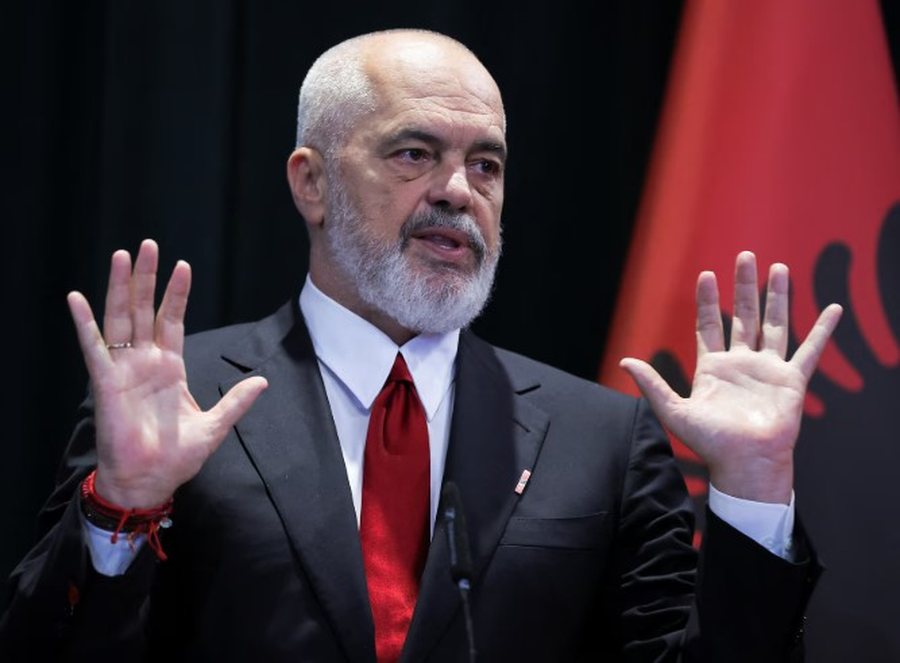
Reflection on 13 years of governance and 36 years of transition.
For many of us, Edi Rama was not just a politician.
He was a hope.
Many citizens believed in his vision. They believed in his ability to speak.
They believed in his courage to challenge the old and build something better.
But today, after 13 years of governance, it no longer matters what was promised.
What matters is what's left.
And the questions that arise today are numerous.
Is Albania stronger or more fragile?
Are institutions more independent or more dependent on government?
Is the citizen the most respected or the most ignored?
Is the future more secure or more uncertain for the younger generations?
But above all, the most worrying question is not related to roads, buildings or statistics.
It is connected to the human being, because the value of a government is not measured by the concrete it builds, but by the human character it forms, by the citizen it educates, and by the hope it sows for the future.
What has happened to the human content of our society?
What happened to the love of knowledge?
With respect for work?
With pride in the profession?
With a sense of responsibility towards the community and the country?
Great philosophers and thinkers have repeatedly reminded us that education is not intended to produce diplomas, but free people.
Therefore the question remains:
Are we educating young people or distributing certificates?
Are we building knowledge or legalizing ignorance?
Are we forming critical minds or just people repeating what they hear?
Are we creating citizens or consumers?
A society can be filled with graduates and at the same time impoverished by the knowledgeable.
It can be filled with titles and simultaneously emptied of wisdom.
It can be filled with information and at the same time lose the ability to think.
It can be filled with universities and at the same time remain without knowledge.
- What is happening with the work culture?
Are young people being taught to build, create, produce, and contribute?
Or are they being taught that success comes not from merit, but from proximity to power, connections, or chance?
Is honest work still the surest path to success?
Is professionalism still a value?
Does the teacher feel the most respected today? The doctor? The farmer? The engineer? The worker? The honest entrepreneur?
If NO - then what message are we giving to the younger generation?
What is happening to the real Albania?
With villages being emptied?
With small towns losing their vitality?
What about the lands that are abandoned because there is no one to work them?
With families being separated by immigration?
Can a process that fills some urban centers while emptying the rest of the country be called development?
Can a model that loses a nation's greatest asset: its people be called a success?
Nations do not die when they lose material wealth.
Nations begin to weaken when they lose faith in themselves, in work, in education, and in the future.
And the most difficult question remains:
Are we building an Albania where citizens feel like masters of their own destiny?
Or an Albania where most of us increasingly feel like spectators in our own country?
Or an Albania where the citizen, although living in his own country, feels increasingly like a stranger in his own destiny?
The goal of development is not to impress the world.
The purpose of development is not to produce facades.
The purpose of development is to give citizens reasons to stay, to hope, and to believe, and this, and this alone, is the true measure of the success of any government.
These are not questions against a person.
These are questions about an era - about the 36 years of transition.
They weigh especially heavily on those who have held the responsibility of governance for decades.
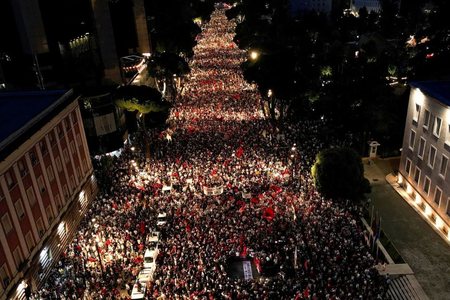
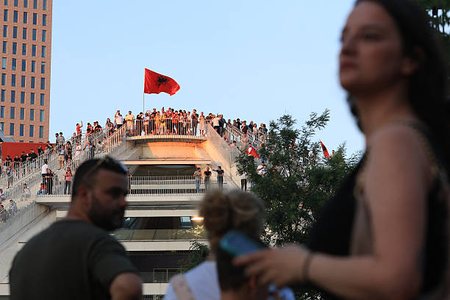
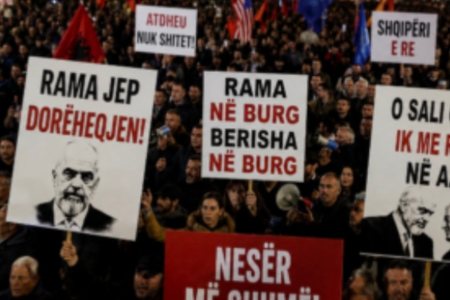
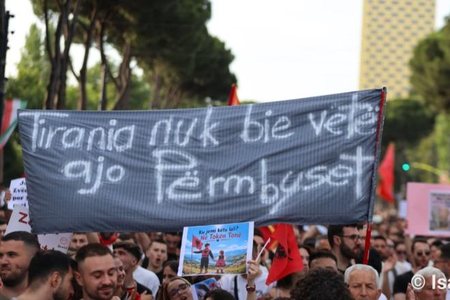
The protest of these days should not be seen simply as opposition to a decision or a specific project.
It is clearly an expression of a fatigue accumulated over the years. A fatigue from the feeling that the voice of citizens is only heard when their votes are needed.
When a protest continues for days, the wisest response from the government is not mockery, contempt, or arrogance. The wisest response is reflection and action.
Because power is not measured by the years spent in office.
Power is measured by the imprint it leaves on people's lives.
Today, those of us who are protesting are not just seeking answers to a specific issue. They are seeking answers to an accumulated sense of frustration.
We are asking for respect.
We are asking to be heard.
We are demanding accountability and responsibility.
We are seeking the restoration of faith that this country can be built on merit, knowledge, and honest work.
And perhaps, if there is one last service a leader can do for himself, it is to listen, because there are moments in history when leaving with dignity requires more courage than staying put at all costs.
History does not only remember those who took power.
History also remembers how they left him, as:
No one can be bigger than the country.
No government is more important than the future of young generations.
And no power can last longer than the patience of a people who demand to be heard.
Because, it's not the leaders who remain.
The country remains. The people remain. The legacy we leave to future generations remains.



Jepi përgjigjr direkte pyetjeve të tua e mos u rrotullo në asgjë.