


 Shkruar nga Auron Tare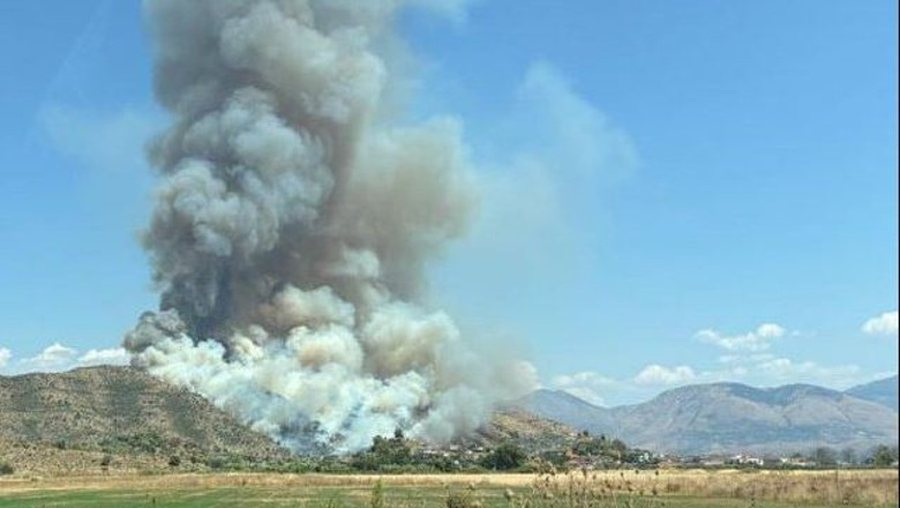
Archaeological research and discoveries were signed for the first time in the time of King Zog, by the well-known archaeologist Ugolini. During the communist period, a series of archaeological and restoration expeditions were carried out.
Today at noon the fire destroyed Finiq, one of the most famous cities of the Ancient world. Apart from some dry news about an ordinary fire, no one talked about the cultural disaster to this ancient city.
Surrounded by magnificent walls with monolithic blocks, with an Acropolis some 7 times larger than that of Athens, with a Theater that could hold over 15 thousand spectators, with a history so glorious that few have it, Finiqi is forgotten, abandoned and largely unknown by the Albanian public.
The capital of Epirus, this place the Molossian royal family had its throne, where the Epirote Kaones flourished in trade, arts and culture. The place from which Alexander of Epirus, the brother of Olympias I, the mother of Alexander the great, began his military campaign, and from where he transported the elephants sent by his famous grandson in military ships to the Italic peninsula.
The city where the Roman Republic and the Macedonian Kingdom signed the first Treaty to end the fighting between them. Conquered and heavily plundered by the Illyrians of Teuta who unexpectedly surrounded him, betrayed by Gallic mercenaries and newly plundered by the troops of Paulius Aemilius, the Roman Proconsul in the Epirote War, Phoenicia was never burned. The greatness made all the warring armies to honor this famous city with an impressive culture and architecture.
Archaeological research and discoveries were signed for the first time in the time of King Zog, by the well-known archaeologist Ugolini. During the communist period, a series of archaeological and restoration expeditions were carried out.
After the fall of communism, it was one of the places where it was systematically excavated by treasure hunters, severely damaging entire architectural structures.
In 1996, the famous Norwegian explorer Thor Heyderal visited Finiq with the idea of an international archaeological expedition, but '97 prevented this interesting idea.
In 2002, under the Butrint National Park project with the support of the private American Coolidge Foundation from Boston MA and the US National Park Service, it became possible to deploy a team of 6 rangers to protect this historical treasure.
With the arrival of Berisha II, this service was dissolved and since then Finiq has been plunged into total institutional oblivion. If the reader will read that one of the Ministers of Culture did not know where Finiqi fell or that a good part of the fathers of the Nation did not know what it is or where it falls, I am sure they will not believe it. Unfortunately it is true.
Finiqi, like most of the National Heritage, is part of a terrible oblivion and neglect. Although it has been widely promised the creation of a structure that would protect and maintain the monuments of Culture as once under the "roof" of the Institute of Cultural Monuments, or a dedicated structure regardless of the name, the Heritage Monuments are abandoned or forgotten.
Any excuses for shortages or bureaucratic obstacles are totally untrue. With a simple calculation, you can understand that the National Park of Butrint (a small village at the time of Finic's greatness) generates somewhere around 2 million euros in revenue from tickets. 2 million euros are enough to keep the entire network of cultural monuments in the Saranda region afloat. Include here also the direct or indirect state funds that go to Tenders in the field of tourism/heritage, you will see that it is not a question of funds but of total incompetence and negligence towards Heritage.
Today's fire, which completely destroyed the Archeological Park of Finic, damaging the cultural monuments and ancient structures, best shows the abandonment of this city, only 9 km from Saranda.
The oblivion and abandonment of this magnificent city that today has become rubble has nothing to do with the barbarians of the past, but primarily with the indifferent spirit of the public and the bureaucratic incompetence of the Institutions who do not understand that the Cultural Heritage is the key to a forward-looking tourism and opportunities for economic development.







Lini një Përgjigje