


 Shkruar nga Simona Siri
Eurasia Group analyst Ian Bremmer: The US is withdrawing from being the guarantor of the global order, and now the world belongs to the strong who dictate the law...

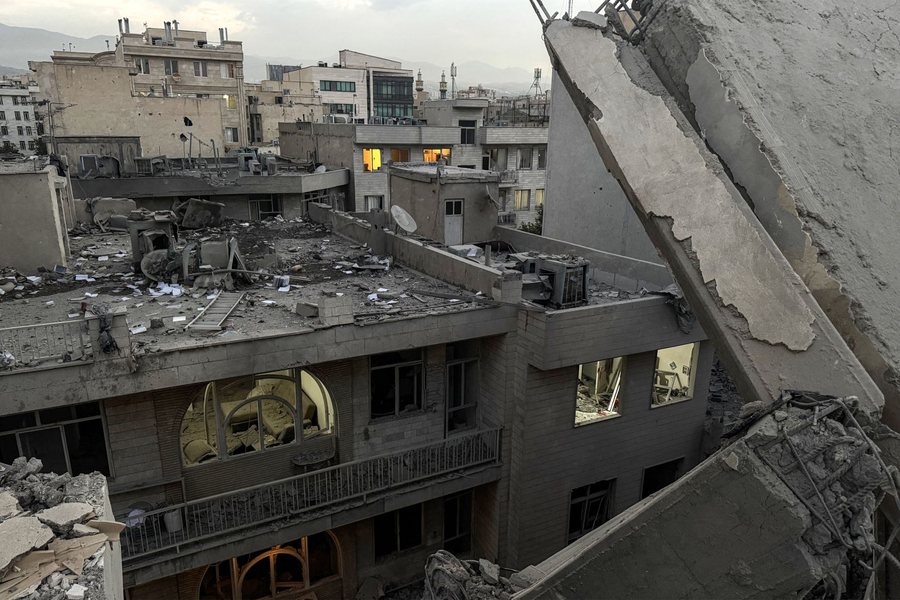
Israel's current attack on Iran is much bigger than the one in April, and this is because Tehran is currently much weaker. This is what Ian Bremmer, founder and CEO of Eurasia Group, the world's leading geopolitical risk consultancy, said in an interview with the newspaper. Bremmer regrets America's withdrawal from global leadership, as this act is turning the world into a rule-free jungle, where the law of the strongest prevails.
How did we get to this situation?
No longer the guarantor of the current world order, the United States has encouraged a return to the law of the jungle, where the strong do as they please, and the weak suffer as they must. And nowhere is this more evident than in the Middle East. Israel is by far the dominant military and technological power in the region, and this gives it the ability to act with impunity.
Secretary of State Rubio spoke of unilateral action by Israel without US involvement…
The US does not want to be an active part of this war, but Trump knew last Monday that these attacks were going to happen. So if he wanted to stop them, he could have done so. Not to forget the fact that the United States regularly provides weapons, military support, and intelligence to Israel.
Of course, there is a difference between not directly participating in attacks, and being complicit or supporting them. In fact, I think at the beginning of the negotiations with the Iranians, Trump expressed to Israel his firm opposition to the attack scenario.
Then, seeing that the negotiations were dragging on and the deal he could reach was not what he wanted, he got bored and lost interest. Trump is a leader who is very focused on what is happening at any given moment, and when something doesn't work, he quickly moves on to other issues.
He failed to convince both Putin and Netanyahu. Not a great achievement for someone who wants to be a world peacemaker...
Putin was not willing to accept a ceasefire, but Trump got everything he wanted from the Ukrainians. He had to tolerate the Chinese on the issue of tariffs, while with Mexico he got guarantees on border security, goods and transportation. The lesson is that weak countries and leaders capitulate to Trump, while those who feel strong react harshly.
How much did Netanyahu's internal political problems influence his decision to attack Iran?
It is true that he is under pressure, but militarily he has achieved great successes. The Israelis support him for what he has done to Hezbollah, and what he is currently doing to Iran. The latter is trying to target and terrorize Israeli civilians, but it is unlikely to have much success.
When Israel struck Iran twice after Hamas attacks on October 7, 2023, the Iranians were unable to inflict any serious damage. Ultimately, what matters in such cases is military imbalances.
How do you see the reaction of other countries?
France and Germany know that Israel has the right to defend itself. Of course, the Saudis have condemned the attacks, fearing that in retaliation the Iranians will block oil from passing through the Strait of Hormuz, which would increase the cost by over $100 per barrel, leading to a global economic recession.
The Gulf states want to show publicly that they want to reduce tensions, but there is little they can or will do to actually intervene. The reality is that most of the world opposes what Israel is doing in Gaza and the West Bank, but is unwilling to do anything about it.
The most hostile countries are Turkey - which could cause economic damage to Israel - and Russia, which needs Iran's drones and capabilities to continue its war in Ukraine.
What is the worst case scenario at this point?
One is that, under great pressure and with a covert nuclear program that the Israelis cannot strike, the Iranians will try to produce their own nuclear bomb as quickly as possible.
The Israelis and Americans learn this, and the Americans immediately get involved in the war. Second, due to instability, the Iranian regime completely transforms into Saddam Hussein's, with hundreds of thousands of civilians killed due to internal repression.
What about the best?
That Iran will not be able to counterattack on a large scale. So the regime is weakening and is no longer able to provide support to Russia, nor to export terrorism through the militias it supports.
How close is Iran really to acquiring nuclear weapons?
Experts say they could have enough enriched uranium to make a bomb within weeks. But that doesn't mean they can turn it into a weapon, as their infrastructure and military capabilities have been damaged. However, one should not underestimate what a radical regime is willing to do when it finds itself in a desperate situation.
The world is on fire today. What would it take to calm things down? Maybe new leaders?
Sadly, today we have no leaders but only winners, and winners always mean that there are also losers. And that means oppression and people who feel mistreated, who at this point are ready to fight./ Pamphlet from “La Stampa”


Lini një Përgjigje