


 Shkruar nga Ylli Pata
Qori is a quiet politician, but one who stands on a clear ideological angle in his platform. He hates the rich, but also their "collaborators" in politics.
In the May 11 elections, there was an electoral outcome that assessed the two major terminal political groupings in the country as inertia.
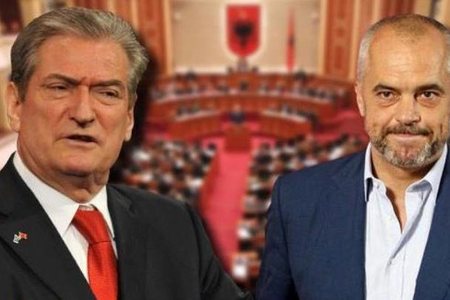
By giving more parliamentary power to Edi Rama's Socialist Party, even though its number of votes is at an overall historical level, it also gave Sali Berisha and his PD a number of votes that he does not really have as his consent, but as a large representative of the large anti-SP and anti-government vote in Albania.
In fact, this reality is not just an Albanian phenomenon, but has been setting the tone for world politics for years, mainly in the US and Europe, since Donald Trump and his Maga appeared on the scene. A phenomenon that fueled the avalanche of populist and extremist movements in Western, Central and Eastern Europe.
These movements are not always on one side, namely they are not only extreme right-wingers like Marie le Pen in France, Viktor Orban in Hungary, or the AfD in Germany, or the populist conservatives in Poland. Extreme populists are also the leftists of 5 Star Movement in Italy, the leftists of Robert Fico in Slovakia.
This movement, which has been fueled by the MAGA hurricane, has given a realist direction to politics. Where fanatical forces and generally extreme positions create an acidic atmosphere for any moderate position or movement that floats towards the center.
In Albania, there has been a gray electorate, which, although never strongly organized in politics, has had its weight in every election. It must even be said that in various cases it has been decisive in determining governance at the central or local level.
The year 2021, namely the parliamentary elections of that year, was a clash of titans between two major groups in the country, which also led to a kind of division among the moderate people.
Referring to May 11, it can be said that the 2021 vote shows a fatigue of moderate reformists, who have refused to become part of a game of confrontation that does not suit them.
As we saw in the May 11 campaign, the new opposition also tried to pave the way not with moderate political positions, but by posing as “more Catholic than the Pope”, namely by selling itself as more puritanical than the resistance. The advancement of Arlind Qori’s new left is a confirmation of the advancement of fanatical political logic. Qori is a calm politician, but in his platform he stands on a clear ideological angle. Who hates the rich, but also their “collaborators” in politics.
This situation has brought about a phenomenon where Edi Rama, who is in a comfortable position in his fourth term, has undertaken to integrate into his government the gray part of the electorate that has voted against it for several legislatures.
A maneuver from above, to consider himself a moderate player towards the center. Which politically Edi Rama is in his political action, but the electorate that voted on May 11, has a compact ensemble of socialists that does not demand the return of Sali Berisha.
Who, for his part, intends to use the 500,000 votes of May 11 as a personal action, when in fact that vote is a clear political inertia. Where, as is being seen today, many of the DP voters have given their trust, as a stance under arms, as an activist and militant action to show that they are facing Edi Rama.
A few years ago, or almost a decade ago, the political center or gray electorate was a potential power not only electorally, but also socially and civilly in the public debate, which today has turned into a battery of trenches in every panel, where anyone who intends to show that they are moderate will either be attacked as a traitor or as irrelevant. Because, the political grip of the extremes is crushing the center.
This is also being noticed in Europe, for example in Italy, where Meloni, who is the undisputed leader of the right and the industrial lobby in the country, does not allow a moderate element within her alliance, as she seeks to maintain this position herself.
On the left, Democratic Party leader Ely Shclein, also belonging to the ideological left, aims to present herself as the head of the coalition that is ready to make an alliance with the moderates, without giving them the primary role.
A few years ago, the Italian left was led by centrist figures like Romano Prodi, Matteo Renzi, or Enrico Letta. Today, these political models are considered far-fetched, which is preventing the left from breaking through to the center. Because the extremes want to prevail.


Lini një Përgjigje