


 Shkruar nga Ylli Pata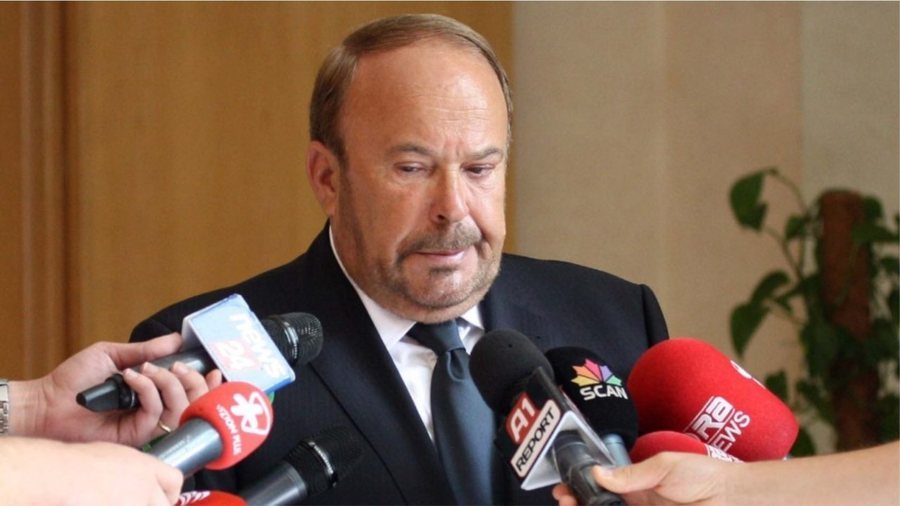
Although an "old" politician, Nano never became a political dinosaur, for many reasons, but first and foremost because he most often and well embodies the institution of resignation in post-communist Albania.
Edi Rama's dedications to his predecessor have become a periodic rite for years now.
A ritual that, more than a personal reaction, is a political stance. This is also evident from the virality that accompanies the dedications of the "great one", where today there was also one from Ali Ahmeti, the leader of the DUI in North Macedonia.
Fatos Nano has been out of the Albanian political arena since 2005, where unlike many of his colleagues, he rarely appears in media appearances, yet every time he does, he "scores". Fatos Nano's most recent appearance was in the spring of 2021. Shortly before the parliamentary elections of April 25, Fatos Nano gave a "bombshell" interview to Fevziu where he painted Sali Berisha and Ilir Meta with a picture that stuck so strongly that that image remains in the public eye today.
That interview showed how important the Albanian language is when used by a character who knows how to do it well.
Fatos Nano really showed his political weight, which was not the first time it was heavy, even though he was not an actor in the game. In 2009, and especially in 2011, Nano influenced with his stance against Edi Rama, so that a few left-wing votes flowed towards the Brisha-Meta alliance.
The key to this political influence of Fatos Nano, of course, lies in his political history and protagonism in his time, where he has left a mark, which is clearly seen by a large part of the electorate, who is a contemporary and fellow traveler on his political journey.
Fatos Nano is one of the political figures who has served as the country's prime minister several times, a protagonist of the era of change of the 1990s, with a key role in turbulent times such as the last years of that decade.
Although an "old" politician, Nano never became a political dinosaur, for many reasons, but first and foremost because he most often and well embodies the institution of resignation in post-communist Albania.
Fatos Nano is part of the new generation of non-dogmatic economists of the last period of communism, who carried out his scientific and academic work on the emerging European Union, namely the European Economic Community. Which he knew at least theoretically better than many of his colleagues. This is also thanks to his contacts and his versatility in understanding the European system, through his know-how in culture and especially in his good knowledge of foreign languages; English, French and Italian.
It was designed by Ramiz Alia to lead the transitional government that would bring change to a country with a ruined economy and international isolation.
Nano led the first contacts with the world, where his choice was clearly the West. Although unlucky, Fatos Nano traveled to all European capitals to attract aid and funds for the ruined Albanian budget, he never had a geopolitical dilemma. For any tangential to China, Russia, or other countries that lost the Cold War.
In the first elections of March 31, 1991, Fatos Nano managed to win the direct race with difficulty, unlike Ramiz Alia who lost badly. But it must be said that Nano ran in an area that is still left-wing today, such as New Tirana - today unit number 5, and Alia chose the area of Old Tirana, today unit number 8.
After the ALP won the elections of March 31, Fatos Nano was appointed prime minister, where he established a youth cabinet, but it lasted only 2 months. The April 2nd of Shkodra and the strike of the Valias miners who demanded the removal of the government of Fatos Nano happened. Thus, the victory of the ALP remained in the throat and the government fell in May. A month later, the PS was founded, where Fatos Nano took the leadership of the party, leading with a group of intellectuals and university professors.
Six months later, Nano faced the elections of March 22, 1992, when the hurricane of change brought the DP to power with 2/3 of the seats in Parliament and the SP with a group of about 32 deputies. Nano gives a political signal about who the new former or post-communist opposition belongs to, which in many of its exponents had anti-Atlantic and anti-Western nostalgia. But Nano had a clear address, when he linked the first international relations of the SP with the Italian Socialist Party of Bettino Craxi, the Hungarian Socialist Party of Gyula Horni and the Israeli Labor Party of Shimon Peres. A fundamental milestone that marked the geopolitical limes of the Albanian left.
Where the new opposition was a force of argument and imposition of new and qualified characters of its leadership. Only 4 months after the heavy defeat, Fatos Nano won the first local elections in the country, without entering the big cities anyway. A year later he was arrested by Sali Berisha, after a fabricated accusation that did not stand up, a process that disturbed and destroyed the justice system in the country from the beginning. which ate judges and prosecutors from the best and most professionals. After 4 years of prison in complete isolation, Fatos Nano returned in 1997 with a more plebiscite victory and was appointed prime minister of the country.
With a full majority to make any change he can, Nano declared that he does not seek revenge against Sali Berisha, but a normal political process in the country.
Ai formoi një qeveri koalicioni me disa forca politike, edhe pse kishte të gjitha numrat për të drejtuar i vetëm, duke i dhënë aleatëve postet kyçe në qeveri. Në këtë kohë Fatos Nano afron qarqet e rezistencës së porsalindur në Kosovë, e cila kontrollohej nga një formacion politik majtist. Përkatësisht konturet e Ushtrisë Çlirimtare të Kosovës, të cilën e kontakton me amerikanët. Të cilët nëpërmjet CIA-s, që hynë lirisht në SHIK-un e drejtuar nga Fatos Klosi, nisën krijimin e një strategjie gjeopolitike të re në Ballkan. Ku qeveria shqiptaret ishte partnerja kryesore. Në këtë kohë, kur nis lufta në Kosove me një intensitet më të madh, SHqipëria vuan disa pasoja të këtyre turbullirave. Ku ndodhi vrasja e Azem Hajdarit dhe 14 shtatori 1998, ku Sali Berisha urdhëron trupat e tij të armatosura të pushtojnë selinë e qeverisë dhe zyra të tjera të shtetit.
Nano, në një rrezik eminent për jetën largohet për 24 orë, rikthehet triumfator, por pas një jave detyrohet të japë dorëheqjen. E kërkuar nga amerikanët. i jep kështu drejtimin e qeverisë Pandeli Majkos, në atë kohë 31 vjeç. Nuk zgjat shumë dhe largohet edhe nga drejtimi i PS-së, duke hyrë në një garë për të rimarrë kreun e Partisë Socialiste. Majko, së bashku me disa grupe të tjera fiton sigurinë për të marrë drejtimin e PS.
Garë që Nano e fitoi për pak vota. Në krye të PS-së, afron Ilir Metën në krye të qeverisë, i cili për 3 vjet fuqizohet së tepërmi. Nano, me pushtet të kufizuar nis atë që quhet “beteja për katharsis”, ku akuzon Ilir Metën dhe eksponentët kryesorë të qeverisë për korrupsion dhe lidhje me personazhe të nëntokës. Pas një beteje inkandeshente e fiton davanë dhe Ilir Meta jep Dorëheqjen. Pas një 6 muajsh kujdestari e Majko 2, Fatos Nano rikthehet në postin e kryeministrit, ku qëndron deri në zgjedhjet e 2005-s.
Në këtë kohë Fatos Nano rikthehet me një plan të ri. Jo më dhurim pushteti për rivalët e mundshëm që mbinin si këpurdhat pas shiut, por një pushtet më i përqëndruar dhe i kontrolluar. Largon Ilir Metën nga drejtimi i PS-së, e ky i fundit krijon LSI-në. Izolon Edi Ramën, që doli hapur si kandidat për kryetar i PS-së, duke krijuar një rrjet armiqsh që e futi mazhorancën në një shteg shizmash. Ku më e madhja ishte LSI-ja e Metës, me të cilin në fillim u bashkuan shumë nga figurat e larta socialiste.
Në këtë atmosferë në zgjedhjet e 2 korrikut 2005, PS nuk pëson megjithatë disfatë numerike, por PD e Sali Berishës është fituese. Me një lëvizje aleancash, mund të krijoheshin dy grupe të njëjta 70 me 70 në parlament, ç’ka pati edhe lobe që e shtynë këtë lëvizje.
But Fatos Nano does not prefer this move and resigns. Thanks also to an American push. Nano's resignation is final even as chairman of the SP. Removed from the leadership, Nano opposes the election of Edi Ramës as head of the opposition and this relationship with the successor will be strained until after 2013. Nano gets closer to Berisha and openly supports Sokol Olldashi for the mayorship of Tirana in 2007. A few months later, he asks the SP deputies close to him to vote for Bamir Topi as President of the Republic, after failing to reach the votes to become himself, thus concretizing an alliance with his political enemy Sali Berisha. An alliance that is also concretized in 2009 and 2011.
In 2012, he attempted to be re-elected President of the Republic, but Edi Rama did not support his political experiment. After that attempt, Fatos Nano never returned to political life and rarely appears in politics. Although with a long and intense activity, even from the very beginning, Fatos Nano did not become a dinosaur by staying in the field, when there was toxic gravity towards him. Resignation is personified with Fatos Nano in Albanian politics as a nobody or no one political player. Dynamic and Europeanist as a player, Fatos Nano was never afraid to “share power to win a state” as he himself put it as a political axiom. He was not afraid to redo political battles from scratch, giving not only the SP, but also the Albanian political sphere a magnetic charge that did not favor polluted water and political swamps.
A loner from the beginning, even serving 4 years in prison, Fatos Nano is among the first politicians to have experienced the "fight against impunity" in his own body. Although he has had many accusations, urban legends, in a very colorful and turbulent political and private life, Nano managed to have people who love him, those who criticize him, but who was not hated by the supporters of the Democratic Party. With whom he had a political journey of alliances without any complexes.
It is precisely the opposition to remain in the seat of power outside the dialectic of centrifugal forces around him that has made Fatos Nano the first European politician in Albania. And in great contrast to his old rival Sali Berisha, but also to many of his colleagues in the Socialist Party, where the first was "Dear friend-enemy" Ilir Meta.
Therefore, he has the image of a liberal politician and not an Anatolian in his approach to political power, which is recognized not only by the fans he continues to have on the left, but also by the respect of voters and supporters on the right.



Lini një Përgjigje