


 Shkruar nga Agustin Palokaj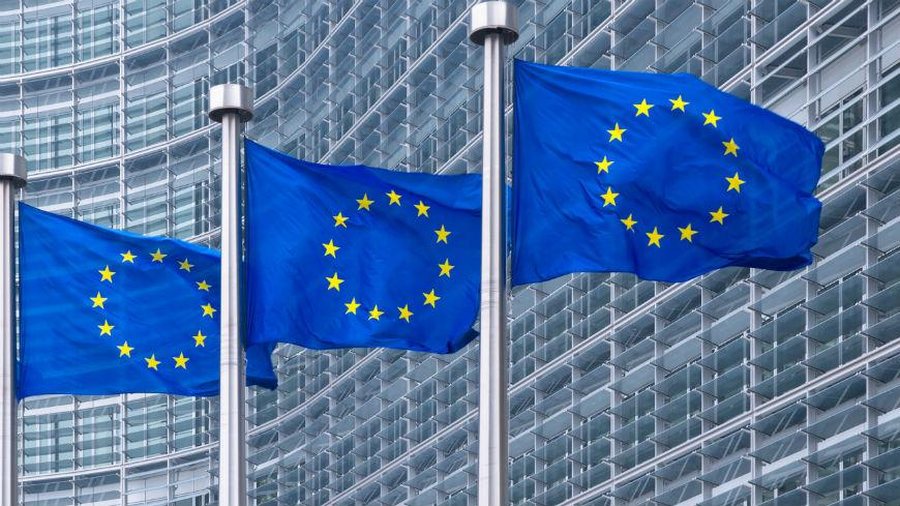
The annual State of the EU addresses have failed to have anywhere near the impact of speeches by American presidents, nor to attract attention outside Brussels' inner circle, and especially not outside the EU.
The latest "state of the union" speech by European Commission President Ursula von der Leyen was as expected. A good speech, prepared down to the last detail by European Commission staff, but which in the end will not change anything in the role of the EU.
Ten years ago, former European Commission President Jean-Claude Juncker started the tradition of delivering an annual “State of the Union” address. The idea was to make it similar to the annual “State of the Nation” addresses that American presidents traditionally deliver to Congress.
As is often the case, copies are never as good as the originals. And the annual State of the Union addresses have not come close to matching the impact of American presidents or attracting attention outside Brussels' inner circle, let alone outside the EU. While American presidents' speeches are broadcast live on all international television channels and are the subject of debates before and after the speech, the addresses of European Commission presidents are not broadcast by anyone and are forgotten the next day. But despite the fact that they do not come close to the importance of the American president's speeches, the addresses of Commission heads are not insignificant either.
They provide a good diagnosis of the situation in the EU and what the EU executive has in mind for the future. But the main problem with these speeches is that they are too balanced to please the different party groups in the European Parliament and in the end they satisfy no one. In addition, the presidents of the European Commission do not have real power. They are unfairly given the epithet “leader of the EU”, which is not accurate. This is because the President or President of the European Commission, unlike the American president, is not directly elected by the people. And the head of the Commission is also accountable to the member states.
The last speech of the President of the European Commission, Ursula von der Leyen, was expected. A good speech, prepared down to the last detail by the staff of the European Commission, but in the end it will not change anything. The reality of the “state of the union” is not good. On the day when Von der Leyen spoke about the power of the EU, the French government was overthrown, while chaos began in the streets of the cities of this country due to protests. In Poland, drones from Russia fell, which in large numbers had violated the airspace of this EU member state. The tragedy in Gaza continued and with it the divisions between the EU states about what should be done. What the President of the European Commission said, on all these problems, sounded good. Especially the message that “the situation in Gaza is unacceptable” or that “Russia must return all the children kidnapped in Ukraine”.
The reality is that the EU was not present in the peace efforts in Ukraine and that it has no influence in the case of Gaza. Meanwhile, the EU’s divisions over plans to sanction Israel have come to the surface as many countries have started to adopt individual measures, unable to act through the EU. These divisions will soon come to the surface even more at the UN General Assembly, during which several EU countries have warned that they will recognize the state of Palestine. All the European Commission has done, apart from calls for peace and readiness to provide humanitarian aid, has been to propose that Israel be excluded from participating in an EU scientific research program. Such a measure would have no effect, but it would at least send a signal that the EU can do something symbolic. And even for this Commission proposal, there is no proper majority in the EU Council, where the EU's power lies, not in the European Commission.
European Commission President Ursula von der Leyen, in her annual address to the European Parliament, also called for what she called “the reunification of Europe” by including the Western Balkan countries, Ukraine and Moldova in the EU. She said that the idea of a free, strong and independent Europe means a united Europe in which the West and the East come together. “That is why we are bringing the future member states closer to the Union. By investing, by supporting reforms, by integrating them into the single market. We must maintain this speed through a merit-based process,” said Von der Leyen. “Because only a united and reunified Europe can be an independent Europe. A larger and stronger Union is a guarantor of security for all of us. Because for Ukraine, for Moldova and for the Western Balkans, their future lies in the Union. Let us make it possible for the future reunification of Europe to happen,” she said.
But, here too, the European Commission is only a tool in the process and does not have the power to push things forward. Ukraine has remained blocked in starting to open chapters because Hungary is keeping it blocked. North Macedonia has been under blockade for 20 years, once blocked by Greece and now by Bulgaria. Kosovo has remained blocked and even under EU sanctions, without candidate status.
With the exception of Albania and Montenegro, no country has made any progress in the EU integration process. And, based on the current dynamics, it is unlikely that the warnings and expectations that the EU will actually expand will be realized soon, despite the good words of the head of the European Commission. As long as in the process, such as foreign policy and enlargement, there is a veto right for each EU country, in these policies it will be powerless. And, due to the inability to speak with one voice, it will remain in fact voiceless at all. And as such irrelevant on the global stage. And the speeches of the heads of the European Commission on the “state of the union” will not resonate outside the corridors of the institutions in Brussels and some limited diplomatic and bureaucratic circles.


Lini një Përgjigje