


 Shkruar nga Ben Andoni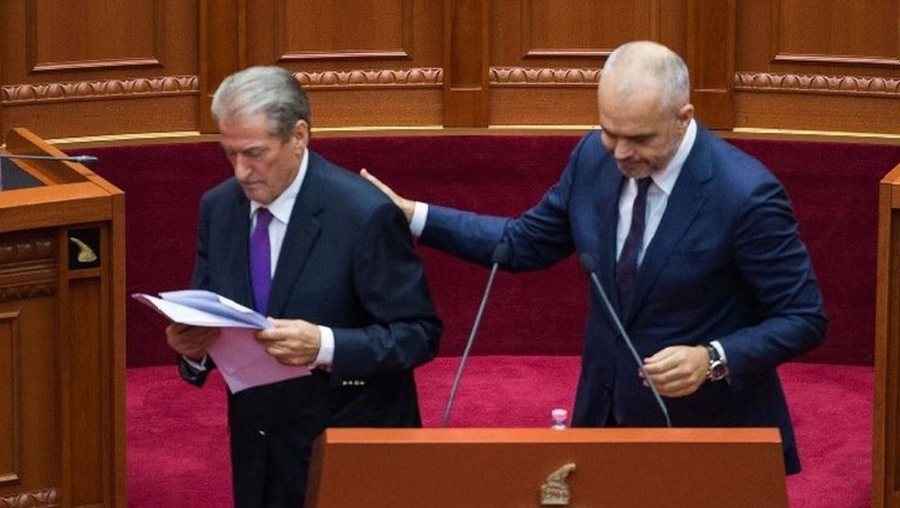
The frightening level of grand corruption at every level, the numerous arrests of bureaucrats and wrongdoers, as well as the injustice shows that in the last quarter century, Albanians have faced one of the most irresponsible governments of its modern historical times.
This has nothing to do with “IF”, Kipling’s famous poem (“If”) nor with the many doubts that politicians of our day bring to us when they offer us an impossible future, but with the way we would be governed, IF we were not a democratic country of responsible politicians. The argument is worrying before the start of the new political season, which foresees major clashes and tensions, starting from the non-recognition of the elections by the DP, Berisha’s promise; and the major reformations and campaigns of the SP that in fact have only one initiator: the country’s Prime Minister Edi Rama.
Apart from these, the future remains a concern for the public, accompanied by unsustainable prices and poverty, where according to recent Eurostat data: Albania leads Europe in terms of the high level of the population with around 42% at risk of being poor as it suffers from a severe form of social exclusion in 2024 (Europe data 2024, Albania 2023). The data refer to more than 1 million Albanians suffering from a severe form of poverty (Monitor, 2025).
Are they seen and judged for these?! Is it possible for Albania to generate a class of rulers who are more careful (we are using it euphemistically so as not to say irresponsible)?! Apparently so. The frightening level of grand corruption at every level, the numerous arrests of bureaucrats and evildoers, as well as the injustice shows that in the last quarter century, Albanians have faced one of the most irresponsible governments of its modern historical times. And yet, despite appearances, Albania, if it adapts to European conjunctures by 2030, could be an integral part of the EU!
A long-awaited step but one that few in Albania believe we deserve. It is enough to look at the treatment of the environment, the way we deal with tourism and the way we are dealing with agriculture, among others, to understand how far we are from the European path. The greatest investment and national sacrifice: Justice is almost one of the biggest public disappointments with verdicts but also the huge delays that have left entire files waiting in line. Property (the biggest unresolved problem) is almost one of the biggest gangrenes in the country, where just thinking about the victims after the '90s makes you gnaw at the bone. And, meanwhile, those we trust with governance and who hold the strings of developments in the country are and often remain disappointing.
Every legislature becomes more and more inferior, ever weaker, while incompetents vegetate in parliament who ultimately enrich themselves terribly. The influence of their power, while accompanied by personal gain, rarely makes a positive difference for the progress in the political and social life of the country. The development of the country is happening as a dynamic and due to the inertia of the time and the spirit of Albanians, with little or no contributions from this class of politicians. How do they manage to represent us? The answer is already known: Albania is in the hands of the party presidency that determines its fate. And, the “difficult” question: What kind of person should someone be to be a protagonist in the historical challenges of Albania?!
Weber posed a big question to the public about the model of the politician, linking it to the feeling of power. “Even in modest positions, the professional politician is satisfied with having an influence on people, having power over them, but above all: holding in his hands a bundle of nerves of important historical events, that is, rising above the everyday.” And, Weber then went on to the important question: With what qualities can the politician hope to be worthy of this power, which he intends to exercise and the responsibility that it imposes on him?!
But our reality helps us: IF our politician were normal, it would not happen that many of the main parties in our country do not recognize party elections at all, PD, PS, PR, PL (LSI), PSD, PBDNJ, PAA, PDIU, and others have had the same chairman for years (And, they don't blush)!!! IF our politician had a little sense of proportion, he would leave his mandate at a moment, when the objectives in the elections were not achieved, or the party's expectations of him/her left something to be desired. IF politicians would care more about the clear canons of politics, the country would have normal elections and, not like these where Rama includes the entire administration, while Berisha only accuses and never knows how to do MEA Culpa. Parties would have institutions within and accountability, just as anyone would have career opportunities according to performance and skills.
Weber, to whom we are referring, establishes three attributes for the model of a politician: Passion, Sense of Responsibility and Sense of the Mass. Of course, his equation was created more than 100 years ago and contains many truths, above all the interconnection of these attributes in a political democracy. IF this were respected in new times, especially by new democracies, like the Albanian one, we would not slide into the absolute power of Rama and the pathetic monologues of Berisha or the declamations of petty mayors. Here the ethical level enters, the one that openly shows us what confrontation evil has with good and the position of truth. The famous German sociologist, since his time and in very cultivated political levels, posed great logical ethical dilemmas, how passion and sense of the mass could condition each other?!
But in our time there is no longer an ethical plane because the two-sided power is often defiled by corruption, by two-faced politics, the lack of a sense of proportion and above all the filth of banality. You understand this in the news, where the connections of politics with the scum collide, but also from the endless maneuvers to win, which are often made as a result of unjust laws. “Every day and every hour, the politician within himself must overcome an enemy that seems ordinary and all too human: quite vulgar vanity”, Weber expressed, showing us the great lesson of distance from himself. IF it were so, because in reality politicians live with vanity, feed on it and exercise power through the means that people usually trust them to maintain the state. Even if it is like ours, shaken to the core.


Lini një Përgjigje