


 Shkruar nga Ylli Pata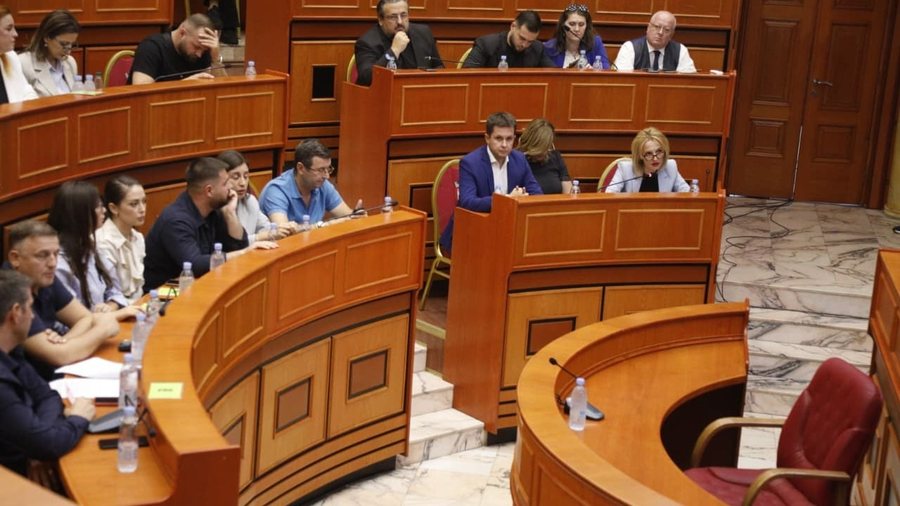
Veliaj is not a small, peripheral, or marginal actor of the majority. He is one of its most important figures, because he is three times more voted for in Tirana, which is Albania in miniature.
After what happened in the Tirana Municipal Council, when the SP councilors voted to dismiss Erion Veliaj, debates would naturally arise over what happened.
Some say that the leadership of the Socialist Party, namely Edi Rama, has abandoned Veliaj and left him alone to his fate. The opposition, on the other hand, with full reason and right, seeks to benefit from this situation, but is hesitant to wage a political battle for Tirana, which in reality is the main battleground of every party in Albania.
What really happened today, in fact, not just today because today you put your stamp on it, but naturally the question arises why the Socialist Party is dismissing Erion Veliaj from his duties as mayor of Tirana?
Beyond the theories that may arise and have arisen, where of course there are also many conspiracy deviants, the issue seems less complicated. The PS, after Veliaj's imprisonment, the official initiation of the indictment and other procedural actions by SPAK, is forced to make a political decision.
A political decision, since in several previous cases, namely the raising of accusations against majority officials, the issue has been resolved with resignation. Meanwhile, on the other hand, the SP has taken a political decision to freeze party functions, in order to show a clear distancing in not politically protecting the official.
Meanwhile, the case of Erion Veliaj is not at all similar to the others, as we are dealing with the second politician after Edi Rama who has received the most votes in Albania, both in terms of number of votes and number of mandates, a full three of them.
In 2013, when the SP had just come to power, there was a criminal case of the General Prosecutor's Office at that time headed by Adriatik Llalla, against the mayor of Vlora, Shpëtim Gjika. Upon opening the case, the SP relieved Gjika of his duties as a member of the party leadership, but the mayor of Vlora continued his duties until the last day, not only of the end of the process against him, but also of the duty, which he handed over to his successor.
In 2014, a year after the indictment was announced, the court declared Shpëtim Gjika innocent. However, after leaving office, he faced legal troubles again, which the former mayor faced personally without seeking political help and today he is a citizen without legal problems, a committed socialist, but politically distanced from the leadership of the Socialist Party, namely Edi Rama.
The Gjika case is a precedent that shows that there is a pattern of bringing charges against a directly elected official, when there is an even more serious charge against him than the one against Erion Veliaj. But that is another matter.
Politically, the Socialist Party, namely Edi Rama, announced that it will face the issue of the Tirna municipality, entering into an electoral battle, announcing the candidate Ogerta Manastirliu. Rama said that we will implement the legal paths to dismiss Veliaj. What happened today is only the first act, and the road is still open and not so easy.
However, politically, the Socialist Party has decided this way, because there has been no resignation of Veliaj from office. He argues that not only is there no reason for him to resign, but he has taken on the responsibility of fighting a legal battle for the accusation against him and the expected political attacks.
Erion Veliaj's resignation, when he is in his term as mayor of the capital, is administratively the easiest step, but politically, if Veliaj had signed his resignation, he would not only have committed political suicide, but on the other hand would have also committed a political assassination against the Socialist Party, a part of which has shown that it stands strong, despite the entire avalanche that has hit it.
Veliaj is not a small, peripheral, or marginal actor of the majority. He is one of its most important figures, because he is three times more voted for in Tirana, which is Albania in miniature.
Of course, this battle within the majority will have its nuances, even its consequences, and here it seems there is much to be expected.
The fact is that Veliaj ended his third term as head of Tirana not with glory, severely hit, but so far he has survived politically, although wounded.
The majority has come up with another candidate for at least the 2 years of transition, such as Ogerta Manastirliu, who according to the first polls, even though she did not have a candidate in front of her, led the popular support with 41% of citizens with the right to vote.
A result that if the elections were held tomorrow, I would declare her the winner. But from the poll to the voting there are many waters to flow and developments to happen, while in the middle there is a campaign. We are at the very beginning now, but the majority has done its part, even though these actions seem to be politically awkward or sadomasochistic. Which in fact they are in some way or many ways.
On the other hand, on the other side, that is, from the opposition, we should have had rapid developments since their telebingo has really fallen. A great deal of work has been opened up for them to revitalize the energies within it, but also to forget the severe trauma of the May 11 defeat.
The new opposition has seized the moment and is pursuing a very active policy. Agron Shehaj's party, which came from the DP, is looking for a common candidate from the entire opposition, while Arlind Qoraj, with an intelligent move, is pursuing his own policy by attacking not Veliaj but the government and the majority.
Meanwhile, the DP, for its part, is not yet approaching a normal identity of a candidate. The two most quoted names that could enter the race, such as Ilir Alimehmeti and Jorida Tabaku, who are also the most voted in the district, have announced that they will not run. In fact, the battle in Tirana is not easy at all, since the capital of Albania has been, with all its components, a bastion of the Socialist Party since October 2000, when Edi Rama was first elected mayor of Tirana.
The DP actually won in Tirana for the last time only in October 1996, with Fatos Nano in prison, with pyramid schemes and the repressive system of the first Berisha, hostile to the West.
In 2011, Lulzim Basha's entry into the Tirana municipality was not a victory but a takeover by force, recognized by all international organizations.
Today, the Socialist Party leads in all administrative units of Greater Tirana, while in the 11 units of the old municipality it is by a deep margin. Recovering the 45-55 thousand vote difference is not a right-wing bread, but it is a political battle that can only be won in a situation of reversal and favorable. Which we are not really in.



Lini një Përgjigje