


 Shkruar nga Skënder Minxhozi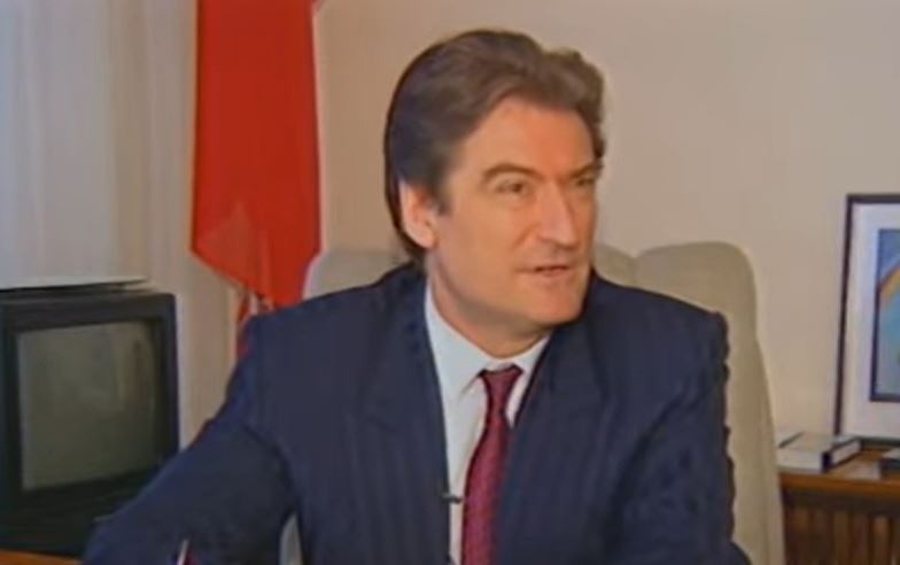
We pressed a button some time 33 years ago to bring the national economy to zero and to sabotage and make a mess of the property of the owners and we are still wandering in the swamps of transition without knowing how to get on the right path of developing democracy and sustainable development.
There is a thirty-year liturgy in Albanian politics, which has ruled intact since 1991. A liturgy that says that when it comes to what happened in this country at the turn of the 80s and 90s and in the decade that followed the collapse of the system totalitarian. According to this concept, everything should be considered absolute good, non-negotiable, almost sacred. The fall of communism as an act is slyly identified with the chaotic processes that followed it. The fall of the dictatorship was undoubtedly a liberating and positive act, but were the economic and social effects that this historical moment produced for Albania in the years that followed?
When it comes to distinguishing the nuances produced at all social levels by the transition from the totalitarian communism of Enver Hoxha to the messy and improvised capitalism of Sali Berisha (92-97), the division becomes deeply ideological. Gone is the cold reason, the calm and objective vision one must have from the height of years gone by. Even today, under Berisha's house, the call, as naive as it is stupid, "Down with communism" can be heard. Are you saying that they don't know that this country no longer has communists, but only good and bad men!
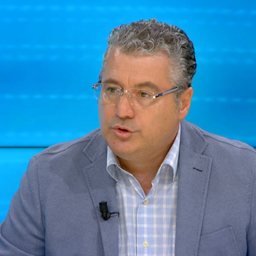
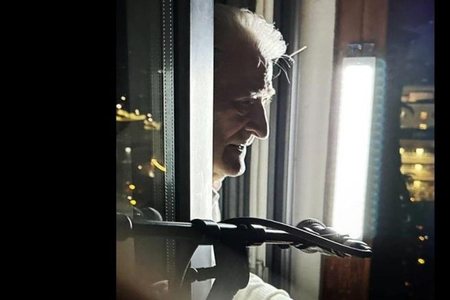
Spartak Ngjela has taken it upon himself to make this distinction, making a public call to investigate the destruction of national wealth in the years 92-96. Ngjela is one of the longest-lived characters in Albanian politics, media and journalism. He is also one of the most independent, direct and controversial politicians and lawyers in the Albanian public square. The personal ordeal spent in the prisons of communism gives him the opportunity and the moral advantage to tell some truths that others do not have the courage to tell openly.
His coming out recently with constant calls for a deep reflection about what has happened to the national wealth after the fall of communism, is a call that should have been heard a long time ago and about which there should be a reflection much calmer and uncolored by the political attitudes of the day or by ideologies.
This appeal calls for more clarity after 3 and a half decades since the fall of communism, about what we have done to our national wealth. It is an appeal that pushes us and motivates us to have a different approach to what we have done good and bad in the freedom and democracy we entered after 1990.
The national wealth is the product and summation of decades of efforts in many economic and social systems, and not only in the communist one or today. It is the historical inventory of what we have created and sacrificed in every time and era and is not related to the merits of a political caste such as that of totalitarian communism.
The national wealth is the result of the maturity and investment of the gigantic efforts that the Albanians have made for affirmation and progress since the moment they created the state, but even earlier than that. Therefore, destructive acts such as those that brought with them the 90s for Albania, require a reflection of everyone, away from emblems and party colors. More responsibility to understand what we did wrong in the past, so that we don't continue doing it wrong today and in the future!
In a narrow sense of the post-communist transition, the behavior with the economic fund inherited from communism is directly related to the irresponsibility that we are still showing today with everything that is considered public. The dominance of the private over the public is a material proof of the concept that everything common has a stamp on it, is bad and harmful, therefore it must be destroyed, alienated, privatized (preferably at the lowest price, for the closest friend )! The left and the right share identical options in this respect, competing to see who is more "capitalist". A banal theater of false "Occidentals".
The artisanal government of the years 92-96 caused many economic assets and huge investments in education, health, agriculture, mineral and oil extraction, infrastructure, etc. to disappear from the face of the earth. It offered us the pyramids while promising us the freedom of the market, it gave us the chaos of '97 while promising us a liberal democracy that offered opportunities for all.
This produced an economic and social system where there is almost nothing public. A system where the state only issues pieces of paper, licenses and rights over the territory, services, economy, environment and others. Giving up the irreplaceable role of the referee who ensures compliance with rules and laws, but also who processes the vision of development and progress for the whole country.
Today, millions of euros are being invested in the construction of greenhouses, planting saplings, land management, drainage and embankments, but it is forgotten that once upon a time in communist Albania, the Albanian people with their extreme efforts, starting with schoolchildren, students, volunteers and ending with political convicts and ordinary prisoners have built terraces and irrigation works with their own hands, which for the size of Albania were simply pharaonic.
All this infrastructure after the year 90 either disappeared, or was alienated by being labeled in the most idiotic way as "communist"!
Today we have a lot of expectations for Shpirag oil, we still talk a lot about Albanian chrome and even about the hydrogen that is found deep in the Bulqiza massifs, but even these assets were resized (you know, they were robbed!) after the 90s. Where did the Albanian coal go? Where is the chrome divided and torn apart by local mafias today? How has oil been used in the last three decades, with the predatory concessions that gave 1 lek and took 9 to take it abroad?!
In a decade of collective stupidity, starting in 1992, the country's industrial base was looted in the most brutal way. Everything that was built was given the most vulgar epithets, did you say that the irons had party money in their pockets! No one thought even for a single moment how this large fund of industrial and agricultural objects could be modernized even partially.
We thus returned to a nation that was supported by immigrants and usury, and later by betting and gambling, while we destroyed the factories and plants of this country, leaving people unemployed, and melting all this great national wealth for scrap.
The concept of shock therapy, as it was called in the 90s by the disciples of the year zero, does not extend only to the decade of Berisha the First. It has been and is a distinctive feature and way of thinking, more or less, of the entire political class, left and right. A political class that for its own propagandistic reasons demonized everything was inherited from the past.
Even today's socialists have followed the paradigm of decolorization, fleeing to a past where even the iron bars of the factories and the canals on the side of the fields were "paying" as if they were members of the ALP Political Bureau.
We pressed a button some time 33 years ago to bring the national economy to zero and to sabotage and make a mess of the property of the owners and we are still wandering in the swamps of transition without knowing how to get on the right path of developing democracy and sustainable development. This is the moral of our 33-year-old fable.



Lini një Përgjigje