


 Shkruar nga Enver Robelli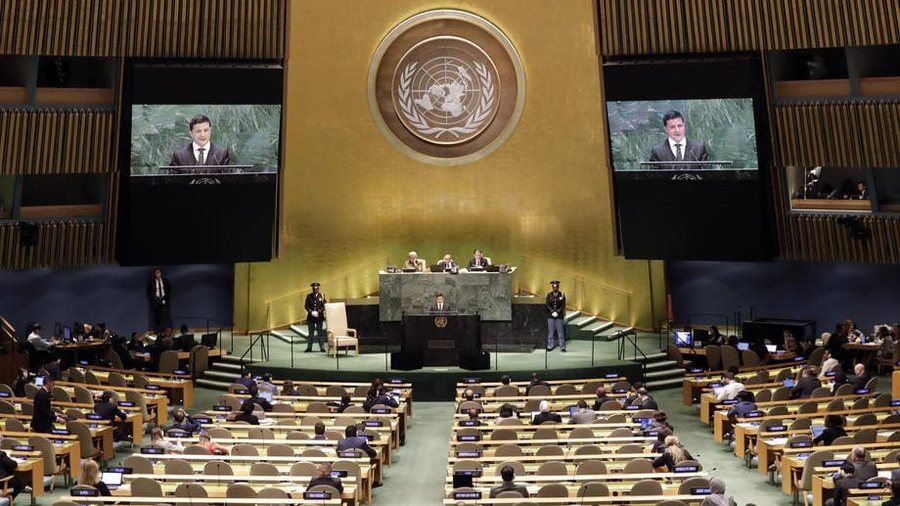
The resolution is a small victory for the victims of the Serbian genocide. The reactions that will follow in Serbia, in the Serbian entity in Bosnia and in pro-Serb circles in Montenegro will show how important the adoption of this Resolution was - and how far Serbian society is from facing its dark past.
What do the Serbian propaganda minutes in New York and a UN Resolution honoring the victims of the genocide in Srebrenica tell us? Those who abstained or did not vote at all deserve more attention than the opponents of the Resolution, among them some Muslim countries for which business with the Serbian regime is more important than solidarity with the Muslim victims in Srebrenica.
1. The cold-bloodedness with which the Serbian president spread a series of lies when he took the floor at the UN General Assembly was disgusting. He said: "We have been protected forever. We are a proud people". This is historical revisionism at its lowest. And denial of the genocide in Srebrenica in front of the eyes of the world opinion. Within a decade, Serbia has ignited four wars - from Slovenia to Croatia and Bosnia to Kosovo. On May 23, 2024, more than 30 years after these wars, the Serbian president with thick propaganda fought against the Resolution that aims to prevent the repetition of mass crimes like the one in Srebrenica.
2. The Serbian president, in a pathetic and hooligan tone, also mentioned the large number of Serbian victims in the First World War. Serbia's role in provoking the First World War is not insignificant. Serbian secret service and Russian circles supported and armed Serbian anarchists in Bosnia-Herzegovina; one of them, Gavrillo Princip, assassinated the Austro-Hungarian Archduke Franz Ferdinand on June 28, 1914. Before the assassination, Gavrilo Princip had tried to come to Kosovo to help the Serbian occupation of Kosovo. The Serbian commanders returned him to the border because he was unwell. The Serbian president also lied when he emphasized the role of Serbia in the battle against the Nazis in the Second World War. The government of Milan Nedić, who was a puppet of Adolf Hitler, was in power in Belgrade. Even Josip Broz Tito tried the anti-Nazi resistance in Serbia (in the Republic of Užice) and fled to Bosnia, because many Serbs sympathized with Drazha Mihajlović's Chetniks.
3. The representative of the United Arab Emirates did not show enough respect for the Muslim brothers in Bosnia-Herzegovina. He said that his country will abstain, that is, it will not support the Resolution, although he said that genocide was committed in Srebrenica. It seems that the numerous investments of the United Arab Emirates in Serbia and the friendly relationship between the heads of this state and the Serbian president are more important than solidarity with the victims of the genocide, with eight thousand Muslims brutally killed by the Serbian forces, which in the 90s - have been actively supported by the current Serbian president. Against the Resolution were China, Russia, Belarus - and Hungary, the only EU member state. It is noticeable that Greece and Slovakia abstained from EU countries, two countries that do not recognize Kosovo; Slovakia has a very understanding government towards Russia. Greece's abstention seems surprising. During the genocide in Srebrenica, a group of Greek mercenaries joined the Serbian forces. Greek journalist Takis Mihas wrote about their role in the book "Unholy Alliance: Milosevic's Greece and Serbia".
Azerbaijan, a Muslim-majority country close to Serbia, did not participate in the vote at all. Israel, East Timor, Somalia, Morocco, Kyrgyzstan, Turkmenistan and several other countries did the same. Cuba and Venezuela, two countries with anti-American governments, were expected to vote against the Resolution. At least Egypt, an important country in the Muslim world, voted in favor of the Resolution. The Embassy of the United States of America in Sarajevo announced that it proudly supported the adoption of the Resolution. Two important states of the Global South such as India and Brazil abstained, while South Africa voted for the Resolution. Albania voted for the Resolution, but the Parliament of Albania has not yet adopted a Resolution on the genocide in Srebrenica, as many countries have done.
Montenegro, North Macedonia, Slovenia, Croatia, Bulgaria, Romania also supported the Resolution, whose text is quite neutral. Not a single word mentions the perpetrators of the genocide (Bosnian Serb forces), nor does Serbia as a country that supported the genocide with logistics, personnel and propaganda. The resolution is a small victory for the victims of the Serbian genocide. The reactions that will follow in Serbia, in the Serbian entity in Bosnia and in pro-Serb circles in Montenegro will show how important the adoption of this Resolution was - and how far Serbian society is from facing its dark past.


Lini një Përgjigje