


 Shkruar nga Ylli Pata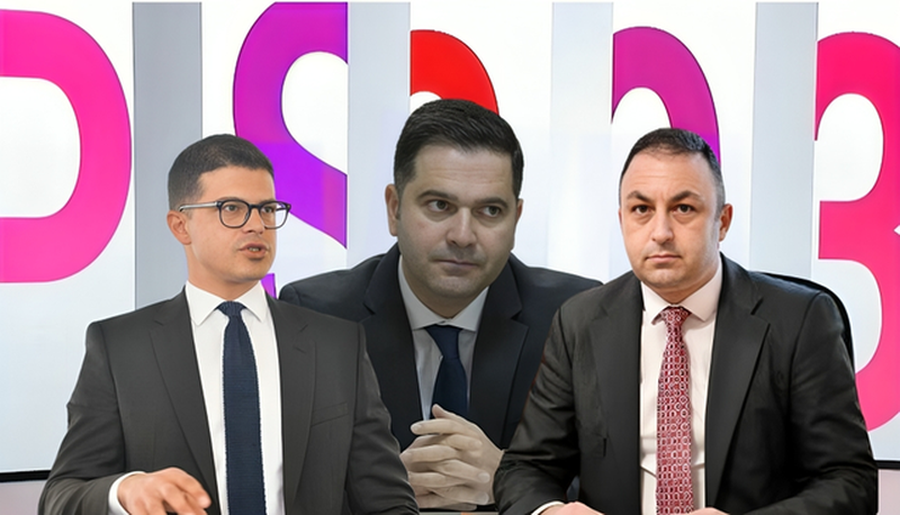
From 2013 until today, the ministers of Edi Rama's cabinet have been changed periodically, bringing in as many new names from the administration or even the universities, up to the political rotation within the political team of the SP.
Except for the case of Taulant Balla, where his move from Interior Minister was not expected, almost everyone was prepared for changes in the government.
A political tradition that Edi Rama has created almost every year before the end of the summer season. He even did some years in July, some in September, and some in December.
From 2013 until today, the ministers of Edi Rama's cabinet have been changed periodically, bringing in as many new names from the administration or even the universities, up to the political rotation within the political team of the SP.
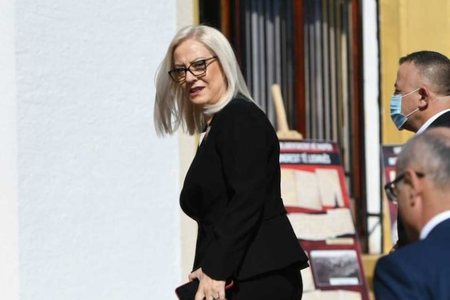
Today, only two women are the "oldest" ministers in the cabinet, but who are also regional political leaders and deputies. Deputy Prime Minister Belinda Balluku, who also heads the Super Department of Energy and Infrastructure, as well as Mirela Kumbaro, Minister of Tourism and Environment.
Meanwhile, before each parliamentary election, Edi Rama has offered a "quasi" technical cabinet, where important departments have been stripped from political figures to be replaced by technicians obtained from their experience in the high administration.
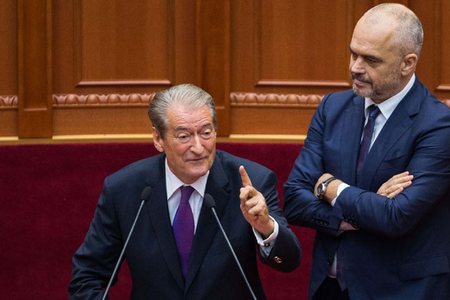
The heated reaction of Sali Berisha's opposition after the changes in the government has been offensive, but more out of inertia than political logic.
Sali Berisha's Democratic Party and its exponents should have played in favor, at least today, for these moves of Edi Rama.
Since, both Sali Berisha and the other exponents, have asked for a "technical government". And in a way, the prime minister has given the opposition a non-political cabinet, especially with those delicate departments where it is required that there are no high-level politicians who move funds or troops.
Thus, the Ministry of the Interior, which is responsible for the State Police, the Ministry of Defense, which has the army, and the Ministry of Finance, which moves money and funds, will be led by experts, without any political experience, or political positions in the dome of the majority.
The tradition that Edi Rama created in 2017, after the May 17 agreement with Lulzim Basha.
However, the frequent frequency of changes and reformations in the government, as well as the surprising way in which Rama carries them out, has created a theatrical environment, which is a development in itself.
However, even here we are not dealing with politics, since the real politics in Edi Rama's speech, that if you add the changes, you see that it is about other movements that are expected to be undertaken.
Starting from the parliamentary group that will appear in the 2025 elections, which in all likelihood will be changed to a large extent. But it is still not known how much this change will affect the political heavyweights, i.e. the political leaders in the districts, who constitute the real political leadership in the majority, but also the integration of new ministers in the new phase that the majority is entering politically.
The tradition of Edi Rama has proven that many of those ministers who entered the government as technicians ended up as first-rate politicians. So Belinda Balluku came to the post of minister not from the structures of the SP, but from the administrative experiences in the municipality of Tirana and the management of Albkontrolli.
Mirela Kumbaro also came as a social contribution from the chair of the University of Tirana, not from the Steering Committees of the Socialist Party. The same goes for Blendi Çuçi, who initially led the drafting of the territorial reform.
Meanwhile, Anila Denaj also came to head the Ministry of Finance, after an experience in managing international financial organizations, or even Milva Konomi who came from Civil Society. All these names are today important political representatives of the majority and have circulated in several circles as deputies or delegates.
Thus, it is not surprising that the new "three musketeers" of the National Security departments, such as Petrit Malaj, Ervin Hoxha and Pirro Vëngu, will be part of the new political team of the Socialist Party tomorrow.
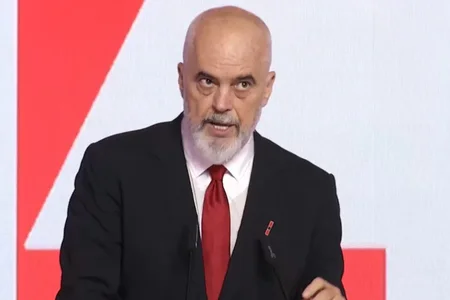
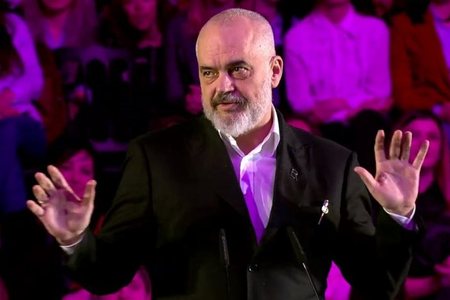
A political trend that was clearly warned by Edi Rama today, who spoke for the first time about an exchange of generations. Obviously using the metaphor of Elena, the girl who opened the congress, but the political message was clearly delivered. Even with an address from where the majority looks to attract new groups or people to place in the central team.


Lini një Përgjigje