


 Shkruar nga Arsim Sinani
The long, mismanaged, and endless transition has left this container rotting from within, without being emptied where it should be: into accountability, institutional cleansing, and real change.
In Albanian political and social life, a recurring pattern of behavior is observed that deeply undermines democratic development and the normal functioning of institutions. This pattern is built on opportunism, envy, and resentment, which do not remain simply individual emotions, but are transformed into the logic of political action and a culture of domination.
Political opportunism emerges when public engagement loses its principled basis and politics is reduced to an instrument of personal gain. Attitudes change according to momentary interest, alliances are built without vision and coherence, while responsibility towards society is replaced by individual calculation. In this climate, public trust is eroded and institutions are weakened, because politics ceases to be a service and becomes a survival mechanism.
Envy deepens this condition by shifting political competition from ideas to individuals. The success of others, instead of being perceived as a social value, is seen as a personal threat. This produces the systematic denigration, sabotage, and exclusion of figures with real potential, impoverishing public life and hindering the construction of meritocratic elites.
Resentment constitutes the most destructive element of this model, because it replaces reason with the punitive impulse. Politics is no longer guided by public interest and dialogue, but by the desire to harm the other. Decision-making becomes an act of revenge, while institutions are used selectively or blocked, keeping society in a state of perpetual conflict.
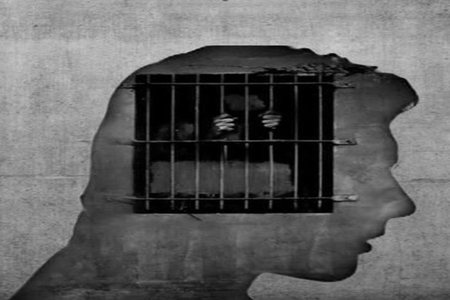
This reality is further aggravated by the involvement in politics of systematically uneducated and unformed individuals. When people without institutional culture, without intellectual formation and without public ethics take power, ignorance does not remain private, but is imposed. Ignorance, endowed with authority, does not dialogue and does not argue; it orders and compels. In this way, ignorance escalates into institutional violence. The law is not applied as a common norm, but is used as a means of pressure, while decisions are made without reasoning and without social sensitivity, producing exclusion, injustice and fear.
In this context, the personalization of power and the absolutization of the individual figure constitute an additional risk to the social order. When the individual is placed above society and decision-making is based on assumptions, rather than on knowledge and responsibility, this becomes a real threat to social stability, order and development. Institutions lose their regulatory function and become instruments of individual will. The absolutization of the individual and governance based on assumptions, rather than on knowledge and institutions, expose society to crises, arbitrariness and political regression. Authority no longer stems from legitimacy and reason, but from imposition and fear.
Albanian politics resembles a container filled beyond its capacity. The long, mismanaged and endless transition has left this container rotting from the inside, without being emptied where it should be: in accountability, institutional cleansing and real change. When a container is not emptied in the right place, the waste ferments, stinks and turns into a public danger. This pollution spreads and takes on social pandemic proportions; its smell is felt everywhere, in institutions, education, media, justice and in the daily life of the citizen.
In a society where development is dictated by ignorance, the danger is not only stagnation, but also moral and institutional deformation. People begin to adopt the habits of those who have money and power, but who lack ideas, thought and vision. Such societies risk recycling violence and constantly returning to zero, restarting history not as development, but as regression.
Breaking out of this model requires a profound cultural and institutional shift. Politics must return to knowledge, education, ethics, and public responsibility, while society must reject the normalization of ignorance, imposition, and anger. Only by emptying the political container and cleaning up the public space can we stop ignorance from turning into institutional violence and build a healthier and more functional social order.
The hope lies in the speedy completion of this transition, so that Albanian society, wherever it lives, can grow and develop freely, with its own thoughts and decisions, and not be guided by someone else's thoughts.




Lini një Përgjigje