


 Shkruar nga Ylli Pata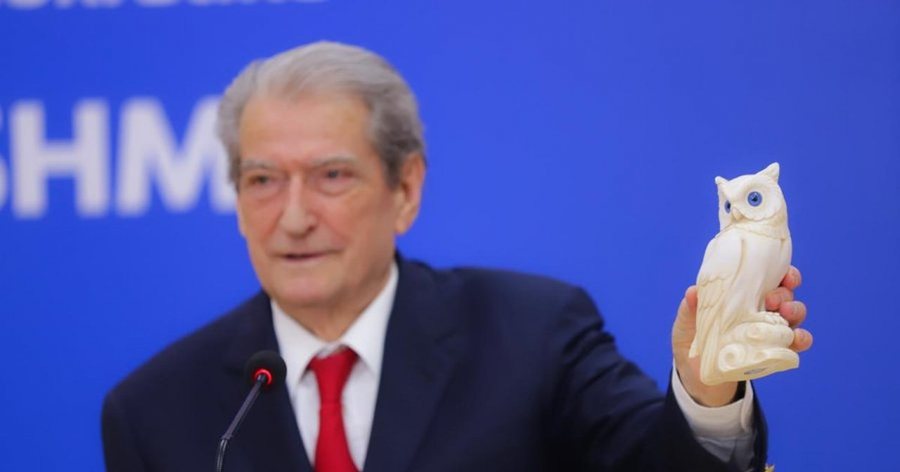
A consistency that has been observed in all elections held in Albania since March 31, 1991.
A political dimension in Albania that has not been given the due weight of analysis or explanation in public opinion is, of course, the almost inexplicable consistency of an opposition electorate in Albania.
A consistency that has been observed in all elections held in Albania since March 31, 1991.
For many commentators, it is strange why, after the civil war that broke out in the DP, as a result of Sali Berisha's declaration of "Non Grata", there was no creation of another important party within the opposition, where those who were in opposition could unite in a formation, and this party would at least have good relations with the West.
In fact, this effort took place, stoically resisting and even winning, in the face of a brutal and massive attack, such as that of January 8, 2022.
That victory also created characters who thought they could use it for their political egos, such as Gazmend Bardhi, Grida Duma, or Ervin Saljanji, who at different stages decided to abandon the group that gave them the political victory over Sali Berisha.
Why did this happen in reality? Because, like Grida, Saljanji, and later Gaz Bardhi, they saw that their strong battle against Sali Berisha did not give them real security for their political future.
After Lulzim Basha, he created a parallel structure that was getting stronger every day, which was not the real leadership of the DP, but the “leadership of branch leaders.” In a word, Basha was more interested in maintaining a direct connection to the territory than in having his own deputies.
Lulzim Basha's logic has a reason, as according to him, he has with him a good part of the branches of the Democratic Party, whose exponents he has also placed on the lists of deputies.
However, to date, this part of the opposition does not appear in the polls, as the main part of the perception belongs to Berisha's DP and its coalition and the "new parties". May 11 will more precisely confirm this configuration of the opposition, which a poll that deals with perception cannot draw in thick lines.
However, the strong consistency of an anti-Rama political vein in Albania is the best news, either for the country or for Edi Rama, in the event that he continues to lead the country.
This political consistency has continued unabated for years, both in perception, discourse, and presence in public debate, namely on social networks, as well as what is very important, the popular vote.
It is precisely this type of vote, which had the greatest political power in the April 25, 2021 elections, that gave rise to the term "opposition people" or "democrats" among many politicians and public commentators.
Turning these terms into a mechanism to gain political and public credibility. Meanwhile, there has been another development within the "opposition people", which does not look good in perception or polls, which was noticed after the publication of the lists.
This problem is called a disappointment of a large part of many characters of the "opposition people", who have maintained a high tempo during the long and not glorious battles since 2013, namely the protests against the US, which took the name for "chemical weapons", the battle of the Theater, the battles in the Tirana municipality, etc., etc.
Many of these characters, who are openly invested in attacking American and European diplomats or politicians, simply for the personal interest of Sali Berisha or Ilir Meta, were not considered at all to be placed on the lists for deputies. The effect of this disappointment does not seem so small, since it was noticed by Berisha and worried him, contrary to the prediction. Therefore, a few days ago in a television interview, he improvised a government cabinet, where he projected the names of the disappointed ones into "his new government".
Beyond the futuristic or utopian aspect of this stance, the problem in this case is not the concrete names of the castle type. But the phenomenon of abandoning characters who have been protagonists of the DP over the years. And it is not a question of Berisha worrying about those who have been protagonists of the opposition in public, because after all, they have given themselves a "fame" and popularity that can serve their careers.
The biggest problem is the people in the territory, some of whom Sali Berisha is treating with humors that range from suspicion to hostility.
It is clear that not placing on the list the character who won the Tirana district primaries, Hysen Kadiu, or even Dashnor Sula, will have real effects on the territory.
Sula, who has been a member of parliament for Peqin since the 2005 elections, that is, for 20 years, has created a personal rapport with the people in the territory. A rapport that is based on access and sympathy with voters and people both in the city of Peqin, but also in the rural area and who belong not only to the DP electorate, but also to the SP electorate, as well as the unaffiliated, who are called the gray electorate.
Berisha fears a domino effect, or avalanche of the phenomenon, that is, the open revolts that Dash Sula has started, or the non-public but even more dangerous ones that the winner of the Tirana primaries has apparently started.
An effect that first gained strength in the elections of May 14, 2023, where some of the democratic leaders in the territory chose without any hesitation to create an alliance with Benet Beci in Shkodra.
An alliance that has likely continued and continues today, and which is seen both in the selection of the SP list, as well as in the selection of people, or even the political sensitivities that the mayor of Shkodra does not forget.
In particular, the effect that Berisha fears has begun to show its signs even before the May 11 elections. Unlike the Socialist Party, which has maintained a generally close and historical relationship with the heads of municipalities or political leaders in the territory, Berisha has historically found this relationship problematic.
This has led, of course, among other things, to not winning the important municipalities of the country. Before Edi Rama came to the head of the municipality of Tirana, the DP won it twice, considering it a political bastion. Meanwhile, he led it for several months with command, respectively from March 1992 to September of that year. But the three mayors of the municipality of Tirana: Tomor Malasi, Sali Këlmendi and Albert Brojka, were politically abandoned by Berisha, and today no one remembers them, although their power and influence in the territory, of course in terms of impression and respect, continues unabated.
The DP held the Durrës municipality until Vangjush Dako won it, that is, until 2007, exchanging it with the PS from time to time. Tomorr Golemi and Arqile Goreja have been two mayors of the DP with great popularity in the territory, both in the city and in the villages around Durrës. The first as a wise and integrity-minded character, the second as a very brave man, respectable and ready to help people. Mr. Golemi never held an important position in the governments or structures of the DP. Arqile Gorea was appointed for a time during the 2005 government as director of the post office, but he never held an important political position.
In Shkodra, the list is very long. From Filip Guraziu to Voltana Ademi. Apart from Lorenc Luka, who has been a deputy, which is the least for a former mayor, or Bardh Spahisa, whose relations with Berisha have been more than political for many years, none of the leaders in the DP territory in Shkodra has received the deserved political reward. This has happened precisely in logic because Sali Berisha did not want to politically strengthen characters who could become a danger to him and his power. Power that without the support of the real army in the territory does not exist.
A few days ago, Edi Rama gave a strong signal in Shkodra, when he publicly praised a current DP MP, who comes from a historically important group of democrats in the territory. Whose support has been very important for the DP and Sali Berisha even in difficult times. If these realities of resistance also waver, Berisha knows that it is useless to continue, however, even though this problem does not have his last name, it has the important stamp of his political guilt over the years.


Lini një Përgjigje