


 Shkruar nga Paolo Rossetti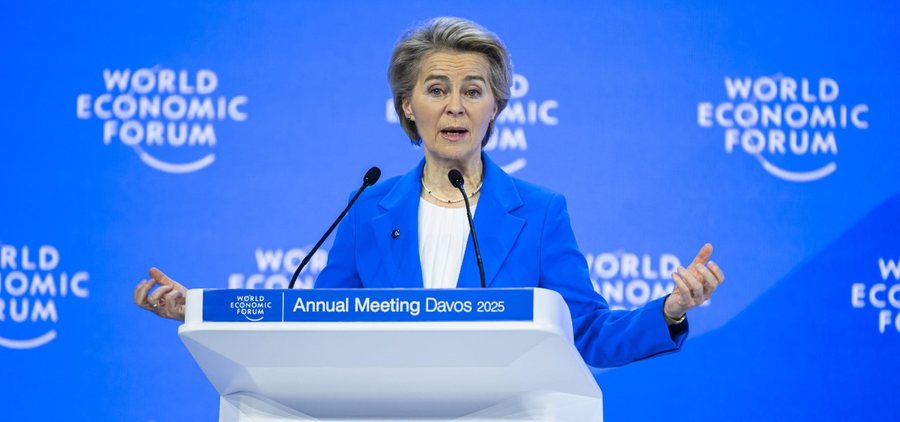
Steps Europe could take in the trade war with the US...
Donald Trump has taken a generally hostile stance towards the EU, promising to impose trade tariffs. Perhaps not on everyone, as he has expressed sympathy for Italian Prime Minister Giorgia Meloni.
Meanwhile, in response, European Commission President Ursula von der Leyen says that Europe should focus on trade with China and India in the future. This approach is also supported by Guliano Noci, vice-rector of the Polytechnic University of Milan.
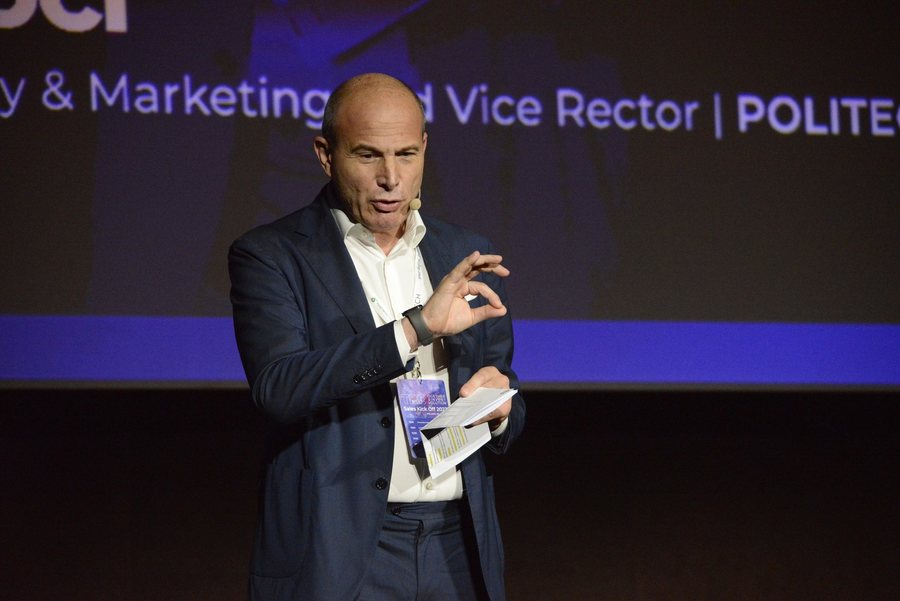
According to him, Brussels should also think about Africa, a continent with a potentially high growth rate. However, to start being taken into account by the US, Europe must change its governance: the current version with 27 member states will never allow it to take the decisions necessary to establish itself among the main players on the world stage. Therefore, according to Noci, a smaller but more cohesive EU is better.
Trump vows to impose tariffs on Europe, as Von der Leyen announces EU is ready to do more business with China and India. Is Brussels flexing muscles it doesn't have?
This is the first positive effect of Trump's return to the White House. The American president is putting the world at a crossroads, and the first positive consequence is this: finally, Europe is starting to understand that it should not only look at the United States. I think the focus towards the East is very positive. As a continent with a trade surplus, we need to diversify our presence in foreign markets more.
In what directions should we look?
We must also turn our attention to the south. We must build strong foundations in what will be the continent with the highest growth rate in the future, Africa, even though we may have already lost the race: China is already very present there.
As Europe, what else can we offer to partners like China and India or others? Von der Leyen is focusing on clean technologies and digital infrastructure. Is this the right path?
As we move closer to China and India, we need to remember that they are countries with a very important critical mass, so negotiations with them will be very difficult. First, we need to promote the fact that we are an interesting market; that without us, China would collapse.
Then we are doing well in some clean technologies (certainly not in photovoltaics, where the Chinese are beating us). Finally, we have products like luxury and agri-food which are very interesting. China is ahead of us in many technologies, but not in others. It is a difficult game, but it can be played, especially if Europe remains united. If there is no unity, we will lose the game with both China and India.
What about Africa, how should we behave?
We can be the engine that contributes to its development, if we do not behave as we used to: we cannot become too sophisticated, demanding "reforms". When the Chinese come to us, they offer their support, and they do not ask for much in return. If you go and ask an African about democracy, this is the best way not to be heard.
Is it necessary to revise the Green Deal to promote greater economic growth for European economies?
The Green Deal needs to be completely overhauled. Environmental sustainability remains a goal, but we also need economic sustainability. And right now, there is no cheaper energy than oil and coal. We need to be realistic, moving the world towards environmental sustainability, but without destroying our businesses. Otherwise, we risk creating an industrial wasteland.
What will relations with the USA be like?
I believe that relations along the Atlantic axis will remain at an acceptable level. Much will depend on what happens with Russia. The United States considers Europe a natural interlocutor under certain conditions. If Russia is strong, for which it still needs a buffer zone, or if Europe grows, it will no longer be a clay pot among iron pots like China and the United States.
Would the economic policy outlined by Von der Leyen be enough to strengthen Europe, and make it a real competitor to the two global giants?
With the current system, Europe can never touch the ball in the global game. To improve, it needs to change its governance, and to do that it may no longer have 27 member states. With so many countries, it shows its weakness: there are so many different interests, which ultimately mean that the European Union represents nothing.
Better a Europe of 10 members and cohesiveness. It would be much more important. We must become aware of the divisions, and restart the project with a process that works on homogeneity, and that does not try to smooth out the differences, a process that cannot happen in the short term./ Adapted Pamphlet from “Il Sussidiario”


Lini një Përgjigje