


 Shkruar nga Luan Rama
Thoma Gëllçi's analysis reveals the alarming reality at RTSH: The platform of the candidate for Director General, Eni Vasili, is a decades-long step back and risks turning the institution from public to governmental. The fault lies not only with the candidate, but mainly with the Steering Council, illegally elected by the Assembly, whose members do not recognize either the legal obligations or the professional responsibility they bear. The real challenge lies in integrity and courage to serve the public and not political interests.
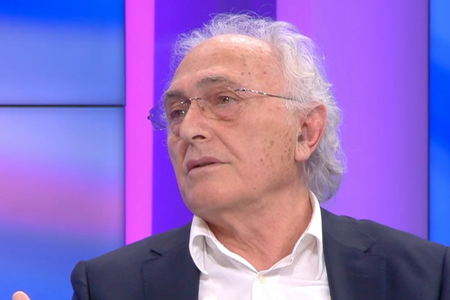
The professional analysis and elegantly argued criticism that Thoma Gëllçi makes of the platform presented by the first-placed candidate in the race for Director General of RTSH in the first round of voting for the new Board of Directors, more than what is wrong with that platform and what he suggests to the promised director, the real value and contribution he offers is in what he, although he does not say, lets it be implied.
The fact that five of the members of the new Board of Directors voted in favor of Eni Vasili's candidacy to be the next director of RTSH, allows us to understand that either the five who voted for that candidacy agree with her platform, which Thoma Gëllçi rightly and with full arguments qualifies as "a throwback to decades", or, in the best case scenario for them, they have not read the platform at all, but have voted for the promised candidate not for the platform, but to justify their election by the Assembly in violation of the law, also because the previous board was dismissed in violation of the law, precisely because it did not elect the candidate of the platform that Thoma Gëllçi criticizes.
Essentially, the problem, or rather the evil in this specific case, does not lie solely in the platform presented by the candidate for Director General.
Ultimately, each of the candidates in the race has presented as much as they know and what they think, in their own judgment, is most valuable in the race to "win" the position of Director General of RTSH. Therefore, if they manage to win even with a platform full of shortcomings and deformations, which not only does not protect what was done well before, but aims to go back and transform from a public entity into a governmental entity, the greatest responsibility lies with the Steering Council.
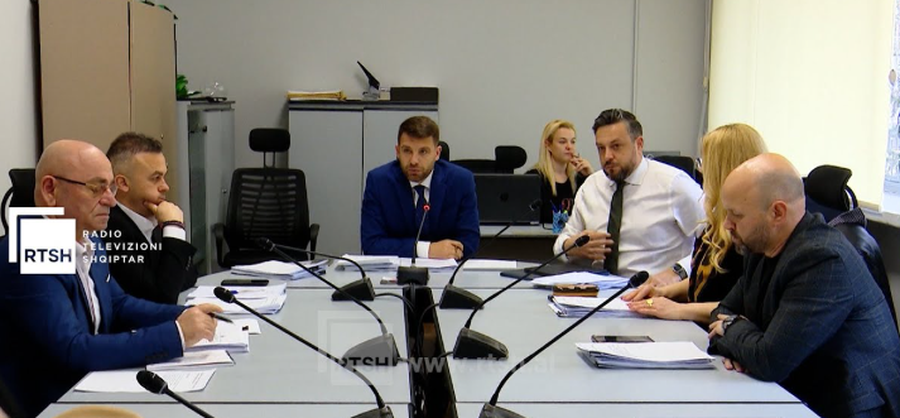
The body that has the legal obligation, namely the responsibility of judging and evaluating the candidates along with the platform of each of them, is the RTSH Steering Council.
The freedom to compete, regardless of the criteria provided by the law, could hypothetically encourage an individual from that half of the population considered a çyryk according to a prime ministerial definition to run. But, if that çyryk manages to win with the council's votes, then logically we can say that we are dealing with a çyryk council!
Since I personally know some of the members elected to the RTSH Steering Council and appreciate what they have done and what they have given in their fields of professional activity, I had the opportunity to talk with them to understand their vision, approach and commitment to furthering the reform initiated by Mr. Gëllçi when he was the General Director of RTSH.
I can say that I have concluded that they love RTSH. They also want its role, authority and weight to increase as the only public broadcasting entity in the country.
But they don't know the law, they don't know the obligations and responsibilities they have. They don't understand the authority and independence that the law gives them to think, judge, and decide according to their convictions.
With the exception of Mr. Beci, who was previously the General Director of RTSH and some others, most do not even formally know the law and the statute of the institution they are responsible for leading. In fact, it will take them time to understand, if they manage to understand, the entirety of the many problems that RTSH has.
The references that Thoma Gëllçi brings and the approach to prestigious models of European public media, the argued objections and the experience that he offers, should help the council to judge and decide with professional and intellectual integrity only in the interest of RTSH, which means only in the interest of the public, so that the public has its own media. For them, what Thoma Gëllçi offers is a valuable help, if they really want to do the task for which they are on that council.
I am convinced that every member of the council agrees with what Thoma Gëllçi writes. However, if we ask the question of whether they are willing to rise to the level of integrity required by exercising the responsibility for which they are on that council, I am afraid to say so. This remains to be proven.
There are two groups within the Council. One was appointed by the majority and the other by the opposition, formally voting for them in the Assembly, but selected not according to the definition of the law. This is one of the problems. But it is essential, because competition has been avoided, competition has been avoided. And for this, the responsibility goes to the Assembly. Because the illegitimacy of the election conditions their decision-making and independence of judgment.
It is unfortunate, but the Parliament has proven that it does not love RTSH. The government, much less so. Otherwise, they would not have mocked RTSH as they did by electing formal councils, which were then imposed on them to appoint directors who have created the situation in which RTSH is today.
Stories of conflicts and flirtations, of quarrels and purchases in the relationships between general directors and chairmen or members of the councils have become an incurable disease of that institution, and without wanting to prejudge, this tradition will likely continue.
I do not want to repeat the multitude of problems that Thoma Gëllçi has exhaustively identified and argued. However, from the platforms presented, I was struck by the lack of attention to language culture and copyright.
In RTSH, the culture of language must be an untouchable cult, the first condition of existence and the "passport" of anyone who enters that temple.
Meanwhile, copyright, respect and protection of what has been and is the intellectual property and assets of RTSH, created from day one until today, must be guaranteed and treated according to EU standards, so that at least RTSH does not become an obstacle to Albania's membership in the EU, between 2027-2030, as the Prime Minister has undertaken.
Some time ago I asked a journalist who works at a private television station why he writes against the RTSH Steering Council, they were just elected and you don't know them?
-I write against them because I want them to understand that RTSH is mine too, he told me. -I want RTSH to be not only the biggest in the country, but also the best, most prestigious, most professional, most trusted, with the best-paid journalists and employees. If RTSH does not become the model to follow, we will continue to remain as we have been until now; servants of the owners who pay us as much as they want and when they want. I want RTSH so that tomorrow I have the right to tell the owner; I want the working conditions and salary that RTSH has. If you do not fulfill them for me, I will leave you in good health because I will go and work at RTSH.
So far, the opposite has happened. The challenge is there. RTSH needs people who love it. They love it to serve it by reviving it, so that it belongs to the public and is at its service based only on professionalism and the sanctity of the truth./ Pamphlet



Lini një Përgjigje