


 Shkruar nga Ylli Pata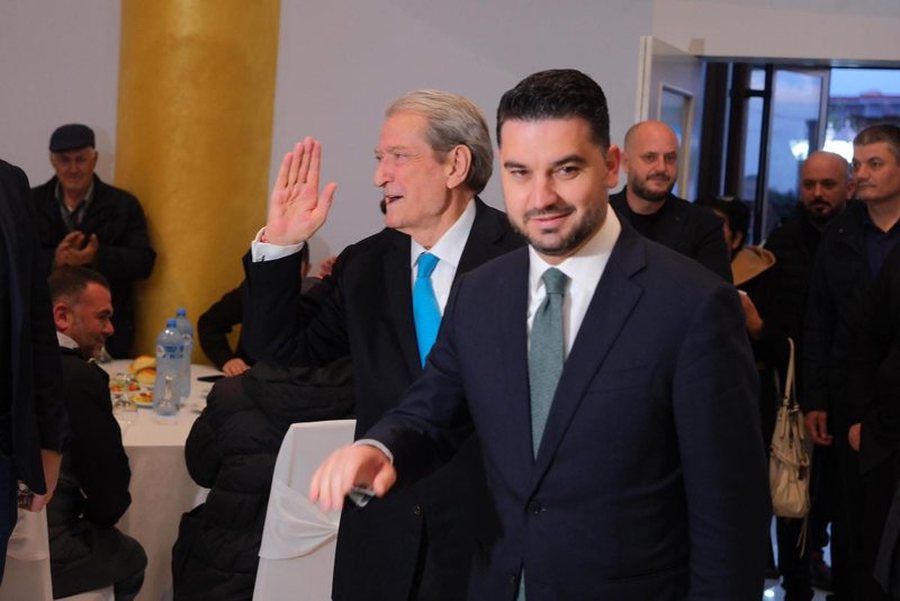
Qose's stances are a serious development, as in essence, the mayor of Kavaja has opposed the entire political substructure of the opposition strategy.
The statement of the mayor of Kavaja, Fisnik Qosja, constitutes a serious political development. The mayor is one of the few figures in the Albanian opposition who, in addition to the official ribbon of the post he represents, the red and black one, also wears the mantle of the winner. A mantle that very few in the losing "army" led by Sali Berisha have worn.
Qose's stances are a serious development, as in essence, the mayor of Kavaja has opposed the entire political substructure of the opposition strategy.
He first clearly opposed the policy of boycott, and non-recognition of political reality. Qosja says that the DP should be part of all political developments in Parliament, including important reforms.
"We must participate in all reforms, in justice, territorial, parliamentary. A political party must be a participant, because if you are not a participant, then you are in vain. A team that does not play on the field will not be called a team. You have to play on the field, then you play well or badly, that is judged by the citizens, but you have to play", declared the mayor of Kavaja, in an interview on A2.
A very strong stance and, in its essence, an alternative to the one offered by Sali Berisha's opposition. Qosja, this stance is not only in words, but with concrete actions. He participates in almost all meetings of Prime Minister Edi Rama with the heads of local government. We have seen him with the Minister of Tourism, Mirela Kumbaro, in the tourist areas that his municipality includes, as well as in other activities together with the central government, which is controlled by Edi Rama's socialist majority.
For this, Qosja has no fear or complex, but gives his opinion openly, being a participant mandated by the citizens who elected him.
What is even more important is that his behavior, that is, his "formal" manner, is completely within the norms of civil etiquette. Without theatrical effort, nor any signs of showing gritted teeth or a frown. On the contrary, the mayor of Kavaja is generally cheerful, as befits his nature as a "middle-class Albanian".
But today's development that bears the name of Fisnik Qose does not end here. He has criticized the way Sali Berisha has chosen the deputies, saying that they should have been the candidates who won the primaries. On the other hand, he says openly and bluntly that the DP needs new figures.
Meanwhile, in addition to the elaboration of the "debate" argument within the DP and the surgical presentation of problems, there is a snag in the environment of these developments.
In addition to the mayor of Kavaja, who is a person with public and political authority, Ervin Saljanji also mentioned the "change" argument after his release from prison. Meanwhile, other voices in the DP, starting with Myslym Murrizi, etc., have been even more vocal and harsh in their criticism.
In other words, in the political cosmos of the Democratic Party, there is no shortage of different voices, which in the logic of the opposition are freer to express themselves, since they have nothing to lose.
However, even from a rhetorical point of view, this discussion is very important, as it presents us with a completely different perspective from the panelists who support Berisha, who strongly oppose the continuation of the water hammer in the mortar.
But beyond expression and speech as the primary power in politics, detached statements may remain a tickle for the numb body of the Albanian opposition.
The presentation of arguments and ideas can be effective if they are addressed where they need to be and accompanied by political action, otherwise they create even more disappointment and pessimism.
The logic used these years, that the fault lies with the doctor's next dolphin and not Sali Berisha, has led the DP to the state of the sick man of the Bosphorus before the fall of the Ottoman Empire.
To resurrect it, a true "Qemalist" revolution is needed, to establish a true European republic in the former building of the Central House of the People's Army. Neither the followers of "Abdulhamit" nor the Young Turks can do this, a Mustafa Kemal is needed, even without a mustache.


Lini një Përgjigje