


 Shkruar nga Annalisa Camilli
The European Parliament has approved a new regulation on the expulsion of migrants, sparking fierce debate and accusations of human rights violations. Although the Italian government sees the decision as a green light for the pact with Tirana, legal experts raise serious doubts about its legality.
On June 17, the European Parliament finally approved the new expulsion regulation, with 418 votes in favor and 218 against. The scene that accompanied this moment was unprecedented.
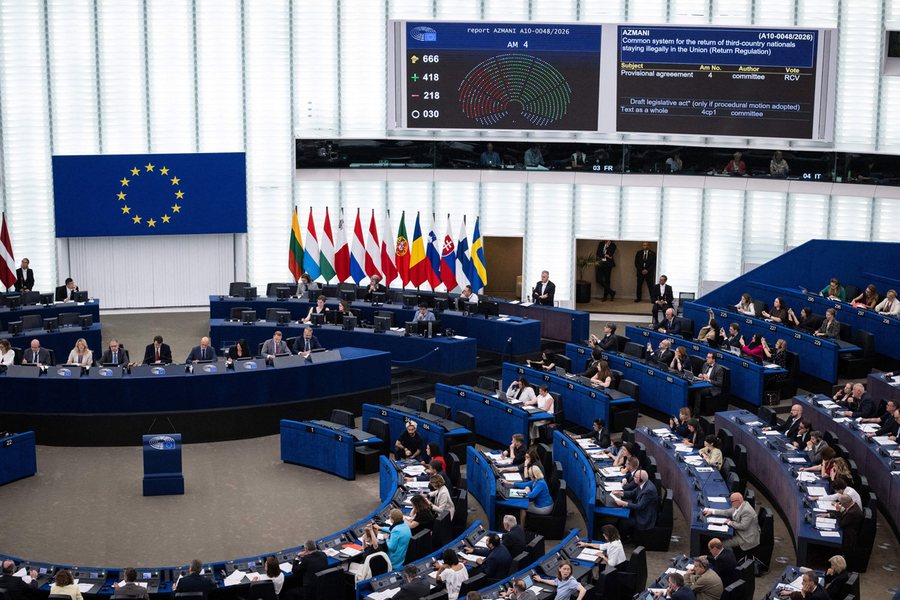
From their seats, some far-right MEPs burst into celebration, chanting the slogan: “Send them back.” Other MEPs responded by shouting: “Shame on you!”
However, the choirs did not stop there, but were recorded in a video that spread rapidly online. The adoption of this regulation was made possible thanks to an alliance between the radical right and popular parties, but this decision was, above all, a triumph for the radical right, which has been pressuring the implementation of such policies for years.
This measure gives authorities the right to detain migrants without proper documents for up to two years, as well as transfer them to centers set up outside the borders of the European Union, which human rights organizations call "human rights black holes."
The regulation also paves the way for the implementation in Europe of immigration control methods similar to those used by the ICE agency in the United States.
The reform was sharply criticized by human rights organizations, including Amnesty International, which called the project "absurd, cruel and discriminatory."
Meanwhile, 16 United Nations experts have pointed out where these new norms risk violating international human rights conventions.
On the other hand, many people welcomed the news with euphoria, especially the Italian government, which saw in this project a green light for the extraterritorial center built in Albania, based on the memorandum of understanding signed with Tirana on November 6, 2023.
However, some experts have pointed out that although the political victory of governments like Meloni's cannot be denied, which imposed their vision on immigration on their European partners, the centers in Albania may still remain dysfunctional.
They are criticized for continuing to remain empty, unused, and costing millions of euros, while contradicting the fundamental norms of the Charter of Fundamental Rights of the European Union.
“Norma e miratuar nuk ka precedent në historinë e Bashkimit Evropian, sepse autorizon një shtet evropian t’u dorëzojë vendeve të tjera personat nga të cilët dëshiron të lirohet, duke u përpjekur të shmangë çdo përgjegjësi juridike sapo të përfundojë operacioni i dëbimit. Duke pasur parasysh se marrëveshja mes shtetit evropian dhe atij jashtë BE-së do të bazohet thjesht te pazari për shumën financiare, këtu duhet të flasim hapur për një formë të shitjes së qenieve njerëzore”, thotë Gianfranco Schiavone, jurist dhe president i organizatës ICS.
Sipas Schiavone-s, rregullorja e re është e paligjshme, pasi bie ndesh, për shembull, me Nenin 5 të Konventës Evropiane për të Drejtat e Njeriut (KEDNJ). Nuk mund t’u lihet në dorë marrëveshjeve dypalëshe midis shteteve evropiane dhe atyre jashtë saj privimi i lirisë personale të një shtetasi të huaj, pa specifikuar çështje jetike, si kohëzgjatja maksimale e ndalimit, e cila rrezikon të ndryshojë sipas marrëveshjeve që nënshkruan secili vend.
“Po ashtu, çfarë ndodh nëse dëbimi i dikujt drejt vendit të origjinës nuk realizohet dot nga vendi i tretë ku ai u dërgua me forcë? A do të lirohet ai dhe a do të marrë një leje qëndrimi në atë vend që ka bërë marrëveshjen, apo do të mbetet pa asnjë status juridik të rregullt, duke u hedhur de facto sërish në tregun e madh ndërkombëtar të trafikut të qenieve njerëzore?”, pyet Schiavone.
Një tjetër element paligjshmërie është trajtimi i ndryshëm me të cilin do të përballen njerëzit e ndaluar në vendet e treta, në krahasim me ata që mbahen në qendrat e dëbimit brenda territorit evropian.
Por, pavarësisht këtyre shkeljeve ligjore të normave të reja, sipas ekspertëve kjo rregullore nuk do të thotë automatikisht dritë jeshile për protokollin Romë-Tiranë.
Sipas Schiavone-s, protokolli me Shqipërinë - ndaj të cilit rëndojnë tri kërkesa për vendim paraprak përpara Gjykatës Evropiane të Drejtësisë (një për çështjet e azilit dhe dy për përdorimin e qendrës së dëbimit) - bazohet në idenë e gabuar se një shtet mund të kryejë jashtë territorit të tij, por nën juridiksionin e vet, procedura që rregullohen nga e drejta e BE-së, siç janë dëbimet.
Prandaj, që qendrat të funksionojnë në përputhje me rregullat e reja, Romës do t’i duhej të nënshkruante një protokoll krejtësisht të ri me Shqipërinë.
“Nuk e dimë nëse Shqipëria do të pranojë apo jo një marrëveshje me Romën për të marrë përgjegjësi juridike për një pjesë të të dëbuarve nga Italia”, shprehet Schiavone.
“Mendoj se një vendim i tillë është mjaft i vështirë për qeverinë e Edi Ramës, e cila tashmë është e mbytur nga protestat për resortin luksoz të paralajmëruar nga dhëndri i Trump-it në lagunën e mbrojtur të Vjosa-Nartës.
"At the moment, neither Italy nor any other European Union country has any active agreement or pact with a third country to manage deportation centers outside the EU and the legal obstacles to these future agreements are simply too great," he concludes./ Pamphlet from "Internazionale"








Lini një Përgjigje