


 Shkruar nga Eduard Zaloshnja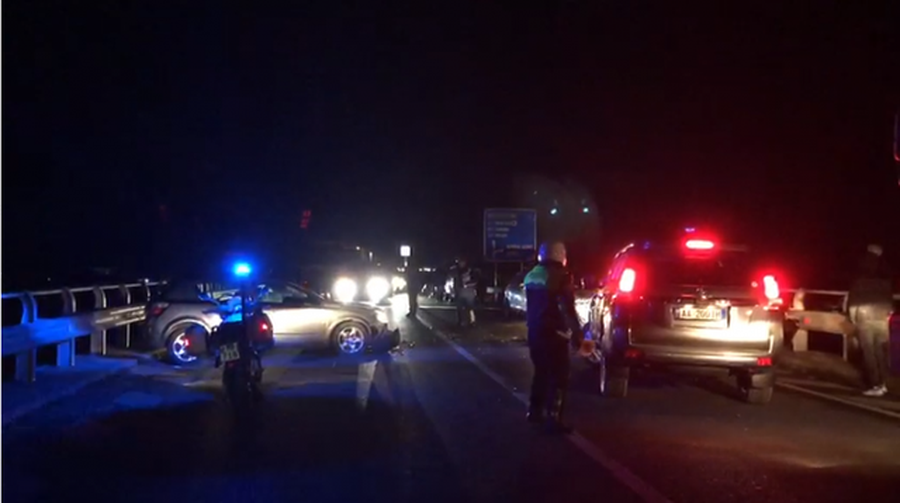
It is understood that the most serious effect for drivers who do not follow the Road Code is when they die or are maimed in road accidents!
Traffic Police activity has increased significantly in recent years, especially after the introduction of advanced technological equipment. It is understood that the aim of introducing these devices is to discourage violations of the Highway Code, and therefore, to reduce road casualties.
The current Highway Code is known not to have been invented in Albania (also, neither the technological devices). For every article of the code that we have adopted from other countries, dozens, if not hundreds, of statistical-economic studies have been conducted in the world to measure their effect.
The most significant (but lightest) effect for motorists is the one that directly affects their wallets, through fines for violations of the Highway Code. Thus, only in the previous week, 9,600 fines were imposed in Tirana. While years in all Albania, about 850 thousand fines were imposed by traffic policemen. Among these fines, about 16% were for wrong overtaking, about 14% for disobeying traffic signals, about 10% for speeding, about 8% for wearing a seat belt, about 6% for using a mobile phone at the wheel, etc., etc.
It is understood that the most serious effect for drivers who do not follow the Road Code is when they die or are maimed in road accidents!
The news about such accidents is painful for every Albanian who hears/reads them, but the pain of these accidents can be felt deep in the soul only by those who lose family members or relatives. It can also be deeply felt by all those who, as a result of road accidents, lose a hand, an arm, a leg, or who suffer trauma with long-term consequences for their health.
Beyond the spiritual and physical pain, road accidents cause a significant economic cost to the individuals of the society. Because every accident is accompanied by the cost of the traffic police going to the scene, the cost of transporting the injured to the hospital, the cost of treatment/rehabilitation, the damage caused to the vehicles, the traffic delays that cause loss of time and fuel, with the loss of the ability to produce material goods, as well as with various administrative expenses.
Until today, due to the lack of detailed data, no economist has been able to estimate how much road accidents actually cost the Albanian society. And it will probably be many years before such data becomes available to economists. Meanwhile, a rough estimate can be made by adjusting the costs of other countries according to Albania's conditions. For this purpose, one can use, for example, a study about the economic cost of road accidents that I conducted for the Pacific Institute for Research and Evaluation, according to which a road accident costs the average American individual/society about 78 thousand dollars ( at the current dollar value).
In order to convert this cost into a figure close to Albania's conditions, some statistical adjustments are necessary. First, these adjustments should take into account the ratio of dead / injured / uninjured in accidents, which in Albania, unfortunately, is significantly skewed towards deaths and injuries. Second, adjustments must take into account differences in the cost of treating/rehabilitating the injured, which is about 8 times higher in the US. Third, they must take into account differences in the cost of replacing or repairing vehicles, which is about 3.1 times higher in the US. And finally, in order to convert the value of material goods that cannot be produced as a result of injury or loss of time from accidents, the adjustments must also take into account what is the average value of the products or services that an employee produces per day in each country.
After these statistical adjustments, it turns out that a road accident currently costs the Albanian society about 10 thousand dollars on average. Or in summary, the total economic cost of road accidents in Albania is close to 13 million dollars per year.
To reduce the economic cost of road accidents, two approaches can be used. Firstly, it can be aimed at reducing the number of accidents, and secondly, it can be aimed at reducing the rate of injury to people involved in accidents. The first approach requires the improvement of roads and road signs, strict compliance with traffic rules, and a significant reduction in the number of drunk drivers or those using mobile phones while driving. While the second requires the use of safety belts and special seats for children up to 5 years old, as well as the equipment of cars with protective air bags.
Among these measures, some are expensive to implement, but others cost very little. Thus, if all people traveling in vehicles use seat belts, the number of deaths from accidents is reduced by almost 40%, and the number of serious injuries is reduced by 26%. Translated into economic language, this means that the effect on the total cost of accidents would be a reduction of about 28%.
Similarly, if the average driving speed across the country were to decrease by 5km/h, the number of accidents, and therefore their total cost, would decrease by 25%. While a halving of the number of drunk drivers, or those who use mobile phones at the wheel, would affect a 21% reduction in the bill that Albanian society pays for road accidents.
To realize such savings, the government needs to spend on improving roads/road signage, on technological devices that control the enforcement of the Highway Code, and on public awareness campaigns. And these are expenses that are associated with the aforementioned savings for ordinary Albanians, as individuals and as members of society.
The introduction of automatic monitoring/fining devices for Traffic Code violators is a good and cheap step in this direction, which should be followed by an efficient system for collecting fines (so that they play a deterrent role). Public awareness campaign can be another low cost step which should be taken as soon as possible.
While improving roads/road signage requires a long-term and continuous investment...


Lini një Përgjigje