


 Shkruar nga Ben Andoni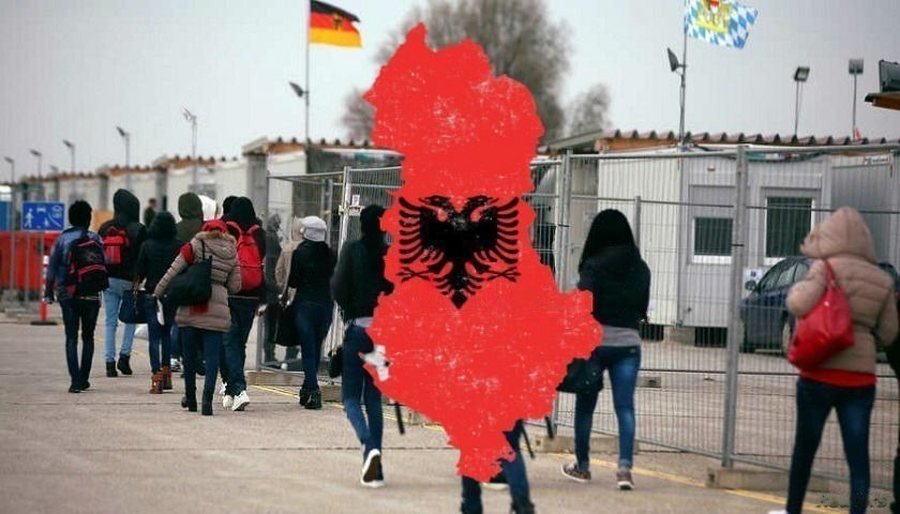
In our country, only party flags and a mass of fearful serviles are raised, cheering the leader who is ten steps ahead! And...Albanians are traveling, politicians are staying in the nest.
A few days ago, an Italian teacher, the oldest among his compatriots in post-democracy Albania, tried to appeal to everyone he met about the frightening drop in the number of students. It is terrible, he affirmed and mentioned the case of Durrës, where he has been teaching for years, for a terrible fall of children in the school benches. The sincere appeal spoke more about the phenomenon of a hemorrhage, which does not know how to stop, and above all the conclusion that he saw no predisposition for a national policy to stop it. It is understood except for the slogans of the rulers and promises, which only those in power can stop! If you know the language of numbers and numbers. In the 2024-2025 school year, about 238,000 children were registered to attend education in the 9-year public system, referring to data from the Ministry of Education. INSTAT at this level of education in the school year 2023-2024 counted 258 thousand students registered in the same system.
With a simple calculation on these data, the number of students in 9-year schools in this season is 7.8% less than last year, or 20 thousand students less (Monitor, 2024). If politicians refer to it as a problematic plan, it seems that few have an idea of what the lack of labor or the injection of this parameter means for the economy. On the basis of the careful statistical analysis of some developing countries, Ruchir Sharma in his book "Rise and Fall of Nations" deduces that the lack of labor force injection is one of the causes of the beginning of major crises in developing countries.
To this is added the lack of production, taking as examples the countries that have climbed the ladder towards the stage of developing countries, added here and with the support of the economy on the continuous and illogical export based on raw materials, without encouraging domestic production. Economists make other arguments, but one thing is clear: the lack of proper policy addressing of the fallout shows not just political short-sightedness, but more than that the profiteering of the moment, which few people concerned about power and the money-hungry (read: the corrupt).
This year's census officially showed the decline of Albanians, while the figures are being anathema by the opposition! Of course, it happened only in the first days, because they are already thinking only about how to come to power. Except the data published by the Institute of Statistics for the twelfth Census in the history of the Albanian state are considered alarming: The resident population was 2,402,113 inhabitants. Twelve years ago, in the 2011 Census, the actual population stood at 2.8 million inhabitants, while the natural increase for the period 2012-2023 is only 88 thousand people (Reporter, 2024).
It's not that the problem isn't being addressed, but we still don't have an alarm. The concern is greater, when you realize that the phenomenon is far from the possibilities of politics, even to the politics that powerful countries are making towards poor ones like ours, in this case. Is democracy or the EU to blame? If the EU is looking for labor force, and for this maybe feel the liberalization of visas for all our countries, why should we blame only our politicians?
Why don't our rulers tell some truths?! In parentheses, a few years ago in Vlora it was reopened after many years of rumors that there would be another exodus and people arrived in the city from all the cities. It seemed ridiculous that after two exodus in the difficult moments of the country, a third was added, when the country was maintaining some kind of political and economic stability. At that time, the German diplomatic authorities denied it and even spoke harshly to those who had created this fable, demanding that the culprits be brought to justice. The paradox was that just a few weeks later, the massive exodus of Albanians would not stop.
Nursing enrollment quotas were at their maximum. It was enough to watch and listen to the recording of those times at the "Goethe" Center for learning German and you were horrified at how far all the psychosis of the escape went? As soon as I finish high school, I will leave, we were told at the time in a report that we made with KAS, every young person we asked. Open. Cynics. Cold. They had no sense of restraint and hope. Their parents encouraged them and everyone planned how to escape an hour ago...from the Albanian curse, where there is no talk of order, law and meritocracy.
Letërsia ka gjetur udhë të tjera dhe na e ka disi lehtësuar qasjen. Bullgaria është një vend, që është po kaq i shqetësuar e mbase më shumë për fenomenin, i cili nuk ndalet dhe sot që gjendet në gjirin e vendeve të BE-së, por intelektualët e saj mbeten vazhdimisht kritikë falë edhe fuqisë së artit. Politologu Ivan Krastev na tregon fabulën e romanit satirik “Misioni Turan” i një autori plot peshë bullgar, Alek Popov, përkthyer edhe në shqip. Presidenti i vendit të tij, për të marrë një mandat të ri dhe për të plotësuar mungesën e qytetarëve të vet votues që iknin, përdori dhënien e pasaportave të qytetarëve që kishin pasur prej kohësh të harruara një lidhje origjine historie me Bullgarinë. Por, të ashtuquajturit bullgarët e rinj, sapo i morën pasaportat, ia mbathën në Perëndim duke i shkaktuar humbje në zgjedhje! Paradoksi e kishte vrarë me aktin e vet presidentin.
Për fat të keq, arti ynë nuk tregon shumë vëmendje për këto gjëra dhe madje nuk është se i trajton bindshëm. Në gjë është e sigurt: tashmë humbja e popullsisë shihet ngado, madje edhe në vetë Perëndimin po kthehet në dhimbje koke. Veçse, ata e zgjidhën dhe po e adresojnë duke e treguar realisht përmes mirëqenies së tyre dhe mbi të gjitha sigurisë dhe rregullit të shtetit ligjor. Nuk duhet të harrojmë se në mungesë të emigracionit në shkallë të gjerë edhe shtetet evropiane të mirëqenies janë të dënuara. “Por qeveritë që mbrojnë kufijtë e hapur janë në telashe në shumicën e vendeve anëtare të BE-së dhe, veçanërisht në Evropën Lindore.
Pra, Evropa ka nevojë dëshpërimisht për emigrantë për të ruajtur modelin e saj social, por votuesit nuk janë të gatshëm t’u hapen kufijtë. Romani na ndihmon të kuptojmë se në një demokraci njerëzit zgjedhin qeveritë e tyre, por qeveritë po përpiqen gjithashtu të zgjedhin njerëzit e tyre duke hartuar ligje për shtetësinë, duke hartuar ligjet zgjedhore dhe duke përdorur praktika deri si mashtrimi dhe shtypja e votuesve. Dhe ndërsa tundimi i qeverive për të zgjedhur ‘popullin’ është një tipar i vazhdueshëm i politikës demokratike në momentet e ndryshimeve dramatike demografike, sociale dhe kulturore, në ndërkohë mënyra se si qeveritë përpiqen të zgjedhin njerëzit e tyre po bëhet e një rëndësie kritike”, referon Krastev në artikullin e tij “Demography and the East-West Divide in Europe” (Demografia dhe ndarja Lindje-Perëndim në Evropë).
In such moments, where Albania is also going through, the politics of migration and diaspora are becoming a central issue in electoral politics and the best immigrant is considered the one who will vote for the party in power. We are still a long way from properly involving the diaspora, even in a country that is facing enormous difficulties for its shrinking workforce. What is clearly seen is that the proper addressing does not take the place it belongs in the rhetoric of our leaders, along with the solution method, as if to surprise the myopic politicians who have started the engines of the election campaign with a very old narrative. Meanwhile, the numbers are scary, and the phenomenon is trending: "Projections estimate that by 2050, Bulgaria will have lost 39% of its population compared to 1989, Bosnia 37%, Romania 31%, Serbia and Croatia 24%, and Albania 25%... Since the period of the fall of Communism and the end of the wars in Yugoslavia, the inhabitants of the Balkans had fewer children and emigrated en masse. This is also favored by the lack of labor force in certain regions of Europe, such as Germany". (The Economist, 2020).
Therefore, I understood well the loud appeal and the fear of the non-response of the Albanian authorities, when the Italian teacher, who travels daily on an old bicycle, told me in front of my face. Except I'm powerless, like many others, before a mountain that won't budge. In our country, only the flags of the parties are raised and the mass of fearful serviles cheering the leader who is ten steps ahead! And...Albanians are traveling, politicians are staying in the nest. (Homo Albanicus)


Lini një Përgjigje