


 Shkruar nga Ylli Pata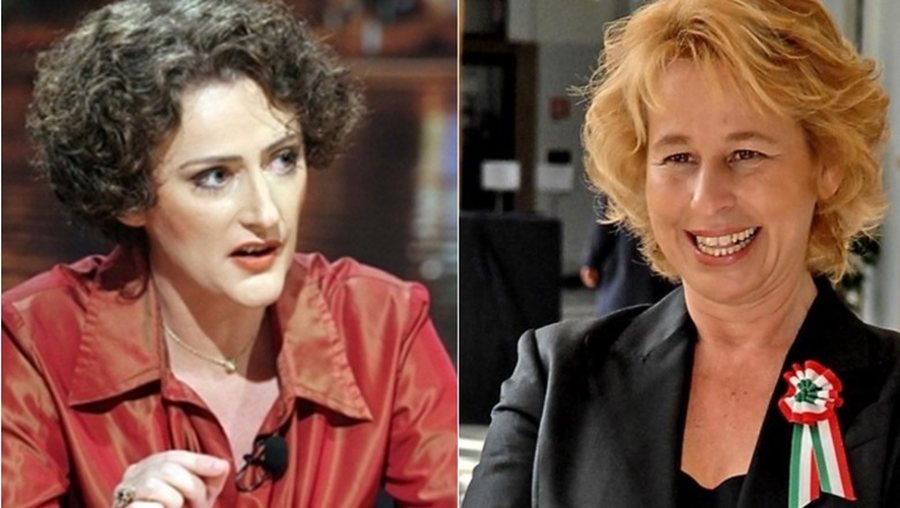
Argita is seeking to integrate to take and protect his father's legacy in the Democratic Party.
Argita Berisha declared last night that she is ready to take important positions in the Albanian opposition. An expected statement after her commitment to the stands of the pulpit on behalf of her father.
Argita, however, was not expected today to enter big politics, since in reality she has entered it for many years. Practically since 2003-2004, when it became the most powerful lobby in the DP, and especially when it came to power in 2005. Many important first-hand figures, but especially second-hand, but more important than the ministers were her lobbying.
In 2006, there was a lot of talk about her entry into the DP dome, seeing her real strength in power. But she answered the journalists' interest in the negative. A similar answer was given by Sali Berisha, who emphasized in bold lines that my children will not enter politics because they have their own professions.
In fact, both Argita and Sali Berisha's son, Shkëlzeni, were by no means immune to political developments in their father's party. They have always had their operating and decision-making lobbies. Even further than active politics, media, business, and above all Albanian justice. Where, according to the USA and Great Britain, there was a significant influence on the appointments of Albanian justice before the reform.
Well, that's another conversation. Politically, Argita is seeking to integrate to take and protect his father's legacy in the Democratic Party. Even if the court approves the re-establishment or the pulpit, Argita takes the reins of the legal opposition in hand.
This is a typical oriental model, clearly semi-monarchist where power passes from father to son or daughter.
But to give a western illustration in this case, it is worth bringing the life experience of the daughter of one of the legends of Italy, the late Bettino Craxi, former prime minister, leader of the Italian Socialist Party, who at the end of his career ended up under corruption investigations.
The model we are talking about is neither less nor more but a Senator of the Italian Republic. Her name is Stefania Craxi. At the age of 64, she started her political career after the tragedy of her father, whom she not only loved very much, but served him until the last day with a spartan devotion. But apart from politics, Stefiania is also an important character in the life of the media business not only in Italy, but also in Europe.
For example, Stefania is also one of the founders of the giant Endemol, which today controls the biggest reality show market since Big Brother. Stefania does not have a high school, although she was excellent at the high school of foreign languages in Milan.
After high school, he entered with passion a media activity in the private televisions of Berlusconi, his father's friend, where he raised the roots of reality, as a format that today brings in billions. We are in 1985, when Stefania is 25 years old and Italy is experiencing the second boom of the Craxian era.
Although the daughter of the most powerful man in the country, who came into armed conflict with the closest Italian-US ally in the Signorella incident, Stefania remained that smart girl but very attached to her father.
Seven years later, Bettino Craxi was under investigation for corruption by the "Mani Pulito" group of Milan prosecutors that destroyed the entire Second Italian Republic.
Craxi, appeared in the process, in front of Antionio Di Pietro. So he went to court, he did not refuse it. And in the process he gave a statement or a question and answer with Di Pietro that even today has remained in the annals of Italian history.
After that trial, Craxi refused to go to prison, like many of his colleagues. With the help and suggestion of his friend, the former president of Tunisia, Zine El Abidine Ben Ali, he moved to the picturesque city of Hammamet. It is said that Gaddafi also offered asylum to Craxi, but he did not accept it.
In Hammamet, Craxit gave you a large villa, as well as a group of National Guard policemen guarding it. But Stefania took care of her father. Bettino Graxi had suffered from high-grade diabetes, and what's more, he didn't wear a shirt at all. He ate pasta and Arabic sweets secretly without end.
Stefania served as a secretary in the full sense of the word, also with the desire of the father who gave his daughter a high-level know-how that constituted a university. However, Craxi's drama was serious, he died of diabetes in 2000, as a result of refusing to be cured in Italy. And Tunisia had a health level like Albania of those years.
The great director Gianni Amellio, who made L'America for Albania, also made the great film Hammamet dedicated to Bettino Craxi. With a top-notch Pierfrancesco Favino, the film is more than an author, it is an artistic documentary.
Craxi, in conclusion, did not go to Italy simply because he did not want to do prison there, after he was convicted, but he was the first to appear at the prosecutor's office and in court.
The death of her father, especially in tragic circumstances, left a trauma in Stefania, who then dedicated her whole life to clearing her father's name. They considered him "the biggest thief of politics". She founded the Craxi Foundation, entered politics and continued her Endemol project with her second husband, who also took over the investment.
Today, 24 years after her father's death, Stefania is an important politician, although not like her father. In a way, she tried to make him proud, defending what she believed to be the good of Bettino Craxi. There are many who oppose and criticize her, but in any case, today she has become a longer-lived politician than her father's legend.



Lini një Përgjigje