


 Shkruar nga Romeo Kara
In reality, many of those who are declared “enemies” are the most honest voices in society: those who dare to speak out, to challenge, to demand accountability. In a healthy system, these individuals are not denigrated, but are heard and respected....
1.
In Albanian politics, but also beyond, it has become almost the norm that every critical voice, every different opinion, every opposition to the next leader is faced with a serious accusation: “treason to the nation”. This label is not simply an insult, but a powerful instrument of intimidation and discredit. It is erected like a wall to stop any debate, to curb any critical reflection, to declare “enemy” anyone who confronts an authority, even when the latter is clearly in the wrong. In this treatise we will examine how this label has been used as a political weapon to preserve power, how it harms democracy, and why, in fact, it is a patriotic act to criticize injustice, not to hide it for the sake of the leader’s ego.
2. Using the word "traitor" as a political weapon
The label “traitor” is one of the most serious accusations that can be made against someone in a society, especially in a society that has gone through painful historical periods where betrayal had serious consequences. In totalitarian dictatorships, such as the communist one in Albania, this term was used to legitimize criminal prosecutions, imprisonments, exiles or even shootings. In fragile democracies, this term does not bring physical shooting, but moral and social “murder”. Politicians who feel threatened by the loss of power or by the discovery of their mistakes, use this weapon to create divisions: “I represent the nation, whoever is against me is against the nation.”
We have often seen examples of this rhetoric in Albania, where opposition members, journalists, activists, or former collaborators who have split from the ruling party have been publicly declared "traitors to the nation," "sellouts," and "internal enemies" simply because they dared to say, "I disagree."
3. Freedom of thought as the foundation of democracy
One of the main pillars of any democratic system is freedom of thought and expression. This right is enshrined in the Constitution of the Republic of Albania, Article 22, as well as in international documents such as the Universal Declaration of Human Rights (Article 19) and the European Convention on Human Rights.
The freedom to think differently is not a luxury, it is the foundation of citizenship. If critical thinking is faced with the label of "treason," then we no longer live in a democracy, but in a silent regime where fear and blind obedience replace reason and honesty.
4. When leaders are themselves in the wrong
No man, no leader, no government is infallible. Democracy exists precisely to correct mistakes, to limit the abuse of power, and to maintain balances of power. When a leader labels his critics as traitors, he is not protecting the nation – he is protecting himself.
In reality, many of those who are declared “enemies” are the most honest voices in society: those who dare to speak out, to challenge, to demand accountability. In a healthy system, these individuals are not denigrated, but are heard and respected. As Vaclav Havel said: “Hope is not the conviction that things will turn out well, but the certainty that what you are doing makes sense – no matter how it turns out.”
5. False Patriotism vs. True Patriotism
One of the greatest deceptions in political history is the equating of the leader with the nation. “Whoever opposes me, opposes Albania.” – this is a dangerous thesis that destroys the concept of true patriotism.
Patriotism is not supporting the wrong leader for the sake of the party. Patriotism is defending the truth even when it hurts. Helping the people not to fall for deception. Being a voice of conscience. This is the patriotism of Socrates who accepted death in the name of truth, of Abraham Lincoln who fought for the dignity of every human being, of Mandela who criticized injustice even from prison. A patriot is one who refuses to remain silent when he sees injustice, even if he is labeled as an “enemy.”
6. Risks to society
The systematic labeling of criticism as “treason” creates a climate of fear and self-censorship. Citizens stop thinking, the media stop reporting, intellectuals stop speaking. Society turns into a body without a brain. This happens because when you fear that every word can be interpreted as an “attack on the nation,” it is better to remain silent.
In such a society there is no progress, no development, no justice. Corruption, the arrogance of power, social polarization grow. Democracy dies not with noise, but with silence – the silence of those who dared not speak.
7. Conclusion – Call for reflection
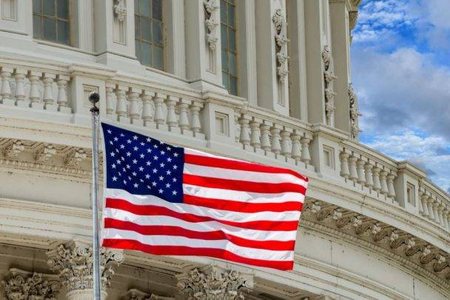
It is time to reflect deeply as a society: Do we want a country where only one opinion is allowed? Where only one person is a “patriot” and the others are “enemies”? If we say no, then we must firmly defend the right to think differently. We must demand that our leaders not cover their failures with the national flag, but face criticism with ethics and prudence.
A traitor is not someone who demands accountability. A traitor is someone who hides the truth for their own benefit.


Lini një Përgjigje