


 Shkruar nga Bardhyl Çipi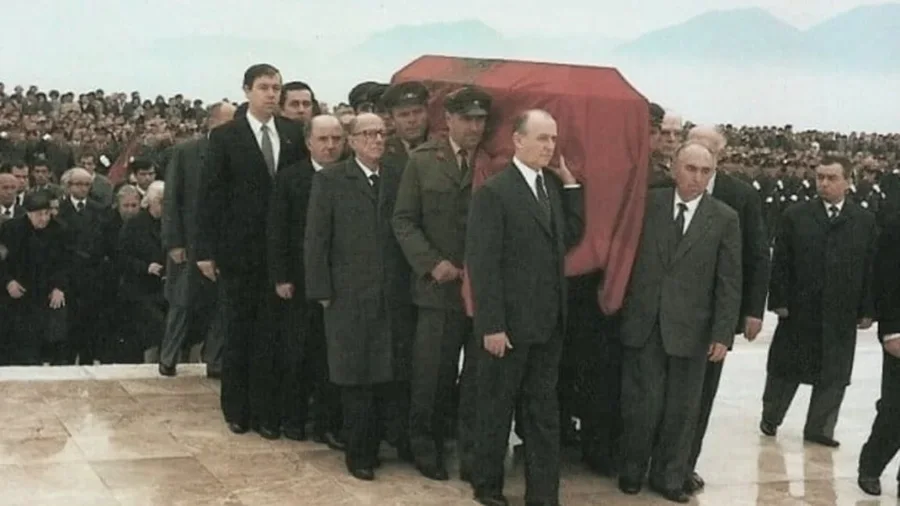
A sheet of lead, quite thick, was discovered under them. It surrounded the coffin from all sides, in the form of a hermetically sealed case.
The exhumation of the corpse of Enver Hoxha
In the forensic examinations, a special place is occupied by the exhumations of corpses of previous deaths, which can be carried out for various reasons, primarily for the examination of corpses, for deaths that are suspected to have resulted from murders, which have not been examined before, or when the first examination was seriously flawed, etc.
But exhumations can also be carried out for other reasons that have nothing to do with forensic medicine, for example, when cemeteries or specific graves will be transferred for different reasons.
One such case is the question of the exhumations carried out on May 2-3, 1992, in the Cemetery of Martyrs of the Nation in Tirana. They were in fact quite ordinary actions, as happens in the transfers of cemeteries.
Besides, this action of the democratic state in the cemeteries where the heroes, martyrs and most prominent people of our country rest, was carried out to remove from them the grave of the communist dictator and those of his main collaborators, who did not deserve the honor of they stayed there, because of the brutal persecution for over 45 years, which they had done to the Albanian people.
For this reason, the Municipality of Tirana, which organized and directed the transfer of these graves, was very careful to avoid any opposing reaction of fanatical communists, supporters of the previous regime.
Due to the experience I had in performing forensic autopsies, I was assigned together with the City doctor, to medically monitor the progress of their performance. To increase the accuracy of our actions, we also hired a criminal expert.
Unfortunately, the criminalist, who was appointed as a member of the group of specialists who would participate in this action, with the task of taking the relevant photographs and preserving them, he announced them. Not only that, but in the writing made in the daily press in the 2000s, which includes the photographs of the forensic expert, this event is presented in a distorted way, even defaming.
Such actions, apparently carried out with certain malicious intentions to incite feelings of hatred in our people, at the same time offensive to me in the delicate profession I practice, which also violate the principle of maintaining professional secrecy, are not only harmful but also punishable.
In these circumstances, I was forced to publish the results of the exhumation of Enver Hoxha, to show the truth of his performance and inform the opinion of our country.
Even for this exhumation, I want to add that recently, other false accusations have been raised, as if dynamite was allegedly used in the opening of Enver Hoxha's grave.
In the same way, the testimonies of the specialists who participated in the hermetic sealing of this grave, in order to preserve the body of the deceased, for as long as possible, have been published, this action, according to them, was carried out on the first night after the burial, in the year 1985.
Therefore, I feel obliged to describe my participation in this exhumation again, especially since it concerns a very important public figure, who was the main deified leader of the communist dictatorship of our country, for a long period of time, about 45 years, for which according to the well-known rules of confidentiality after death, medical secrecy, may not be preserved.
During my long professional activity, I have participated in a large number of examinations of this type, so much so that I have forgotten many of them, which belong to the past years.
However, what has remained in my mind from all these innumerable cases, has been precisely that, to create a feeling of bitterness and suffering, when you think about the human being who existed before, the efforts he made, the troubles he had rich, the good or the bad he has done to others and now to end up in this waste of tissue and bone, which will gradually crumble and disappear in the earth, standing in the midst of a microbial rot and insects with their larvae, which they are destroying by eating them bit by bit.
In relation to the event that I am telling, for me as a forensic specialist, the main impression I have left is that during it a perfect job was done in all aspects: technical, scientific and humane.
All procedural rules of the state were strictly followed, accompanied by an accurate and detailed documentation of all actions performed. For almost all the corpses to be removed, new coffins were prepared, marked with the respective names.
On the other hand, the Municipality of Tirana had taken measures to carry out the works of opening the graves. It was decided that the works should begin on the evening of May 2nd, for the sole reason that it was thought that they might last several hours, owing to the difficulties that might arise from opening the concrete parts of the graves, so that in the morning of the day otherwise, they would be ready for the performance of other exhumation actions.
According to an international rule, which has always been applied in our country, exhumations are always carried out in the early hours of the morning.
And in fact, that's how it was done. The corpses to be transferred were examined one by one and very carefully by us, mainly in terms of pointing out the identifying marks of their remains, especially since some of them had been transferred before from other cemeteries. .
Më pas, pjesët e tyre, gjithnjë nën kontrollin tonë, u vendosën me shumë kujdes në arkivolet e reja, të cilat u dërguan më pas në varrezat e qytetit për rivarrosjen e tyre.
Përsa i përket varrit të Enver Hoxhës, në hapjen e tij u hasën disa vështirësi, për shkak të ndërtimit të ndërlikuar të tij. Në fillim u hoq pjesa e sipërme e betonuar, e mbuluar me pllakat e mermerit; më pas u hoqën me radhë një shtresë betoni, me anën e mjeteve të zakonshme që përdoren në këto raste, më pas një shtresë me trashësi 40–50 cm., prej materiali “buke peshku”, me ngjyrë të bardhë, e imbibuar me ujë, poshtë saj – një pjesë tjetër betoni më e hollë, prej disa shtresash.
Nën to u zbulua një fletë plumbi, mjaft e trashë. Ajo e rrethonte arkivolin nga të gjitha anët, në formë të një këllëfi të mbyllur hermetikisht. Sipas konstruktorit të këtij varri, i pranishëm atë natë, për të orientuar ata që punonin për hapjen e tij, këllëfi metalik, i mbyllur në mënyrë hermetike, në brendësi të të cilit gjendej arkivoli me kufomën, siguronte një ruajtje shumë të mirë dhe afatgjatë.
Për fat të keq, pas hapjes të këllëfit metalik, rezultoi se mbyllja e tij nuk kishte qenë hermetike, sepse brenda tij u gjet një sasi shumë e madhe uji me erë disi të keqe, i cili gati sa nuk mbulonte arkivolin. Pas këtij zbulimi, konstruktorin e varrit, nuk e pashë më. Arkivoli u nxor në sipërfaqe, me ndihmën e një vinçi.
Ai ishte prej druri me ngjyrë në kafe, me zbukurime të shumta në trajta të gdhendjesh në sipërfaqen e tij. Kapaku i tij ishte i lirë, i pa mbërthyer. Arkivoli paraqitej pjesërisht i dëmtuar nga qëndrimi i gjatë në ujë. Pas heqjes së kapakut të tij, brenda në arkivol, gjendej një kufomë njerëzore, e seksit mashkull, me shtat të lartë, e cila megjithëse kishte filluar procesi i kalbëzimit, paraqitej në përgjithësi e ruajtur.
Kufoma mbante të veshur një kostum të errët (xhaketë dhe pantallona), këmishë të bardhë dhe kravatë, këpucë gjysma dhe çorape. Në jakën e majtë të xhaketës, kishte dy stema, nga të cilat njëra e 40 vjetorit të PPSh-së. Në pjesën e barkut, ndodhej një copë letër e bardhë, me formë katërkëndëshe, e lagur, në të cilën dukej që kishte qenë e shkruar me bojë, por që ishte pothuajse krejt e shpëlarë dhe e palexueshme.
Te këmbët ndodhej një lule artificiale, me ngjyrë të kuqe. Koka e kufomës, paraqitej e rregullt, por me flokët e rëna. Fytyra ishte e deformuar nga procesi i kalbëzimit mjaft të përparuar, sidomos te sytë dhe buzët. Në përgjithësi, pjesët e tjera të trupit, ishin më të ruajtura. Pasi u fotografua, ajo ju paraqit një të afërmi të familjes, i cili e identifikoi atë, se i përkiste Enver Hoxhës; pas kësaj ai mori edhe aprovimin e të afërmve të tjerë të familjes, që qëndronin pak më larg.
E gjithë këqyrja, u krye brenda një kohe të shkurtër, për disa minuta. Kufoma, nuk u nxorr nga arkivoli, për ekzaminime të mëtejshme. Arkivoli me kufomën u transportuan me kujdes, me një makinë të tipit “Zuk”, të funeraleve, për t’u rivarrosur në varrezat e Sharrës në Tiranë. Kjo ka qenë gjithçka që unë dhe kolegu tjetër, pamë në këqyrjen e shpejtë të kufomës së Enver Hoxhës, pas zhvarrimit të saj.
Në të vërtetë, për konservimin e kufomës së Enver Hoxhës, pas vdekjes së tij, ishte treguar një kujdes shumë i madh. Në morgun e Tiranën kur u krye autopsia, dhe më pas, u përdorën metodat me anën e përdorimit të lëngjeve ballsamuese, më të mira, gjithashtu kufoma u mbajt në frigoriferët e morgut, gjatë natës, në ditët që bëheshin homazhet.
Po kështu, specialistët, që u përpoqën të kryejnë mbylljen hermetike të varrit, punuan me përkushtim, por pa arritur të krijojnë vakumin që kërkohet në raste të tilla, sikurse e pohojnë ata tani. Në fakt, edhe sipas literaturës mjekoligjore, në raste kufomash të ruajtura në mënyrë pak a shumë të ngjashme me atë të Enver Hoxhës, ato janë gjetur të paprishura, bile edhe pas disa dhjetra vitesh.
Për fat të keq, varri kur u hap, u gjet i mbushur me ujë brenda të cilit, notonte arkivoli me kufomën. Nga përvoja jonë mjekoligjore dhe literatura respektive, prania e lagështirës dhe ujit, përbën një nga faktorët kryesorë që ndikojnë në zhvillimin më të shpejtë të procesit të kalbëzimit të kufomës.
Pra, kjo ka qenë arsyeja kryesore dhe jo mungesa e vakumit, që te kufoma e Enver Hoxhës, pas zhvarrimit, 7 vjet pas vdekjes, ishte shfaqur procesi i kalbëzimit, mjaft i përparuar, sidomos në fytyrë. Kjo vërteton në mënyrë të qartë, që nuk është arritur të kryhet një mbyllje siç duhet e varrit dhe këllëfit prej plumbi, rreth arkivolit.
Nuk dua të zgjatem më shumë me sajimet dhe interpretimet pa kuptim, në lidhje me këtë ngjarje, të botuara në dy shkrimet e muajve janar dhe prill të vitit 2000, (në “Gazeta Shqiptare”) dhe më pas në gënjeshtrën se; është përdorur dinamiti për hapjen e varrit!
Megjithatë, nuk mund të rri pa e përmendur shpifjen, që bëhet, sipas së cilës, kufoma pësoi një dëmtim, duke u çarë në anën e majtë të fytyrës, nga goditja që pësoi nga kapaku i arkivolit, kur ai lëvizi në momentin kur ai po nxirrej me vinç, për arsye të mos kapjes mirë të arkivolit, nga kavoja e vinçit.
Me sa më kujtohet, nga kjo ngjarje, kur arkivoli u nxor me ndihmën e vinçit, gjatë ngritjes së tij, u ndje në fillim vetëm një kërcitje e lehtë e tij dhe asgjë tjetër. Kjo zhurmë e vogël, me sa duket ka nxitur fantazinë e kriminalistit, ose të gazetarit, për të bërë këtë sajim imagjinar, disi të ndërlikuar dhe pak të çuditshëm.
From the external, careful examination of the corpse, together with the doctor of the Municipality, a member of the commission of these exhumations, not even a single mechanical damage was found, a fact which I remember very well even today. Likewise, the claim that dynamite was used to open this grave is completely untrue, because I was present throughout that night in all the actions that were carried out in this grave.
As far as I remember, ordinary tools were used there to open and remove the concrete or metal parts, and then only a crane was brought, which served to more easily remove the coffin from the depth of the grave.


Lini një Përgjigje