


 Shkruar nga Pamfleti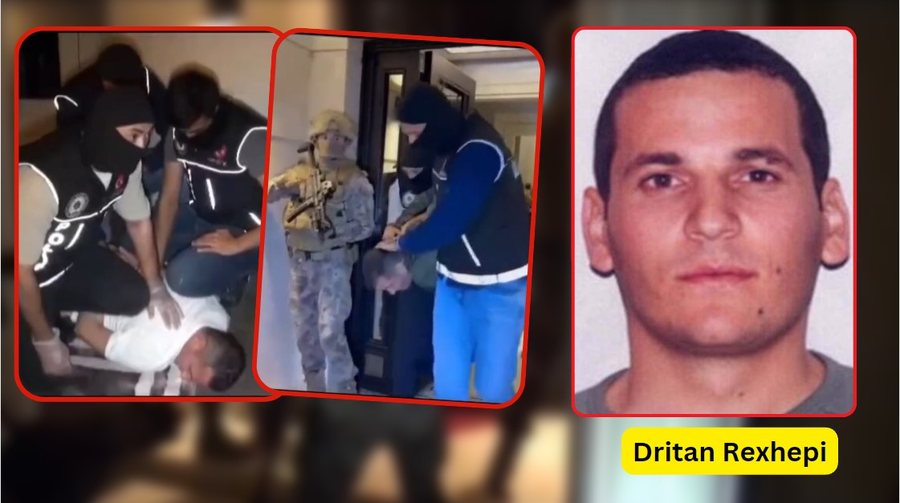
At the beginning of 2023, the audio and information leaked by the digital media La Posta, in the framework of a work called the Great Godfather, brought Dritan Rexhepi or Dritan Gjika (the Albanian has at least six fake names) to the public eye.
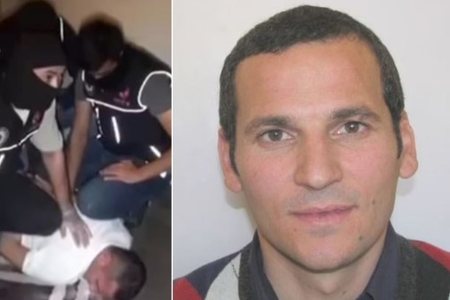
A few days ago, the Turkish authorities reported that Dritan Rexhepi, the head of the narco-criminal group known as Kompania Bello, was arrested in Istanbul as part of a joint operation called "Cartel", which involved police from Italy and Albania.
This is how the Ecuadorian newspaper "El Universo" begins the article.
Rexhepi disappeared from the radar of the Ecuadorian authorities in early 2022, when he did not comply with the measures ordered by the bail judge of the prison of Guaya, Diego Poma, in the context of the approval of the request for early release for health reasons.
Instead of prison, he has been ordered to use electronic handcuffs and not to leave the country.
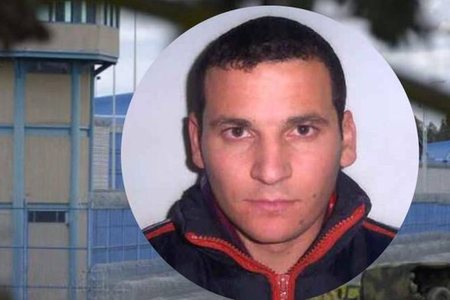
The Albanian has been detained since 2014, as he was one of the eleven captured in the Balkan operation carried out in Ecuador. On charges of drug trafficking, the man known as the 'King' of cocaine was sentenced in Ecuador to 13 years in prison, of which he served only 7.
The benefit of prison before release was granted in 2021, despite extradition requests made by Italy and Albania weighing on him.
At the beginning of 2023, the audio and information leaked by the digital media La Posta, in the framework of a work called the Great Godfather, brought Dritan Rexhepi or Dritan Gjika (the Albanian has at least six fake names) to the public eye.
Reports from Operation León de Troya indicated, among other things, that Rexhepi maintained a business relationship with Rubén Cherres. Between them they founded at least 13 companies, most of them related to construction and real estate companies. Police surveillance within the operation revealed countless meetings and conversations between Cherre, Rexhepi or Gjika and individuals who were part of what was known as the Albanian mafia.
The revealed business relationships between Cherres, Rexhepi and the Albanian mafia attracted attention not only because they were businesses that were apparently related to the creation of front companies for the transport of drugs from Ecuador to Europe and money laundering, but also for the close friendship of Cherres and Danilo Carrera, brother-in-law of the president of the Republic, Guillermo Lasso.
Police reports indicate that the cartel led by Rexhepi transported countless millions of dollars worth of drug shipments from South American countries to Europe. It is believed that the Albanian, during the time he was detained in Ecuador, has continued to direct the shipment of drugs, while the activity has increased when he was out of prison and out of the control of the Ecuadorian justice system.
Dritan Rexhepi was wanted internationally as he had convictions for murder, drug trafficking, kidnapping, forgery of travel documents, weapons and ammunition. Before arriving in Ecuador, the Albanian has already escaped from prisons in Albania, Italy and Belgium. The journalistic investigation called "The Great Godfather" was described by the Prosecutor's Office as the Encuentro case. This fact created concern for the executive of Guillermo Lasso.
Since last October 25, the Prosecutor's Office has requested to move the Encuentro case from the pre-procedural investigation phase to the organized crime prosecutorial investigation phase. Pichincha prosecutor Luzmila Lluglla asked an anti-corruption judge for a date to file charges against seven suspects for participating in this alleged network of corruption in public companies in the electricity sector.
The initial list of defendants includes Danilo Carrera; Hernán Luque, former president of the Coordinating Company of Public Companies (EMCO); Leonardo Cortazar, who is identified as the operator of the corruption network; except Antonio I., former official of the National Electricity Corporation; Julio L., Jorge O. and Roberto B., suspected middlemen of the network.
The first summons for a hearing was issued for last October 31. This was not realized due to the request for postponement made by five of the seven suspects. Judge Eduardo Andrade, of the Specialized Unit in the Trial of Crimes Related to Corruption and Organized Crime, decided for that "only time" to postpone the procedure and leave it for November 16.
A few hours before the postponement was announced, on the night of Monday, October 30, the Prosecutor's Office reported in a statement that the facts investigated within the "León de Troya" operation would be added to the facts of the Encuentro case. According to the Prosecutor's Office, the decision to join the cases was made to strengthen the process that will take place before Judge Andrade.
The exact facts that will shape the organized crime that is being pursued and for which the Prosecutor's Office will bring charges in the case of Encuentro-León de Troya will be known only on Thursday, November 16, when the hearing will be held in one of the chambers of the Judicial Complex in Quito.
Although an investigation has been opened for seven people, this number of suspects may increase depending on the elements that the prosecutor finds in the investigation phase, and there is even a possibility that the crime for which the criminal process was initially opened will be reformulated. At the moment, the name of the Albanian Dritan Rexhepi, Dritan Gjika or Benjamin Omar Pérez García - the false name with which the foreigner entered Istanbul, Turkey - is not part of the criminal process that would be opened in Encuentro.




Lini një Përgjigje