


 Shkruar nga Pamfleti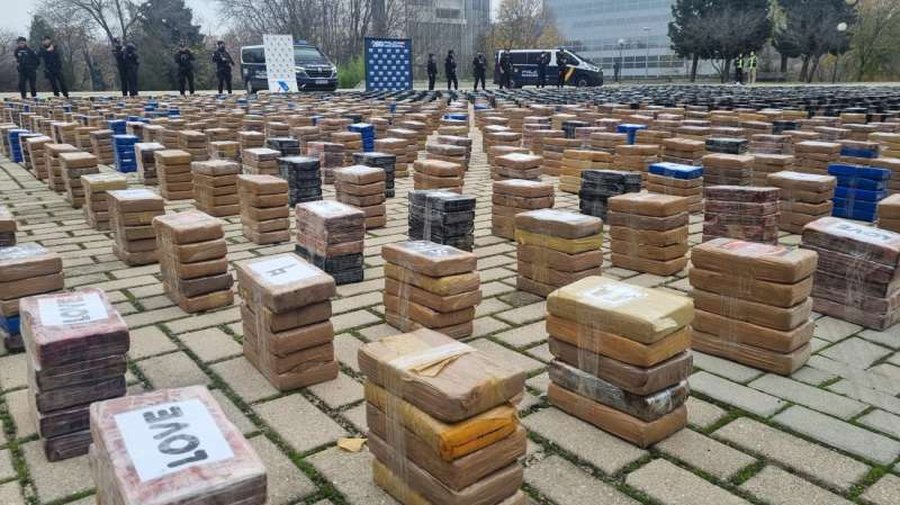
From the institutional vacuum of the 1990s to international drug trafficking networks, the evolution of Albanian criminal groups and their role in Europe
Albanian organized crime was formed in the conditions of a deep institutional vacuum after the fall of the communist regime in the early 1990s. The weakness of the state, the lack of control and the economic crises created the ground for the rise of criminal groups.
The year 1997 marked a turning point. The collapse of pyramid schemes brought massive financial losses and destabilization of public order. Military depots were looted and a large amount of weapons passed outside state control. In this situation, Albanian criminal groups consolidated, exploiting the spaces left empty by the institutions.
Expansion towards Italy and Europe
At the same time, mass immigration to Italy created new routes of movement. These flows also included criminal elements who built networks abroad.
Initially, the activities of these groups were limited to common crimes such as theft, robbery and exploitation of prostitution. But very soon, Albanian organizations entered the heroin trafficking along the Balkan corridor, gaining a functional role in the distribution chain.
Over time, these groups expanded their activities into cannabis and cocaine trafficking. They established stable links with criminal organizations in Italy and other European countries, positioning themselves as partners in logistics, transport and distribution.
Organizational model: networks and clans
One of the main characteristics of Albanian organized crime is the lack of a centralized structure. According to the analysis, there is not a single leadership hierarchy, but a system of closely connected family clans.
This structure gives it flexibility and resilience. The groups operate independently, but maintain functional links with each other and with the base in Albania. Networks in Europe provide logistical support, contacts and integration into local illicit markets.
In their early stages, these groups were characterized by the use of overt violence. Over time, many have shifted to a more silent model, focusing on high-profit activities such as drug trafficking and money laundering.
Role in the European narcotics market
Today, according to international investigations cited by media sources, Albanian criminal groups are considered among the most active in Europe in the field of drugs. They have managed to control parts of the cannabis production and distribution chain in the Balkans and establish direct contacts with cocaine suppliers in South America.
Their strength lies in their networked model: a flexible structure, without a single formal identity, but with strong ties within the community. This model has enabled them to adapt quickly and operate in several places simultaneously.
Cases in Sardinia: presence in networks, not territorial control
In Sardinia, investigations by the Cagliari Anti-Mafia Prosecutor's Office indicate the involvement of groups with Albanian connections in drug trafficking, but not a centralized structure with territorial control.
Three major operations evidence this presence:
2016 – “Polo Est”
30 people were arrested for international drug trafficking, including Albanian citizens. The investigation revealed a transnational network with operational links on the island.
2023 - "Family & Friends"
An Italian-Albanian organization was hit with 40 security measures. According to the investigation, cocaine was also supplied from Albania, while hashish from Spain. The financial turnover reached around 15 million euros.
2025 – “Terms”
The wider operation included 71 security measures. Two groups in Sardinia were found to be linked to Albanian criminal networks active in other Italian regions. Over 50 kilograms of hashish were seized.
In conclusion, the analysis emphasizes that Albanian organized crime does not function as a single hierarchical structure, but as a dynamic network of groups that cooperate at an international level, playing an important role in the European narcotics market./ Adapted from "Pamphlet" by "Unione Sarda"






Lini një Përgjigje