


 Shkruar nga Pamfleti
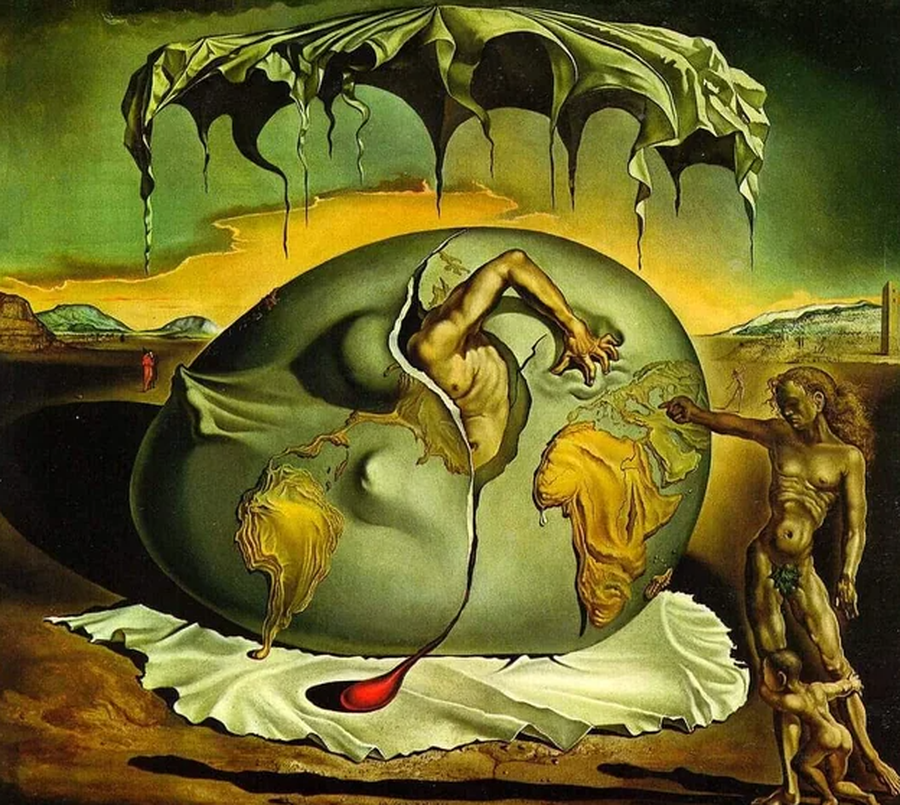
Salvador Dalí's 1943 painting, born in the midst of World War II, stands today as a mirror of the crises the world is experiencing at the beginning of the 21st century...
Dalí depicted the world as an egg that breaks open in pain, giving birth to a new man out of blood and rubble. Today, in a time of global turmoil, this metaphor seems more relevant than ever.
In 1943, amidst the flames of World War II, Salvador Dalí created “The Birth of the New Man,” one of his most historically symbolic paintings. Set in the United States, he observed the collapse of the old European order and the rise of a new world.
At the center of the work is a giant cracked egg, from which emerges a naked, writhing body. On the eggshell, continents are drawn to depict a global transformation. A weary woman and a child watch the scene, symbolizing the generations that witness and those who will live in the new reality.
A drop of blood flows beneath the egg, a reminder of the pain and sacrifice that accompanies every historical change. Dalí does not present the birth of the new world as a peaceful act, but as a bloody and painful process.
In the 1940s, this metaphor was interpreted as a sign of the rise of the United States and the decline of old Europe. Today, at the beginning of the 21st century, Dalí's work sounds like an eternal warning: world orders are never born without pain, and the birth of the new always comes on the body of the old.
Current crises, from wars to economic collapses and global tensions for power, make the painting seem close to our reality. Dalí reminds us that every era is born in the midst of destruction, and that the real question is not whether a new order will come, but what kind of man will emerge from today's cracked shell of the world./ Pamphlet



Lini një Përgjigje