


 Shkruar nga Pamfleti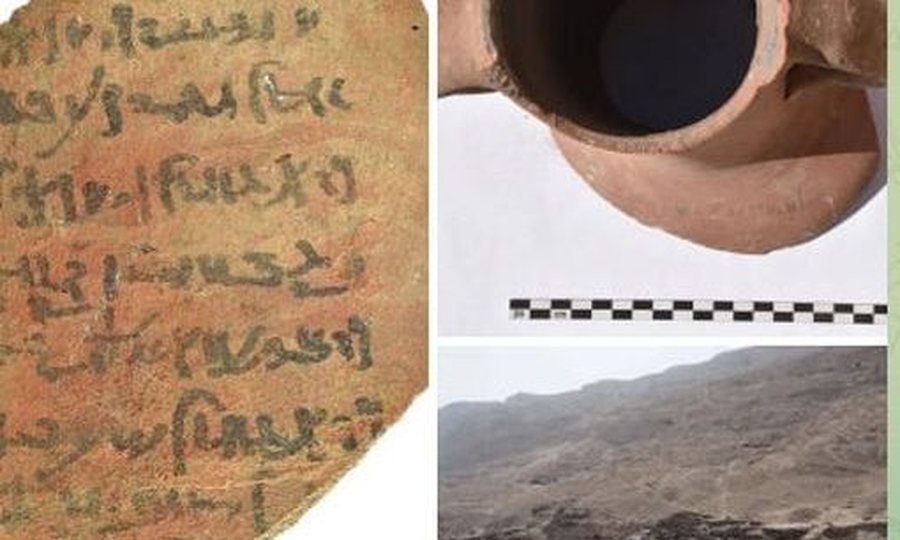
Inscribed ceramic fragments, used as an alternative to papyrus, shed light on ordinary life, education, trade, and administration over a period spanning more than a thousand years.
One of the most important archaeological discoveries of recent years, related to the daily life of ancient societies, was made in Egypt.
In the ancient city of Athribis, near present-day Sohag, archaeologists have discovered more than 43,000 inscribed ceramic fragments, known as ostraca.
In ancient times, these ceramic pieces were used as a cheaper and more accessible alternative to papyrus. Residents used them to record everyday and professional information, ranging from taxes and financial accounts to school assignments, personal notes, and to-do lists.
According to the research team from the German University of Tübingen, in collaboration with the Egyptian Ministry of Tourism and Antiquities, the discovered materials date from the 3rd century BC to the 11th century AD.
The finds include school assignments with teacher corrections, accounting records, tax receipts and religious documents related to sacrificial rituals.
A particularly interesting category consists of more than 130 horoscopes, which contain astronomical observations of the time.
A rare glimpse into ordinary life
Archaeologists emphasize that the importance of this discovery lies in the fact that it not only helps in the study of the elites of antiquity, but also provides direct information about the lives of ordinary people.
Through these documents, researchers can analyze lifestyles, education, commercial activities, tax administration, and the organization of daily affairs in different historical periods.
Documents in five different languages
One of the most important features of the collection is its linguistic diversity.
The inscriptions are written in ancient Egyptian, Greek, Coptic, hieroglyphs and Arabic, reflecting the multicultural character of the region over the centuries.
According to researchers, this diversity of languages testifies to the political, religious, and cultural changes that Egypt experienced throughout more than a millennium of history.
The discovery is expected to provide valuable material for historians and archaeologists, helping to reconstruct daily life in one of the most important centers of ancient civilization.








Lini një Përgjigje