


 Shkruar nga Pamfleti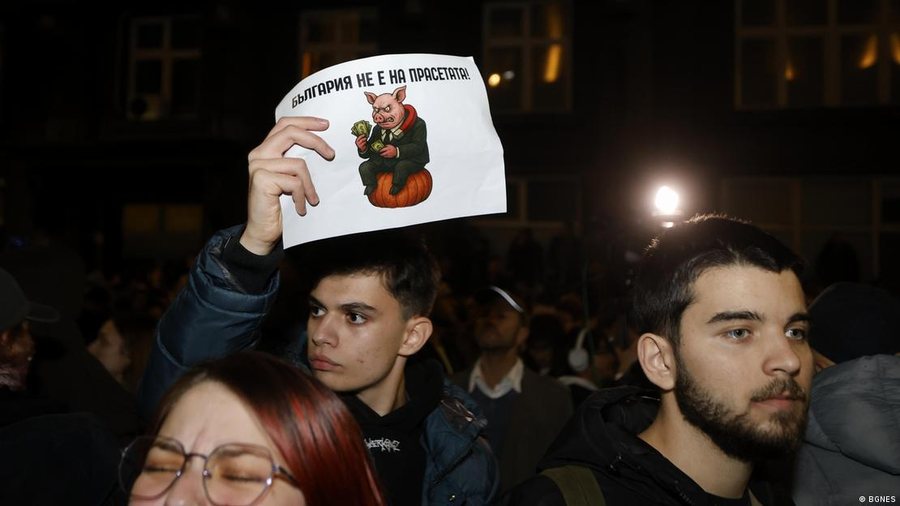
From Sofia to Belgrade, the voice of the new generation is being heard, but where is the Albanian youth?
The protests that erupted in Bulgaria in early December, led by Generation Z, are a clear signal that the spirit of social and political revolt is awakening in parts of the Balkans and that the patience of younger generations towards corruption, political irresponsibility and lack of perspective is reaching a critical point.
At the center of the strong reaction that has engulfed the main Bulgarian cities is a budget criticized as unfair, approved without transparency and with an arrogance that has revolted not only civil society, but especially young people. But more than a revolt against a fiscal decision, the protest is a total rejection of a political system that is considered trapped, closed and without a vision for the generations to come.
The Bulgarian Generation Z, the one that did not experience communism or the economic crises of the 1990s – has taken to the streets en masse for the first time, transforming an ordinary protest into a social movement with deep political charge. The motives are clear: the lack of hope to build a life in their country, the lack of opportunities for quality education, decent employment and above all, the perception that governance is held by an unchanging elite, which governs with arrogance and tramples on the public interest. Two developments that made the rounds on the networks, a law passed in 26 seconds and another budget vote held secretly during the lunch break, became the catalysts of anger and a symbol of a captured state, where laws and policies are passed without any debate and with contempt for citizens.
While Bulgaria is facing this wave of protests, the spirit of discontent is also being felt in other countries in the region. In Serbia, student protests following acts of violence in schools sparked a national movement that challenged government structures. In Bosnia, young people are rising up against ethnic divisions and the corrupt political system that is paralyzing the state. In North Macedonia, youth organizations have increased to oppose economic stagnation and disillusionment with political elites. One thing is clear: the younger generations are beginning to understand that silence is complicity and that democracy does not work without citizen pressure.
But in this map of civic awakening in the Balkans, Albania remains outside. In a country where the same government has continued uninterrupted since 2013, protests are not lacking, but are always called by political parties or individuals associated with them. Sali Berisha continues to organize protests every Monday in front of the Tirana City Hall, as part of his political struggle with Edi Rama. Arlind Qori has announced another protest in front of the Parliament, while Adriatik Lapaj is stationed in front of the Prime Minister's Office. But citizens, especially young people, are not rising up on their own. There is a lack of a spontaneous, horizontal, non-political civic movement that would loudly challenge a system that has been rigid for more than a decade and has closed every democratic breathing channel.
While unemployment, mass emigration, lack of prospects for a dignified life, and the concentration of power in a few hands are daily concerns for many Albanians, the reaction is not coming from civil society or the younger generations. This silence, at a time when their peers in Bulgaria or Serbia are rising up to demand more freedom, justice, and a future, is worrying.
It is unclear whether this is due to fear, total distrust of any kind of organization, or simply due to an apathy rooted in constant disappointment. But it is certain that unless an awakening similar to what Bulgaria is seeing today occurs, Albania risks remaining an island of passivity in a region that, despite all its problems, is beginning to demand accountability.
The fact that in Albania, neither corruption, nor economic crises, nor weekly scandals, nor uncritical construction, nor depopulation, nor the capture of institutions have yet produced a real civic movement from below, indicates a huge void of hope and faith. A generation that does not believe that it can change the situation, does not try to change it. But history has shown that everything starts with a collective “no”. Bulgaria started with the budget – but in fact it is looking for another place. A place where young people have a place.
The question is: will the same thing ever happen in Albania? /Pamphlet




Lini një Përgjigje