


 Shkruar nga Pamfleti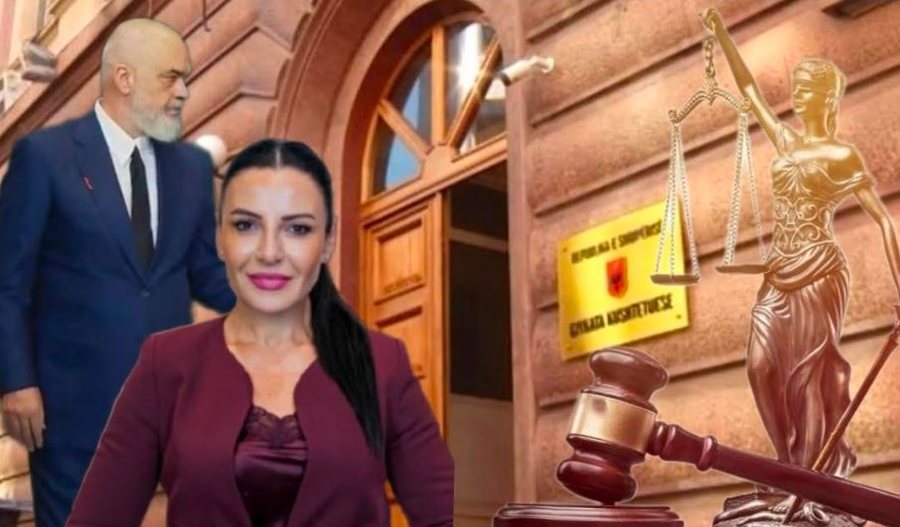
He said that this is an institutional judicial battle to prevent what the Venice Commission considers an impermissible violation of the separation of powers.
Prime Minister Edi Rama has considered the request to the Constitutional Court for the security measure 'suspension from duty' for Belinda Balluku, who holds the position of Deputy Prime Minister and Minister of Infrastructure, a complaint of principles.
The GJKKO, at the request of SPAK, decided that Balluku be suspended from government duties, after being found guilty in connection with the Llogara tunnel.
But in his video message, Edi Rama states that this complaint is not about an individual, but about an intervention by an independent power, such as the judiciary, in another independent power, such as the executive.
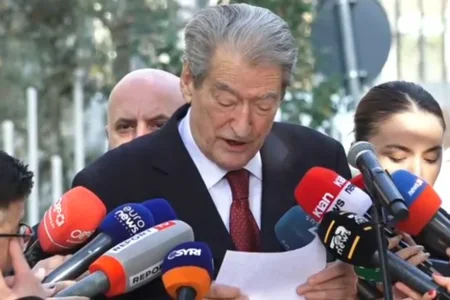
Rama's second message within 24 hours, while tomorrow the Constitutional Court is expected to consider the complaint made by the Government, is also a response to the claims of the leader of the Democratic Party, Sali Berisha, who stated that there is no Opinion from Venice in cases of suspension of officials from their duties, including ministers.
Responding to Berisha who accused him of lying about Venice, Rama says that the swamp cannot find a case for suspending the minister by court decision in Europe.
" Regardless of me, us, of those who are today and are not tomorrow. If the suspension of a minister by a prosecutor and judge were to be legitimized as a legitimate right of justice, then extending the judiciary's arm beyond the dividing line with the executive branch would create a dangerous and threatening precedent, because by opening the way to political pressures on the government, institutional destabilization would occur, something that is unknown in Europe.
You have to be completely blinded by hatred to turn this conflict of powers between the executive and the judiciary into a political conflict, as the drowned in the swamp do for everything. They jump up on their own scum to grab food for the opposition from the doors of the prosecutor's office, in this case they can't show it, a case in Europe and the world if they want, where a member of the government was suspended by a court decision. They can't find it because it doesn't exist and they don't know how and where to get it. The suspension of a minister at the initiative of a prosecutor and a judge is a usurpation of the prime minister's powers .
"De jure it is called suspension, but de facto it is a dismissal that the prime minister must formalize since the prosecutor thought it and the judge decided it with mandatory determination. Suspending a minister does not mean suspending a public official, but it means annihilating without a deadline an authority with executive decision-making power. If the minister is suspended, the deputy minister cannot exercise the exclusive authority that the constitution gives only to the minister to represent the sector in the council of ministers and to propose to the government, say, weekly decisions for the sector ," said Rama.
He said that this is an institutional judicial battle to prevent what the Venice Commission considers an impermissible violation of the separation of powers.
And further, the Prime Minister emphasizes that his message has nothing to do with pressure on the Court.
"Judicial pressure? Prime Minister, I shouldn't talk about a judicial process. We haven't understood each other. That's why I'm here, starting with the question, do you know who appealed the minister's suspension to the Constitutional Court?"
I have appealed as Prime Minister and not for an individual minister who in this case is also Deputy Prime Minister, but for the principle of non-violation of the balance between powers, for the principle of non-interference in an independent power, and not taking over the powers of the Prime Minister and the President by a prosecutor or a court. I am a party and I speak as a party, I do not put pressure on anyone.
"I speak for the public, for a process that decides not for me, but for the balance of powers, for the constitutional freedom of the prime minister to decide on the executive and its composition, the exclusive right of parliament to approve or not the composition of a government ," Rama continued.




Lini një Përgjigje