


 Shkruar nga Yulia Petrovskaya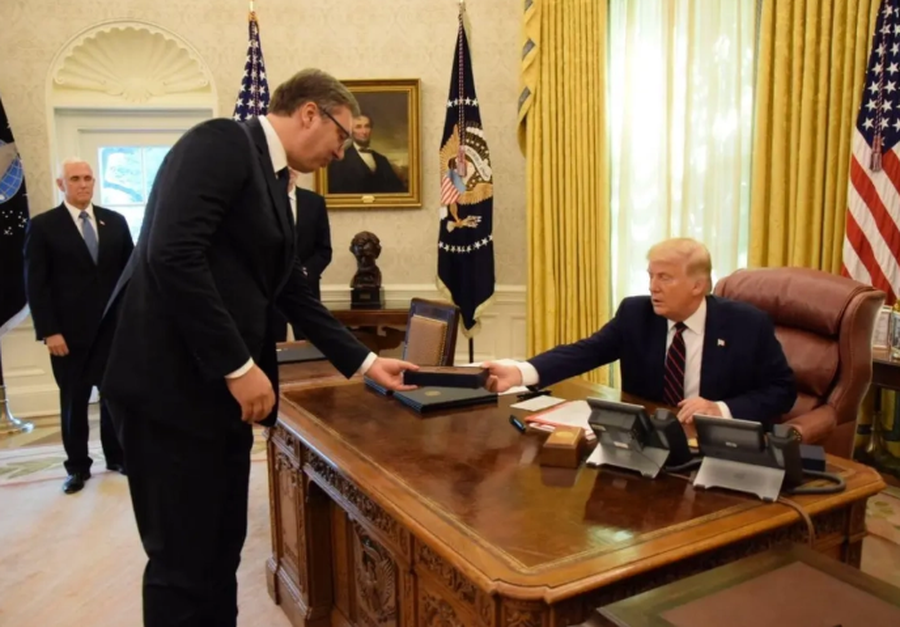
Instead of the interventionist and state-building model that has dominated for three decades, Washington is favoring a more pragmatic approach, based on strategic and economic interests. This raises questions about the sustainability of the security architecture that the US itself helped build after the wars of the 1990s...
The situation in the Balkans has become even more precarious since Donald Trump returned to the White House. Since the 1990s, the region has been the site of two frozen conflicts: in Bosnia and Herzegovina and in Kosovo.
International efforts to resolve both conflicts were led by the United States, particularly on issues of security and constitutional governance. But recently, Washington's approach has begun to change.
The new strategy, described as more pragmatic, relies on advancing commercial and geopolitical interests more than on direct involvement in resolving political crises.
Washington is asking countries in the region to take greater responsibility for their problems, while increasingly linking American engagement to security, energy, and infrastructure.
Energy and infrastructure projects are now seen as part of a strategic competition with Russia and China. The objective is to reduce the Balkans' dependence on Russian energy and limit Beijing's economic and political influence.
This change comes in parallel with plans to reduce the US military presence in Europe, as well as with the demand that European allies take more responsibility for the continent's defense.
The Trump administration declares that "the era of US-led state-building is over," and that policy toward the Balkans no longer aims for institutional reconstruction, but stability and mutually beneficial partnerships.
According to this vision, local actors should solve their own problems, while the US will intervene only when its strategic interests require it. At first glance, this approach seems logical, as local politicians have often transferred responsibility to Brussels or Washington.
However, the very architecture of peace in the Balkans is built on the long-term political and military presence of the West. For decades, the American presence has been the main guarantee that conflicts would not revert to armed clashes.
This raises the question of whether the post-war agreements have truly created lasting stability. Serbia continues to not recognize Kosovo's independence, while Bosnia and Herzegovina remains under an unusual system of international supervision created after the Dayton Accords.
Administrata amerikane deklaron se do të vazhdojë të mbështesë rajonin kur kjo të jetë e nevojshme. Por shembulli i Bosnjës tregon kufijtë e këtij angazhimi. Pas përplasjes mes liderit të Republikës Srpska, Milorad Dodik, dhe Përfaqësuesit të
Lartë Christian Schmidt, Bosnja mbetet pa një zëvendësues të dakordësuar ndërkombëtarisht, duke reflektuar mungesën e koordinimit mes SHBA-së dhe Bashkimit Evropian.
Edhe në dialogun Kosovë-Serbi, Uashingtoni kërkon një marrëveshje të pranueshme për të dyja palët, ndërsa vazhdon të marrë pjesë në misionin paqeruajtës të KFOR-it. Megjithatë, po diskutohet edhe reduktimi i trupave të aleancës, çka ka shtuar shqetësimet për të ardhmen e sigurisë në rajon.
Megjithëse NATO këmbëngul se çdo vendim do të varet nga situata në terren, burime diplomatike kanë bërë të ditur se ideja për uljen e pranisë ushtarake ka ardhur nga Uashingtoni. Kjo është parë me shqetësim, sidomos pas tensioneve të viteve të fundit në veri të Kosovës, kur KFOR-i u detyrua të përforconte misionin pas përleshjeve dhe mobilizimit të forcave serbe.
Edhe pse SHBA-ja ka më pak trupa se Italia në Kosovë, roli i saj mbetet strategjik për shkak të kapaciteteve ushtarake dhe bazës “Bondsteel”, një nga më të rëndësishmet amerikane në Evropë.
Dimensioni i dytë i politikës së administratës Trump është ekonomia. Uashingtoni po promovon eksportin e gazit të lëngshëm amerikan, teknologjitë bërthamore dhe investimet në energjinë e rinovueshme, duke i lidhur këto me objektivin për të kufizuar ndikimin rus.
Ndër projektet prioritare është Interkoneksioni Jugor, që synon ta lidhë Bosnjën me rrjetin kroat të gazit dhe terminalin LNG në ishullin Krk, duke eliminuar varësinë
nga gazi rus.
Projekte të tjera përfshijnë lidhje të reja energjetike mes Serbisë dhe Maqedonisë së Veriut, modernizimin e sektorit energjetik në Kosovë dhe investime në hidroenergji në disa vende të rajonit.
Sipas administratës Trump, zgjerimi i bashkëpunimit ekonomik është mënyra më efektive për të kufizuar ndikimin e Rusisë dhe Kinës. Raporti i drejtuar Kongresit akuzon Moskën se përdor tensionet etnike dhe energjinë për të ushtruar presion politik, ndërsa Pekini shfrytëzon tregtinë, kreditë dhe lidhjet me elitat për të zgjeruar praninë e tij.
Megjithatë, ekspertët paralajmërojnë se kjo qasje mbart rreziqe. Politologu Igor Novaković argumenton se administrata Trump nuk e konsideron më Ballkanin një prioritet strategjik dhe e sheh rajonin kryesisht përmes interesave ekonomike.
Sipas tij, objektivi është ruajtja e stabilitetit minimal që u shërben investimeve amerikane, dhe jo domosdoshmërisht përfundimi i proceseve ende të papërfunduara të shtetndërtimit. Ai thekson gjithashtu se SHBA-ja po tregon gatishmëri të veprojë edhe në kundërshtim me partnerët evropianë.
Clashes over the appointment of the High Representative in Bosnia and American control over the Southern Interconnection project are signs of a new transatlantic rivalry, he said. This is also prompting the European Union to reconsider its approach.
There is a growing conviction in Brussels that enlargement can no longer be based solely on technical criteria, but also on geopolitical considerations. However, it remains unclear whether all member states are willing to accelerate the integration of countries that have not yet met the required standards.
Security expert Vuk Vuksanović describes Trump's policy as a combination of continuity and discontinuity. On the one hand, the US continues to support Kosovo's independence, Bosnia's territorial integrity, and curbing Russian and Chinese influence.
On the other hand, relations with the region are becoming increasingly transactional.
According to him, the US administration is looking for business opportunities and projects that bring concrete benefits, while figures close to Trump, such as his son-in-law Jared Kushner, have shown interest in investing in Serbia and Albania.
However, Vuksanović does not believe that the region is on the verge of a new war. Even if the US reduces its presence in Europe, the Balkan countries do not have the capacity for long-term conflicts like those of the 1990s.
Most likely, they will orient themselves towards different partners according to their interests, while Serbia will continue its policy of balancing between the West and Russia. Even analysts at the Atlantic Council argue that the Balkans may be on the verge of a historic transformation of American policy.
For three decades, the West has operated on the belief that the region needed ongoing political and institutional management. Today, this premise is being questioned. But the reality on the ground suggests that the fundamental problems have not disappeared. Bosnia and Herzegovina remains a state with fragile institutions, where political elites still rely on ethnic rhetoric. Debates about changing borders have not disappeared, and the Dayton Agreement offers no solution for such a reconfiguration.
Milorad Dodik continues to threaten the secession of Republika Srpska and cultivate close relations with Moscow. After the easing of US sanctions, he has also established contacts with people close to Trump, while reports of a review of the US presence in Bosnia have added to the uncertainties.
In this context, the gradual withdrawal of the US does not necessarily mean a return to war, but creates a political and strategic vacuum that it is not yet clear who will fill.
It is precisely this vacuum that constitutes the greatest challenge for the Balkans in the coming years: a region where conflicts have not been fully resolved, while the guarantees that have kept them frozen are changing radically. / Pamphlet from "The Insider"


Lini një Përgjigje