


 Shkruar nga Diplomatico | Pamfleti.net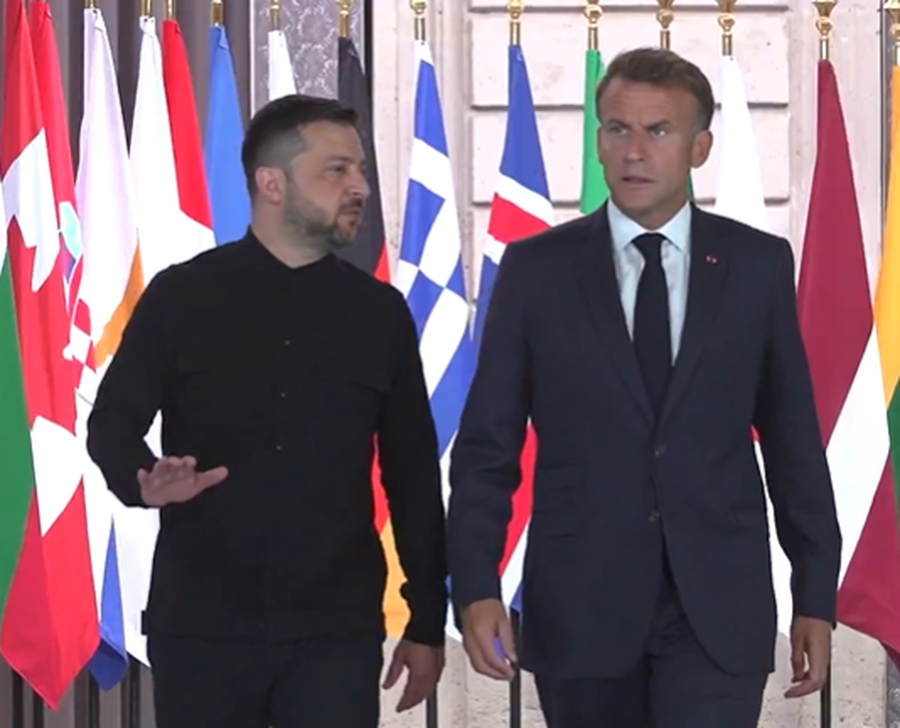
The Paris Volunteers Summit seals military support for Ukraine; Trump in a phone call 'neither meat nor fish', while Russia strikes with 112 drones...
Europe gathered on September 4, 2025 in Paris, not for an ordinary diplomatic summit, but for a political act that is leading the continent towards direct involvement in the conflict in Ukraine.
Dubbed "The Volunteers," the leaders of 35 Western countries, including the EU, the US, Britain, Canada and others, unveiled a new strategy for military aid and direct security guarantees for Kiev, with the aim of ensuring that Ukraine is no longer left in the air as Russia continues its bloody offensive.
At the head of the table were Emmanuel Macron and Keir Starmer, the French president and British prime minister, who not only set the tone for the Summit, but also established a new dividing line in international politics: Europe is no longer a spectator, but an active player in a conflict that is reshaping the global order.
For the first time, European leaders spoke of "joint force" and "coordinated military engagement," going beyond symbolism and declarations.
Zelensky, present in the hall, was no longer a leader seeking help, but a central part of a grouping that is transforming into a de facto military alliance.
He stated that "guarantees are turning into concrete actions," welcoming the proposal to add air defense systems and advanced weaponry.
Germany, traditionally reluctant, came up with a plan that includes increasing military support for Ukraine by 20% per year, but with three clear conditions: American involvement, an offer of negotiations from Russia, and approval by the Bundestag. In diplomatic language, this is a call for coordinated intervention that has no time for bureaucracy.
Russia, on the other hand, reacted in typical Soviet-era language: it warned against any Western intervention and struck Kharkiv and Odessa with 112 Iranian Shahed drones, delivering the usual message of brute force. But this time, the Western world did not react with despair. Instead, it used the attack as evidence of the necessity to end the status quo.
But perhaps the most significant moment of the day was neither Macron's speech nor the airstrike on Ukraine. It was the phone call with Donald Trump, held at the end of the summit.
The American president is the person who can block or accelerate Western involvement. He got involved with an ambiguous statement: he promised a commitment to peace, but without articulating clear support for Ukraine or a sustainable vision for ending the war. It was a phone call that produced neither solutions nor certainty, but it highlighted the fact that Europe is learning to move without America at the helm.
If a single day can mark a historical turning point, September 4th may be one of them. No official declaration of war was made, but everything else happened: the drafting of a new alliance, the confirmation of a common front, and the de facto involvement of the West in a conflict where silence would be complicity. The war in Ukraine is no longer just a Ukrainian issue. It is the direct collision of two worlds, and finally, Europe is taking its side./ Pamphlet


Lini një Përgjigje