


 Shkruar nga Pamfleti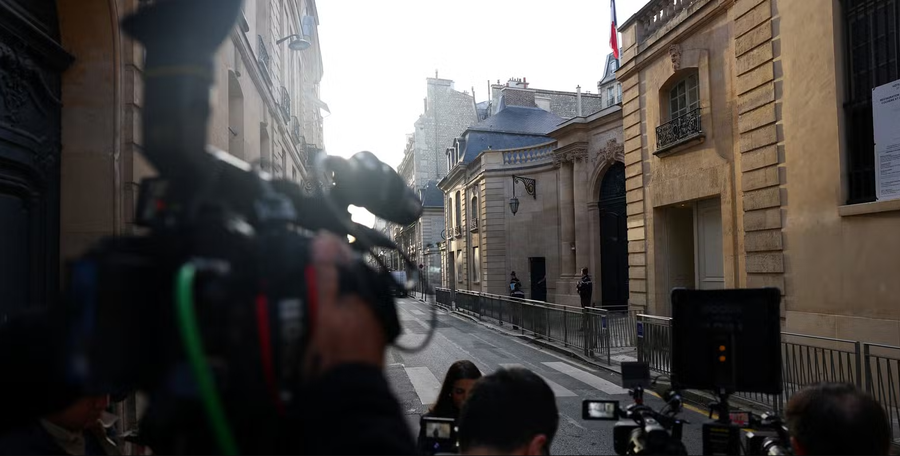
Edouard Philippe challenges the taboos of the Fifth Republic, while Macron faces political isolation and government paralysis...
France is in the midst of a deep political crisis that is shaking the foundations of the Fifth Republic and Emmanuel Macron's presidential authority.
In a destabilized governmental context and with a dysfunctional parliamentary majority, Edouard Philippe, former prime minister and leader of the centrist "Horizons" party, has publicly floated the idea of holding early presidential elections after the 2026 budget is approved.
His proposal is not a call for the immediate resignation of the President, but for an extraordinary political agreement aimed at ending institutional paralysis.
Philippe suggests that Macron appoint a transitional government, with a limited mandate, to ensure the passage of the budget and then lead the country to early presidential elections.
According to him, the current crisis cannot last another 19 months, until the end of the presidential term in 2027, without serious consequences for the country's stability.
This proposal has opened a major constitutional and institutional debate. In the French system, the president does not have the right to unilaterally call early presidential elections. The constitution does not provide for such a procedure except in cases of resignation, death or permanent incapacity of the president. Philippe's idea is therefore a form of political pressure that requires a voluntary act on Macron's part, which for many analysts would constitute a dangerous precedent and a step towards an unsustainable form of renewal of the political system.
The background to this movement is a deep crisis of governance. Since the 2022 legislative elections, Macron no longer has an absolute majority in the National Assembly. Reforms are passed with great difficulty or by decree, as happened with the pension reform that caused massive protests. Every attempt to create a new majority has been met with successive rejections, both from the left and from the traditional right. A coalition with the Rassemblement National is not a politically acceptable option for Macron, leaving room only for extraordinary solutions.
Philippe's proposal is also a personal strategic move. He is widely seen as a possible candidate for the 2027 presidential election, and by positioning himself as a voice of reason and solution, he gains political clout. An early election would speed up the electoral calendar and force parties to come up with their candidates earlier, giving Philippe an advantage over other center-right and center-left rivals.
On the other hand, Macron has not yet given any sign that he is ready to take such a step. His team sees the proposal as unconstitutional, destabilizing and dangerous for the functioning of institutions. But the pressure is mounting. The economy is under stress, markets are reacting to uncertainty, and the 2026 budget will be a difficult test for a government without a majority. If it fails to pass, it will be another blow to the executive's credibility.
The opposition is also divided. The left is calling for a new coalition government and a social turn in public policies. The traditional right is in an identity crisis, while the far right is taking advantage of the chaos to increase support in public opinion. Against this backdrop, any scenario; from cohabitation, to a technical government or general elections remains possible, but unclear.
In summary, the political crisis in France has entered a critical phase. The system seems blocked, the president is isolated, and the alternative being articulated, that of early presidential elections, is an unprecedented scenario that challenges not only constitutional logic but also French political culture itself. If Macron agrees to follow this path, he will mark a historic turning point in the republican life of the country. If he refuses, he risks facing a prolonged institutional paralysis that could turn into a systemic crisis.
The choice is between an immediate danger and a prolonged danger. In either case, the consequences for France's political future and for the democratic stability of Europe will be profound and long-lasting./ Pamphlet



Lini një Përgjigje