


 Shkruar nga Pamfleti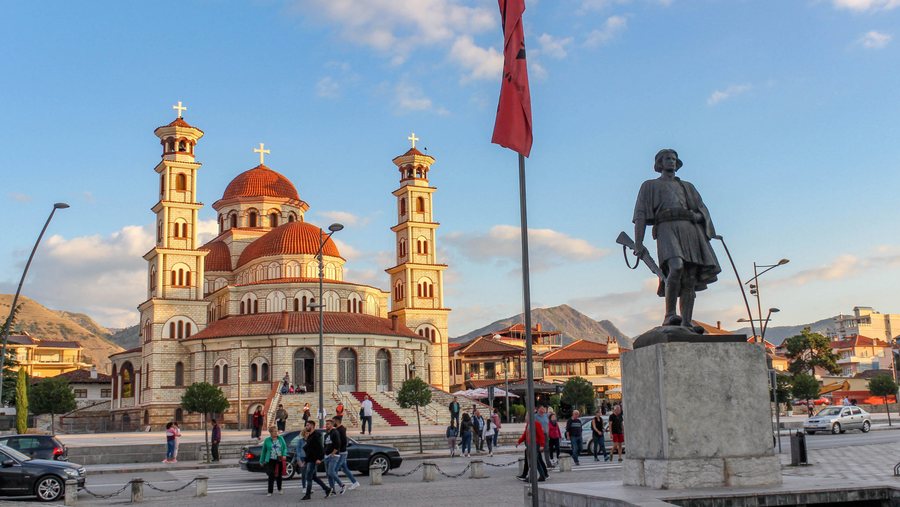
The number of mandates for MPs elected in the Korça Region has dropped from 11 to 10 in these elections. This suggests that each party will need significant progress compared to past elections to achieve anything more than a tie in the number of mandates.
Voters in Korça District have regularly cast almost equal votes for both sides of Albanian politics, with the Socialists being guaranteed votes while the other half has fluctuated and been split between the PD and the LSI. If the PD and LSI are considered together, the result in the four elections held under the current system has been the same, with the Socialists receiving slightly more than half of the votes and the PD and LSI receiving slightly less than half. And the result in terms of mandates, which is more important for the country’s governing majority, has been split evenly between the two elections, but the LSI’s move into coalition with the SP in 2013 made the difference, as the tie returned in 2017.
The Korça region sent 12 MPs in the 2009 and 2013 elections. In 2009, the mandates were divided 6-6 between the SP and the DP, while the popular vote was split 47% for the Democrat-led coalition and 48% for the Socialist-led one. An LSI-led coalition called the Socialist Alliance for Integration received 4% of the vote, insufficient to produce a mandate and with no effect on the distribution of mandates.
In 2013, the SMI, this time in coalition with the SP, managed to take 1 mandate from its former democratic allies, reducing the DP to 5 and leaving the SP at its unchanged quota of 6 mandates.
In the 2017 elections, the Korça region fell from 12 to 11 mandates and in this case, the drop in the odd number allowed the Socialists to achieve a significant victory in mandates with their small advantage in votes as the D-Hondt formula for distributing mandates favors the largest party if it wins even one more vote. Consequently, the Socialists retained their 6 mandates but the DP fell to 4 mandates and the LSI retained one mandate, for a total of 6 to 5 for both sides of the political spectrum.
In the 2021 elections, the LSI lost its mandate in Korça, but the mandate lost by the LSI fell into the lap of the DP. If the LSI and the DP had competed together in those elections, the result would have been the same, 6 for the Socialists and 5 for the opposition, because the Socialists also won about 1,600 more votes in those elections than the DP and LSI combined.
The calculations seem to be simplified in the May 11 elections because the number of district mandates has dropped from 11 to 10. Consequently, if there are no fundamental changes from the historical results, the Korça district will send five socialists and five oppositionists to the next parliament. In case either party wants to get six mandates in Korça, it will have to change the opinion of 6 or 7 thousand citizens from supporting the opponent to supporting itself. Such a change is out of the ordinary in Albanian elections.
In the 2023 local government elections, the Socialists won all six municipalities in the region with 62% of the popular vote. Socialist candidates collectively won 66,000 votes, or about 6,000 more than the Socialist Party received in 2021. If the Socialists receive this number of votes in the May 11 elections, they are close to securing a sixth mandate in the region.
Participation in past elections has dropped to 46%, while for the May 11 elections, around 20,000 voters applied to vote from abroad, a figure equivalent to 16% of the votes cast in the 2021 elections.
Demographic and social profile
The Korça region lies in a mountainous and very mountainous area in southeastern Albania, with the lowest elevation in the Pogradec city area, 700 meters above sea level, and with the Korça plateau at an elevation of 830 meters. The Kolonja area is even higher.
The population of the district was 173,000 in the 2023 Census, a decrease of 21% compared to 2011 and 34% compared to 2001. About 56% of the district's population lives in rural areas. The population has decreased in both rural and urban areas.
The economy is focused on agriculture while cultural heritage tourism has developed over the years in the city of Korça, nature tourism has historically developed in Pogradec, and mountain tourism in almost the entire territory.
Industry is limited while the towns of Maliq, once a center of agro-industry, or Kolonja and Leskovik are gradually turning into villages.
Candidates
Niko Peleshi, former mayor, former deputy prime minister and member of parliament since 2013, is expected to receive a fourth consecutive mandate as he is on the closed list of the Socialist Party alongside Romina Kukos, deputy minister and president of the Tirana Municipal Council. The third on the list is Genti Lakollari, director in various oppositions of the central and local public administration in Korça, most recently, deputy mayor of the Devoll Municipality.
Ivi Kaso, Ledina Aliolli and Bledjon Nallbati are on the closed list of the Greater Albania Coalition. Ten candidates on each wing aim to capture the remaining four mandates by running from open lists.
Petro Lubonja, an immigrant in Greece and Austria, is running at the top of the Joint Movement list while Arben Elezi, a former mayor, is running for the Euro-Atlantic Coalition. / BIRN


Lini një Përgjigje