


 Shkruar nga Pamfleti
As events took another turn and incidents were recorded, there was a total silence from the media, which decided not to publish the polls until the Central Election Commission was the first to release the news.
Hours after polling stations closed in Albania, it still remains unclear whether the ruling Socialist Party secured a historic fourth term or whether the opposition Democratic Party is facing a tough election campaign.
"Politico" writes that no Albanian television station published preliminary polls, leaving voters and observers in total darkness regarding the outcome of the elections, which are seen as critical for Albania's path towards membership in the European Union.
"Exit polls were not published even by the media, which announced that they would have their polls on election night. There is no clear answer as to why this happened," said political analyst Lutfi Dervishi.
A single poll published by “Klan Kosova” and the “Albanian Post”, known for its pro-government views, shows a decisive victory for Prime Minister Edi Rama’s Socialists with 51 percent, while Sali Berisha’s Democrats lag behind with 38 percent.
The media have not given any explanation for their decision not to publish the polls and instead broadcast common stories such as analysis regarding assumptions of victory for each candidate or on minor incidents such as the damage to a ballot box in the Kamza region.
"I think that the political parties in the country may have exerted pressure on the media not to discourage the commissioners who were participating in the vote counting process ," Dervishi added.
According to Reporters Without Borders, journalists in Albania are under pressure during elections. However, the country ranks higher on the organization's press freedom index than some neighboring countries such as Greece, Kosovo and Serbia.
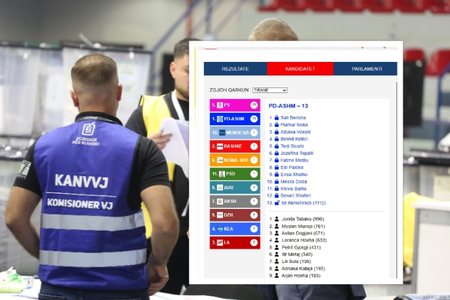
In Albania, the boxes go from polling stations to the district vote collection center, where officials manually count each vote under the watchful eyes of party monitors and observers from all political parties, as well as civil society organizations, in an effort to guarantee a fair and transparent count.
“Both main political parties seemed determined to encourage their election commissioners and vote counting observers to ensure that every vote was recorded without any influence. If a poll comes out and it is said that one party lost, this could seriously threaten the integrity of the voting process,” continued Lutfi Dervishi.
As events took another turn and incidents were recorded, there was a total silence from the media, which decided not to publish the polls until the Central Election Commission was the first to release the news.
Local and international journalists covering the elections, including those from POLITICO, spent the evening contacting the country's main news broadcasters, such as Top Channel and Ora News, but received no clear answer as to why the election polls were not published.
The diaspora vote
Albania has about 3.5 million registered voters, with at least 1.4 million citizens living abroad. For the first time in Albania's history, citizens were allowed to vote from abroad. About 245,000 citizens from the diaspora registered to vote and about 190,000 of them participated in Sunday's elections.
The inclusion of foreign votes for the first time has raised questions about the reliability of exit polls and may help explain why television channels chose not to publish them.
The Central Election Commission is obliged to publish a preliminary vote count within 48 hours of the closing of polling stations.
However, even the results from two administrative districts that were implementing a pilot program for electronic voting in Vora and the 10th district, (meaning that the vote would be counted automatically) decided to postpone the announcement until the next day.
A scuffle broke out between observers at the main vote counting center in Tirana's Olympic Park after ballot boxes containing votes from the Greek diaspora arrived. Democratic Party observers demanded that the commission review the validity of the ballots, causing tension.
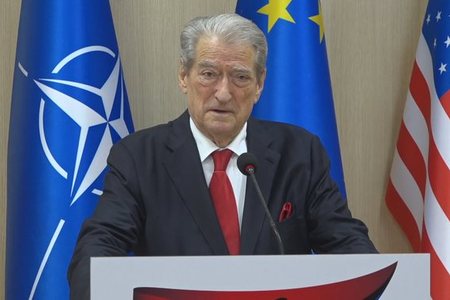
Opposition leader Sali Berisha urged the Central Election Commission not to succumb to pressure to rush the vote counting process.
"The vote is in the hands of the commissioners, who bear the greatest responsibility. No vote can and should be counted under pressure ," Berisha said.
Pre-election polls put Edi Rama's Socialist Party in the lead, yet the opposition Democratic Party fought to return the opposition to power, going so far as to hire former Trump strategist Chris LaCivita to guide the DP's campaign.
If the Socialists secure another mandate, Rama, who has been in power for 12 years, will become Albania's longest-serving leader since Enver Hoxha./ Adapted from "Pamphlet" by "Politico."





Lini një Përgjigje