


 Shkruar nga Matteo Fabbri
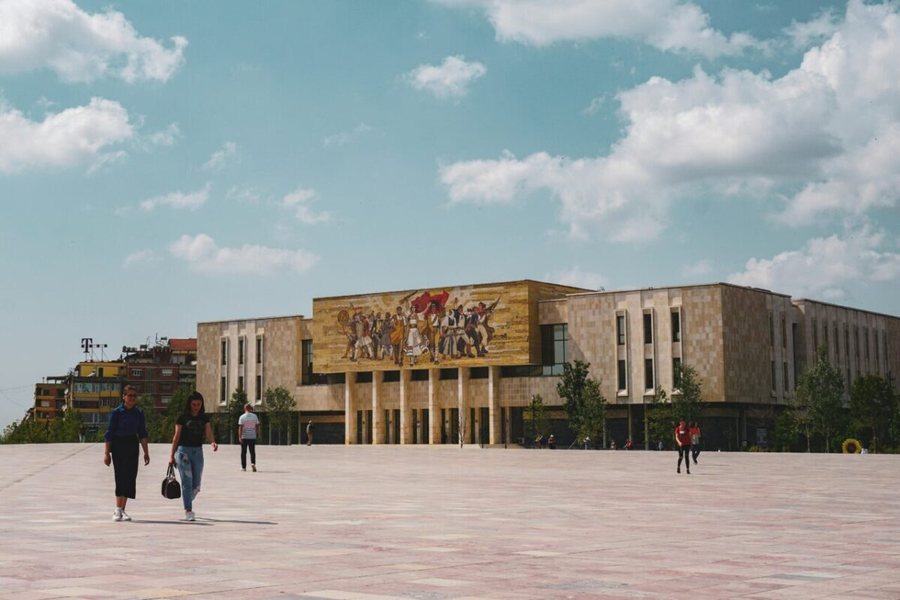
The government in Tirana aims for EU membership by 2030, but democratic reforms and media freedom remain a strong obstacle...
Conclusion of membership negotiations in 2027, and membership in the European Union in 2030. This is the objective of the Albanian government, reiterated in recent days by Prime Minister Edi Rama during his meeting with the President of the European Council, António Costa, shortly before heading to Luxembourg for the fourth conference between Albania and the Foreign Ministers of the EU countries.
An ambitious roadmap, but one that will require major reforms. But Brussels is convinced that Tirana can accelerate the process in the next 2 years. Together with Montenegro, Albania is today the country with the greatest chances of membership in the bloc.
On 14 April, the European Union opened the second part of the negotiations on the internal market, which includes 9 chapters. In recent months, and specifically in December 2024, the chapters on external relations were opened, while in October 2024 the one on the foundations of the rule of law.
Negotiations on the latter are usually the first to open and the last to close, and they also determine the duration of the negotiations. Given the acceleration of the process in recent months, it is clear that some progress has been made.
"The ambition is to open other chapters during 2025. We have a very concrete program and we want to respect it," Costa said.
In foreign policy, Tirana has a positioning increasingly aligned with that of Brussels, and is among the most reliable partners in the region.
It has fully endorsed sanctions against Russia, supports Ukraine politically and militarily (Rama and Zelensky recently signed a cooperation and security agreement) and has always been one of the main drivers of stability in the region.
A particularly valuable ally in the region, even in contrast to Serbia's behavior, which on the contrary continues to cultivate privileged relations with Moscow. Albania is also part of the European economic growth plan for the Western Balkans, which will bring almost 1 billion euros to the Albanian government's coffers over the next 10 years.
It is also involved in various infrastructure development projects funded by the European Union, such as the railway line between the port of Durrës and Rrogozhina, which will have a strategic importance for military mobility within NATO in Southeastern Europe (Tirana has been part of the Alliance since 2009).
However, beyond foreign policy and infrastructure development, there are still several problems that need to be solved. Despite improvements in democratic institutions and rights, anti-corruption measures have so far yielded limited results, as have judicial reforms.
Even Edi Rama's government has been repressive towards the media and in its relations with other parties. Relations between the government and the opposition remain tense, with street protests and ongoing complaints about an illiberal climate.
Things are no better in the area of press freedom: media independence and some controversial rules that limit freedom of expression online are worrying both NGOs and European institutions. Brussels has stressed the need for reforms, which will be crucial for progress on the path to membership.
Compliance with the roadmap announced in recent days will depend above all on progress in these areas. The European integration process will be one of the central themes of the electoral campaign ahead of the parliamentary elections on May 11.
Rama can benefit from his good relations with European leaders, above all with Georgia Meloni. Italy and Albania have historically had a strong economic, cultural and political connection.
Italy is among the countries that would benefit most from a full integration of Albania, in terms of economy but also of regional influence. The agreement on migrants, so far a total failure, was a further step towards rapprochement with Meloni, who
recently donated the Italian Navy-owned patrol vessel Libra P 402 to the Albanian government, to allow Tirana to strengthen control of its coasts and intensify its participation in NATO missions.
Rama has also managed to cultivate good relations with Mrs. Von Der Leyen's Commission and other European leaders, and now Albania seems closer to Europe than ever before. But to make the 2030 objective credible, it is not enough to simply declare this goal on both sides.
Tirana will soon need “difficult” reforms, as High Representative Kaja Kallas called them, as well as a major leap in the quality of democracy. If it wants to respect the roadmap outlined by Rama in recent days, Albania cannot afford to slow down the pace of reforms.
On the other hand, the country's entry into the European Union would also be a good sign for Brussels, which has failed to make any significant progress in the enlargement process for years. The declared goal of increasing influence in the Western Balkans has not brought any great success in recent years.
On the contrary, tensions in the region have increased despite warnings from the European Commission./ In Albanian: Pamphlet


Lini një Përgjigje