


 Shkruar nga Roberto Saviano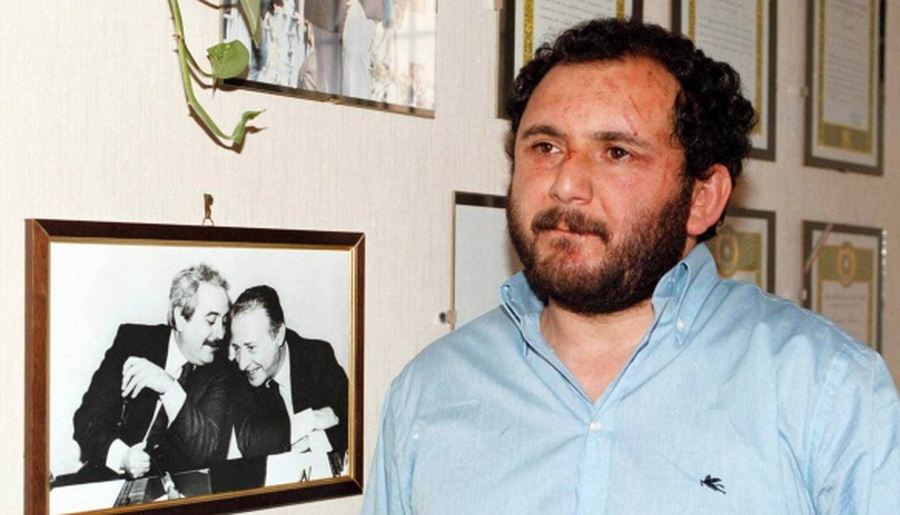
Giovanni Brusca released and the price to be paid to discover the truth about the mafia...
The release of Giovanni Brusca does not represent a miscarriage of justice, a bureaucratic error or a flaw in the system. On the contrary, he is free according to the law. This is painful, but we must understand that the state and countries in general, not just Italy, are extremely fragile in the face of organized crime. Without collaborators in justice, no result would be achieved.
It can be added that, without collaborators, the costs of the fight against the mafia would be four or five times higher, because many more investigators, wiretaps and a much greater amount of work would be required. The collaborator of justice, when effective, allows costs to be amortized and commitments to be limited.
Brusca's nicknames, such as "the murderer of Christians" or "the pig", describe his character. Despite his great responsibilities, Riina distrusted Brusca, considering him weak, fragile and more inclined to worldly life than to power, which was the true goal of the "man of honor". When his father, Bernardo Brusca, ceased to be the head of the San Giuseppe Jato area, it was not Giovanni Brusca who succeeded him in that role (also due to his exile), but Balduccio Di Maggio, chosen by Toto Riina.
Giovanni Brusca's collaboration with the justice system has clearly revealed the internal evolution of Cosa Nostra. Although it is understandable that no collaborator ever reveals everything he knows, always keeping some information to himself (especially about capital), Brusca's contribution has been essential. His collaboration has led to a much clearer understanding of the dynamics of Cosa Nostra. The tripartite nature of the organization is an interpretation that emerges clearly from his statements.
Riina's Cosa Nostra decided to declare war on that part of the state that opposed it and that had not protected it: the strategy was to assassinate magistrates and eliminate political allies considered traitors. Bombings in Milan and Florence followed.
Riina's goal was to preserve his leadership at a crucial moment, namely the Maxiprocess, the first world demonstration of the structured existence and practices of Cosa Nostra. However, the final decision undermined Riina's credibility as a reliable leader, because it failed to stop him.
Before this, major trials ended with individual, not collective, convictions, and the existence of Cosa Nostra had never been proven. At that point, Riina was faced with two alternatives: to be replaced or to continue the war. Cosa Nostra thus divided into three major currents: the current of massacres led by Riina, the peaceful current of Bernardo Provenzano, and the receptive current of Matteo Messina Denaro.
Brusca has allowed interpretations, although not directly through full disclosures. His freedom is considered a moral disgrace in a country where many innocent people remain in prison for lack of proper means of defense. The slowness of Italian justice is, in fact, among the worst in the Western world.
In such a context, Brusca's freedom turns out to be repugnant, especially because the logic of reward tends to favor the big criminal bosses. This logic does not reward the low-ranking member. He who commits crimes without threatening the state of affairs will serve the entire sentence, at most by taking a plea bargain for some crimes. On the contrary, he who commits very serious crimes can sit at the negotiating table.
It is not possible to know if Brusca ever repented morally for what he did, because it is impossible to enter a person's soul. However, from his behavior, it appears that he who is born a "man of honor" dies as such. Brusca became a collaborator of justice out of fear of death. After Balduccio Di Maggio's repentance, he became the head of the San Giuseppe Jato area, but the choice for the massacres of the group would not have allowed Brusca to survive in the eyes of Riina, who considered him "weak"; it would have been better to think of him buried.
Brusca would not have done the prison of honor, that is, disciplined and in silence. Knowing this, he chose cooperation (it was not the only reason, of course) and has been wisely managed by prosecutors over the years to obtain elements of knowledge that would otherwise be inaccessible. His freedom is painful, but it also shows that it is the price that must be paid to obtain the truth and, if we consider this perspective, Brusca's freedom is proof that the mafias are not invincible and that the road is still long, very long. / Preparation in Albanian: Pamphlet




Lini një Përgjigje