


 Shkruar nga Diplomatico | Pamfleti.net
At a time when several Balkan states are falling into the shadows and international support for them is fading, Montenegro is firmly back on the American foreign policy agenda...
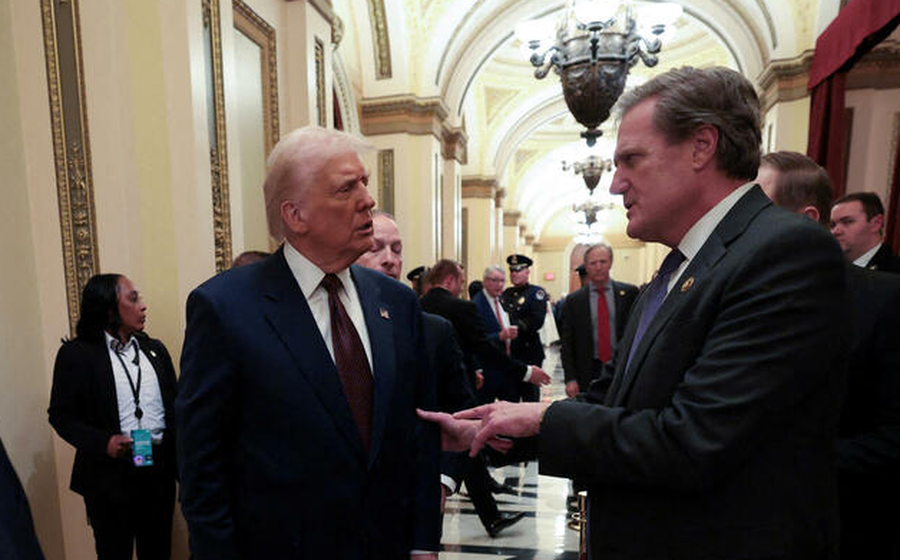
A strategically important development has taken place in Washington, signaling that Montenegro has not been forgotten by Euro-Atlantic partners in the European Union’s enlargement agenda. US Congressmen Mike Turner (Republican) and Chellie Pingree (Democrat) have introduced a bipartisan resolution in the House of Representatives calling on the US administration to publicly and through concrete means support Montenegro’s EU membership.
This act, although unreported by many media outlets in the region, carries the weight of a clear strategic signal: The United States is still willing to invest politically and diplomatically in those countries that remain committed to reforms, Euro-Atlantic values, and against the authoritarian influence spreading from the East.
This resolution for Montenegro is not just a moral or rhetorical endorsement; it is a concrete sign of the return of American attention to a small but strategically important state in the Western Balkans. Meanwhile, in this small diplomatic ring, Albania seems to be no longer part of the game.
While the US Congress clearly articulates its position on Montenegro, there are no resolutions, no bipartisan statements, nor any efforts to make the country a priority of American foreign policy for Albania.
Instead of concrete commitments, Albania has fallen into a strategic lull, a kind of diplomatic oblivion where the absence of criticism is not a compliment, but indifference. No official document in recent months has placed Tirana at the center of any serious debate in Washington. This is frightening for a country that has historically declared itself America’s most loyal ally in the Balkans. But alliances are not one-sided and do not survive on rhetoric alone.
Unlike Montenegro, which even in the face of internal crises has managed to maintain a clear pro-Western course, contribute to NATO missions, respect sanctions against Russia, and invest in reforms, Albania is locked in an endless cycle of propaganda rhetoric, politicized institutions, and selective justice.
While Podgorica is praised for its fight against hybrid influences and its alignment with Euro-Atlantic policies, Tirana seems obsessed with external image but empty in content. This emptiness is already being reflected in the way the US reads the region.
At a time when the Balkans has become a battleground between West and East, when Russia and China seek to expand their influence through political groups, controlled media, and investments with dubious interests, the United States is differentiating between real allies and those who use the West as a backdrop. And in this new filtering, Montenegro has been added to the list of support, while Albania has disappeared from the map of priorities.
The Congress resolution on Montenegro is a message to the European Union, but also a political assessment of what the Balkan countries have achieved or not. It is a reminder that international support is not eternal and that diplomatic reputation is measured by actions, not words.
In this context, Washington's silence towards Albania is louder than any statement. It is a call for reflection, or worse, a sign that the game is over and the former allies have been replaced by more serious partners./ Pamphlet




Lini një Përgjigje