


 Shkruar nga Pamfleti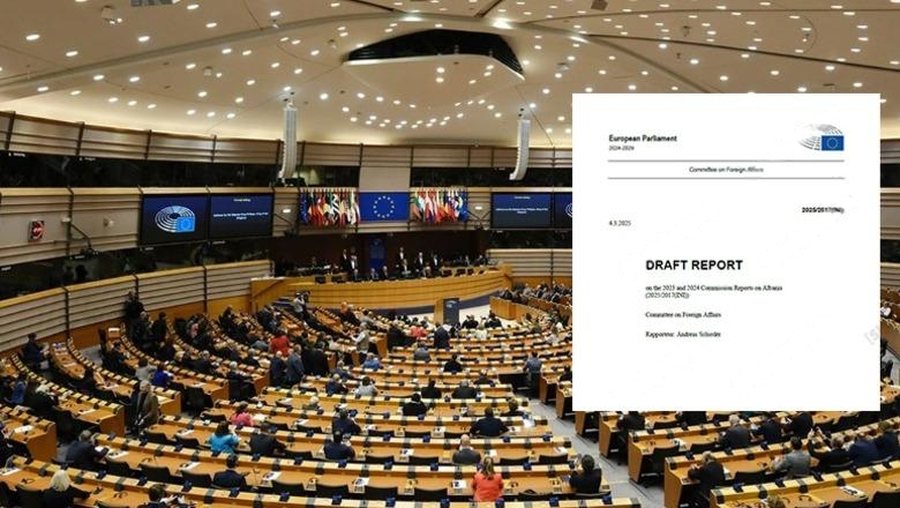
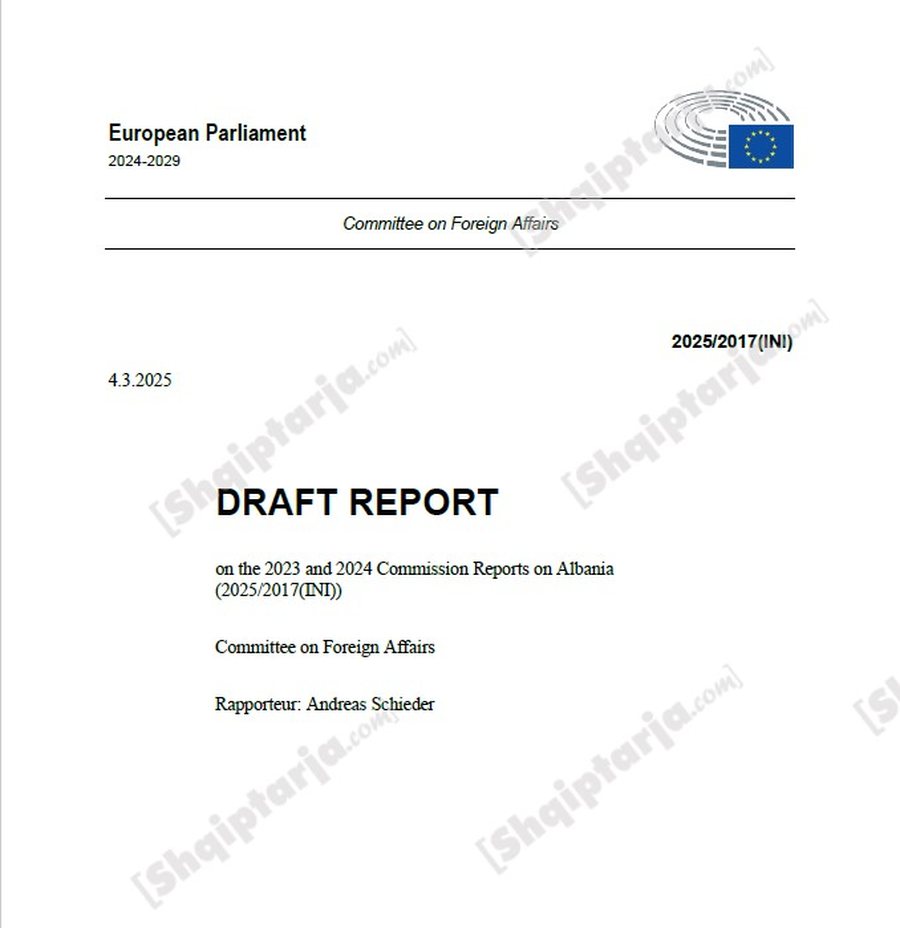
The draft report on Albania in the European Parliament, drafted by rapporteur Andreas Schieder and discussed on March 18 in the EP's Foreign Affairs Committee, is provided.
The draft report states that it welcomes Albania's unwavering commitment to EU integration, which reflects consensus among political parties and broad support from citizens, and appreciates its full and continued alignment with the EU's common foreign and security policy and the promotion of the rules-based international order.
It also welcomes Albania's ambition to conclude membership negotiations by the end of 2027 and the rapid progress achieved in recent years, in particular the opening of two sets of negotiation chapters in 2024.
The European Parliament's draft report highlights the importance of political dialogue, calling on the parties to overcome the ongoing polarization between them. The draft report insists on constructive debate and proper parliamentary behavior as key aspects of democratic governance. It takes into account the changes to the Albanian Electoral Code of July 2024, which brought the diaspora vote, but calls on politicians to implement OSCE recommendations in the elections.
It also welcomes the progress Albania has made in implementing justice reforms, including the vetting process. The draft report highlights the key work of Albania's Special Anti-Corruption and Organized Crime Structure (SPAK) in prosecuting and convicting high-level corruption cases and warns against undermining the work of independent institutions, such as SPAK, which are important for the justice process and the fight against corruption.
What does the draft report say?
Democratic institutions, media and civil society
The draft report Insists on the importance of constructive political debate and proper parliamentary conduct as key aspects of democratic governance; reaffirms the shared responsibility of Albania's political forces to strengthen constructive and inclusive political dialogue and overcome the persistent political polarization in the country; stresses the need for more effective parliamentary oversight, improved functioning of institutions and meaningful participation of civil society;
Takes note of the amendments to the Electoral Code of Albania of July 2024, which enable voting abroad by the Albanian diaspora and establish partially open candidate lists; insists on the need to address and implement outstanding recommendations from the OSCE/ODIHR and the Venice Commission.
Notes with concern that the independence and pluralism of the media continue to be affected by the overlap of business and political interests, the lack of transparency in funding and ownership, intimidation and precarious working conditions for journalists;
It reiterates the need to strengthen investigative journalism, fact-checking and combat hate speech, disinformation and fake news.
Rule of Law
Welcomes the progress that Albania has made in implementing justice reforms, including the vetting process, which has been concluded at first instance; expresses concern, however, about the continued political interference and pressure on the judicial system;
Highlights the key work of Albania's Special Anti-Corruption and Organized Crime Structure (SPAK) in continuing to document investigations, prosecutions and convictions in high-level corruption cases; warns against undermining the work of independent institutions such as SPAK.
Notes the challenges related to the quality and efficiency of the justice system, including the high number of judicial vacancies, insufficient staffing in the courts, the quality of initial and continuous training of judges, the coherence of jurisprudence and the lack of a modern integrated case management system; notes that budgetary allocations are insufficient, in particular for the courts.
Welcomes the adoption of national legislation to align with the EU acquis in the fight against money laundering; notes the need to establish a strong Asset Recovery Office and to improve the process of vetting, investigating, prosecuting and convicting high-level corruption cases, including through the seizure and final confiscation of criminal assets;
Calls on Albania to continue to align its legal framework with the EU acquis in the fight against organised crime; notes the appointment of additional prosecutors to the Special Prosecution Office as well as the establishment of a financial investigation unit; appreciates Albania's participation in joint operations and cooperation within the framework of the European Multidisciplinary Platform against Criminal Threats (EMPACT) and with INTERPOL in the fight against organised crime.
It also welcomes Albania's commitment to implementing the EU Growth Plan for the Western Balkans, which includes integration into the EU single market, regional economic integration, substantial reforms and increased financial support;
It also encourages the Albanian authorities to improve access to social and health services, especially for populations in need; calls for the implementation of the National Strategy for Social Protection 2024-2030 and the National Strategy for Employment and Skills 2023-2030;
Welcomes the fact that Albania joined the Single Euro Payments Area in November 2024, which reduces costs for citizens and businesses and will contribute to Albania's further integration into the single market.
What happens next?
The draft report was prepared by Andreas Schieder, it is an annual draft of findings for Albania that has no connection to the progress report on integration, unlike what was interpreted by the opposition and its media, which have reported Andreas Schieder's findings as a progress report, which is in fact stamped by the European Commission.
The draft will be examined and discussed in the Foreign Affairs Committee and then voted on a specific date that depends on the committee's calendar and plenary sessions. After discussions and the possibility of amendments, the report goes to the vote in the plenary session of the European Parliament. There is no exact date at the moment when it could be put to the vote in the EP. After approval, it is sent to the Council of the European Union and the European Commission for further consideration and evaluation./Albanian







Lini një Përgjigje