


 Shkruar nga Pamfleti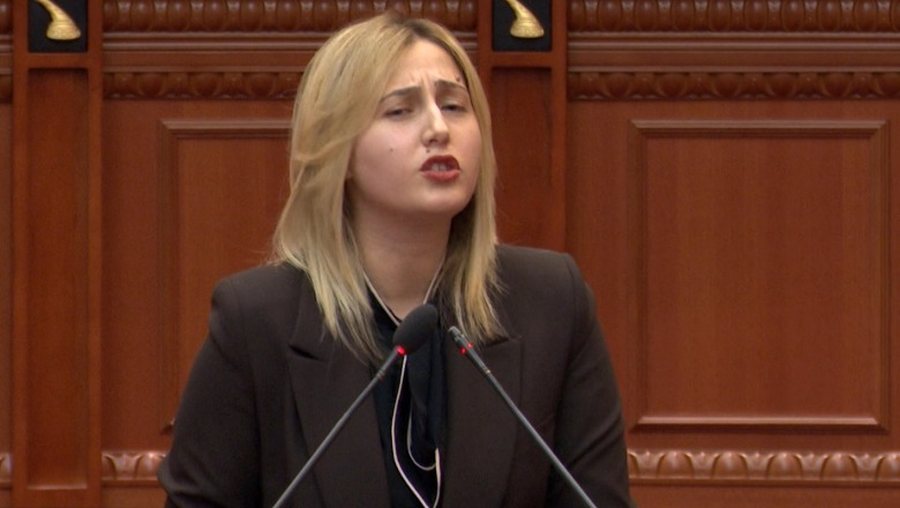
The government has today made the second public presentation of the new draft of the Criminal Code, an initiative that has raised alarm among journalists, civil society organizations and the political opposition. Despite repeated warnings, the government has not reflected any changes in the most problematic articles that directly affect freedom of expression and the media.
The Chairperson of the Media Commission, Ina Zhupa, has described this draft as an open attempt to instill fear and criminal intimidation on journalists, making them subject to severe punishments simply for publishing information critical of the government or the justice system. According to her, free speech is being trapped in a repressive and diabolical methodology.
Zhupa denounces four specific articles as the most dangerous:
Article 865 (Defamation): strengthens criminal penalties to an extreme extent, especially when it comes to the media;
Article 863 (Insult): introduces vague terms such as “disturbing public opinion”, creating ground for abuse;
Article 536 (Impact on the independence of the court) : prohibits comments on judicial proceedings, silencing the media;
Article 517 (Provision of Information) : criminalizes the publication of data related to investigations or operations, which fundamentally strikes at investigative journalism.
Furthermore, Zhupa emphasizes that the public hearings are a farce, as no one from civil society was truly heard. She warns that upon the constitution of the new parliamentary session, she will pursue this issue with absolute priority and will use all constitutional means to prevent the adoption of a Criminal Code that restores censorship with the government's signature.
Full post
Journalists will feel insulted if they are not put in prison; Journalists should be held under criminal threat; Journalists should be afraid when publishing news about the government and the courts; these were some of the postulates of Edi Rama's new criminal code against media freedom and journalists.
Repressive method and diabolical insistence to silence and control journalists through the new penal code, totally unacceptable by European standards.
Today's re-presentation, camouflaged as a hearing where no one from civil society was heard, did not change the criminal code's approach to media freedom at all.
The problematic articles that directly violate freedom of expression, the freedom to practice the profession of journalists, and free speech continue and are defended with absurdities like in the attached video.
Article 865 (Defamation) significantly increases penalties, especially when the information is disseminated through media channels and used as a means of direct threat to journalists.
Article 863 (Insult) for serious insults introduces vague criteria such as “disturbing public opinion” and “good customs”, lacking clear definitions and leaving room for subjective interpretation and selective application.
Article 536 (Impact on the Independence of the Court) is particularly concerning as it broadly prohibits the making or publication of comments on judicial proceedings, thus directly interfering with the essential oversight role of the media and undermining transparency.
Article 517 (Provision of Information) prohibits 'disclosure' of police operations and investigations, directly affecting the work of the media, especially in cases of investigation. When a journalist publishes information regarding an ongoing operation or investigation, the law now defines it as disclosure.
There was zero reflection on all of this, rather a charlatan defense of leaving it unchanged despite the reaction of the Safe Journalists Network, partners of the Media Freedom Rapid Response Initiative (MFRR), and civil society organizations in Albania.
Meanwhile, we should have a criminal code that addresses the issue of journalists and media freedom in line with Council of Europe standards and EU recommendations, and as foreseen in the Rule of Law Roadmap and as requested by civil society and the media community.
With the constitution of the new legislature, I will pursue this issue with absolute priority, using all constitutional instruments to listen to interest groups, to follow European standards, and to prevent violations of media freedom.


Lini një Përgjigje