


 Shkruar nga Pamfleti
It's been a while since the decisions of the Constitutional Court have received the attention they did this year. Maybe because there were a few, maybe because they had to do with politics. Maybe because no one knew what the way forward was to get out of the institutional crisis and tried to find solace in them. But this time, it seems like the situation is different, that Kosovo no longer has any escape from early parliamentary elections. So, how can we get there?
Another month, another decision of the Constitutional Court of Kosovo, another moment of uncertainty. A situation repeated several times this year. The only difference is that the largest Albanian parties made almost no comment at all on the Court's decision, which said that the Assembly of Kosovo has not been constituted, and that there are still 12 days left to finalize the process, from the moment when the verdict is published in full on the official website of this institution.
If we analyze the official pages of the parties on social networks, their leaders seem very busy with the campaign for the local elections of October 12, or with meetings with foreign officials. But, political experts suggest that they save some energy, because they will most likely need it for early parliamentary elections.
Sociologist from Pristina, Artan Muhaxhiri believes that there is no other way out of the institutional crisis in which the country finds itself.
“There is no logic to continue with this blockade. Unfortunately, we have an absurdity, that neither the Vetëvendosje Movement (LVV), as the winner of the elections, nor the other parties, want to form a majority, they have no will, they have no courage, they have no ideas ”, he tells Radio Free Europe (REL).
“For this reason, the best option is to go to new elections, to re-legitimize political parties, leaders, MPs and to attempt a return to normality ”, says Muhaxhiri.
For political scientist Dritëro Arifi, elections are not a solution, but they are the only way to get away from what he calls “political stupidity”.
“ The country is, in reality, in anarchy, Kosovo is in total anarchy. The parliament has no control, neither over the Government, nor over the Police, nor over the army, nor over the intelligence. It is really a country without control ”, he tells REL.
Even before the new institutions were formed from the February 9 elections, ideas for new elections arose, as the situation is almost unprecedented since independence.
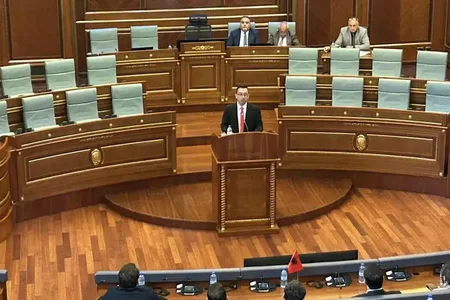
The LVV won the most votes in the elections, but not enough to govern on its own. As a result, the largest parties have failed to reach a consensus for a government coalition, and have been blocked in a series of processes, starting with the constitution of the Assembly.
The deputies have held dozens of sessions, and several judgments have been issued by the Constitutional Court, but the process has not been successfully finalized.
The latest judgment concerns the complaint of the Serbian List – the largest Serb party in Kosovo – regarding the separate voting of candidates for deputy speakers of the Kosovo Assembly from among the minorities.
The Speaker of the Assembly, Dimal Basha, declared the Assembly constituted even without the election of a Serb deputy speaker, but the Court found that such a thing does not hold.
Political experts believe that the main blame for the created situation lies with the political elite, which is not interested in finding a solution.
Some, like Dritëro Arifi, believe that the biggest blame for the created situation lies with the LVV. Artan Muhaxhiri believes so.
“ According to political logic, there should have been [the other result], because this blockade has come mainly as a result of the lack of political will from the Vetëvendosje Movement, which again wanted 50 percent ,” he says.
“The citizens of Kosovo should vote in a way that imposes cooperation on them, because the political system in Kosovo is such that without cooperation there can be no result .”
In the full texts of the judgments issued this year by the Constitutional Court regarding the crisis in the Assembly, no punitive measures are mentioned if the deadlines for the decisions it has made are not respected. Arifi believes that it acts this way, as it cannot prejudge the decision that the deputies make.
“They are elected deputies, it is difficult to penalize them. It only assesses whether an action was in harmony with the spirit and letter of the Constitutional Court. This is all it can do .”
According to him, the intervention of the president, Vjosa Osmani, will be needed to change the situation.
“The president would have to be much more active, so that we have an Assembly and a government, so that we can move forward, because we are in the 10th month of being a blocked country, and no one can be proud of anything ,” he estimates.
Muhaxhiri does not believe that the Constitutional Court can lead the country to elections either, because this is a political issue.
"However, the president could invite the leaders of political parties and, in cooperation with them, reach the conclusion that new elections are the only way out of this catastrophic blockade that has plagued Kosovo since February 9."
While discussions about new elections are rife, the international factor calls for the implementation of the decisions of the Constitutional Court and for the formation of institutions as soon as possible.
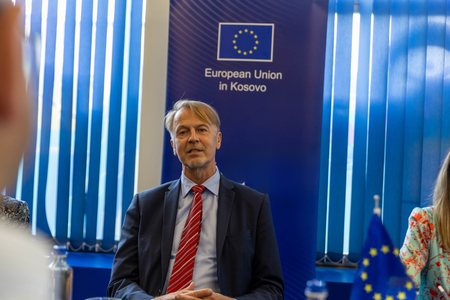
Among the most recent was the appeal of the European Union Ambassador to Kosovo, Aivo Orav: "Please, constitute the Assembly and please form a government." Will there be ears that hear and respect this plea? Let's see.../ REL



Lini një Përgjigje