


 Shkruar nga Pamfleti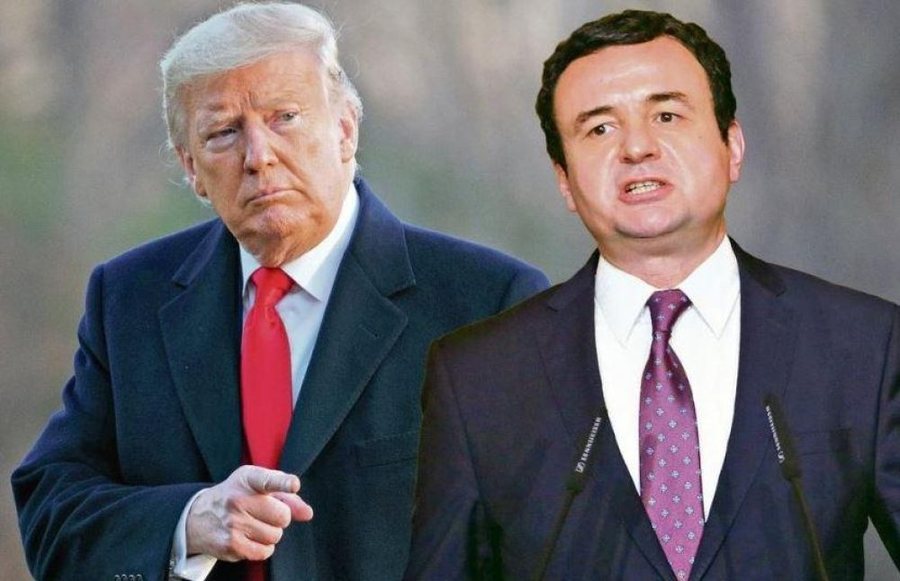
Once part of the US strategic vision, today Kosovo barely figures in its National Strategy. Washington's priorities have changed, and Kosovo has not capitalized on the period of calm, remaining vulnerable.
Earlier this month, President Donald Trump's White House released its National Security Strategy, a document that every American administration issues to explain its foreign policy priorities.
The strategy, which bears the president's signature, emphasizes that "the days when the United States supported the entire world order like Atlas are over," that "the affairs of other countries are a concern of the United States only if their activities directly threaten American interests," and that "the United States will reaffirm and implement the Monroe Doctrine to restore American primacy in the Western Hemisphere."
The 33-page document also calls for the "cultivation of resistance" in Europe, warning that the continent is undermining democracy, blocking peace in Ukraine and facing the "extinction of civilization" due to high migration and falling birth rates.
He also blames European officials for obstructing US efforts to stop the war in Ukraine and accuses governments of ignoring a "vast European majority" that wants peace.
Kosovo is mentioned only in the "principles" chapter, as one of President Trump's successes in achieving peace between it and Serbia.
Europeans welcomed this strategy with concern: "the foundations of partnership require mutual respect, especially in moments of political divergence," said the president of the European Council, Antonio Costa.
In the assessment of Olivia Eno, from the Hudson Institute, the strategy openly acknowledges that America cannot deal with everything, leaves out some regions and problems, and clearly lists priorities, starting with the Western Hemisphere, then Asia, Europe, and finally the Middle East.
This choice, according to her, is controversial for those who want a more stable foreign policy, but it is intentional.
"I read it as a ranking of priorities. Others may disagree, but to me the message is clear: this is our hemisphere, so this is of the utmost importance to us. We are going to make sure that our border is secure. That is the top priority," Enos tells Radio Free Europe.
For critics, the strategy is ideologically charged.
Former US Assistant Secretary of State Daniel Fried says it separates values from interests, conflicts with other US policies and favors the radical right in Europe, contrary to the US's own strategic goals.
The non-inclusion of Kosovo and the Balkans in general in the strategy, according to Fried, reflects both the reduced urgency of the crisis there, as well as the expectation that Europe will take the lead role.
He adds that, given the ideological tone of the new strategy, it is perhaps even “better” for Kosovo not to be mentioned at all.
"The strategy could have easily dismissed the Balkans as a European issue, not a U.S. one. And it could have even criticized our previous focus on the Balkans… why we got involved in Kosovo's state-building or human rights issues, which led us to military conflict," Fried told Radio Free Europe's Expose program.
However, according to him, the confusion is also visible in the very capital of world decision-making – in Washington. Congress there is pushing forward with the National Defense Authorization Act, which contradicts the National Strategy.
It aims to strengthen US military engagement in Europe and increase attention to Russia's cooperation with China and North Korea. The law guarantees 76,000 US troops in Europe, stops major equipment withdrawals and continues support for the Baltic states to contain Russia.
The section on the Western Balkans states, among other things, that "it is in the common interest of the United States and the countries of this region that they have sustainable economic growth and development."
He evaluates the Agreement on the Roadmap to Normalization of Relations between Kosovo and Serbia as "a positive step forward in advancing normalization between the two countries" and emphasizes that they should strive to make immediate progress in its implementation.
"The United States should continue to support a final comprehensive agreement between Kosovo and Serbia based on mutual recognition," the document also states.
Fried says the language in the National Defense Authorization Act is "completely opposite" to that of the strategy.
"It places limits on the administration's ability to withdraw troops from Europe. This is also a Republican document. The Speaker of the House of Representatives, Mike Johnson, has supported it," says Fried.
Because of these contradictions, as he calls them, Fried also sees “a relative hope” – that the US is not as determined to withdraw from Europe as the strategy might suggest.
For Kosovo, the alliance with the US remains an unbreakable axis. After a meeting with President Trump in September, the country's president, Vjosa Osmani, said she thanked him for what she called his tireless commitment to peace.
Trump has mentioned Kosovo several times this year, mainly to emphasize his role as a mediator who stopped the conflict between it and Serbia. For former Austrian diplomat Wolfgang Petritsch, the era of the classical alliance between Europe and the United States – the one built after 1945 – is over.
Në Ballkan, thotë ai, roli i SHBA-së po tkurret si në aspektin strategjik, ashtu edhe në atë politik. Rajoni shihet gjithnjë e më shumë si përgjegjësi evropiane dhe shtetet e Ballkanit, veçanërisht Kosova, e cila nuk është as anëtare e OKB-së dhe as e NATO-s, duhet të përshtaten me këtë realitet.
“Ne tani jetojmë në një epokë pasigurie – pasigurie të plotë – e cila për shtetet më të vogla dhe më të brishta si Kosova, paraqet sfidë edhe më të madhe sesa për ato që tashmë janë në Bashkimin Evropian dhe që mund të përpiqen të veprojnë bashkë brenda BE-së”, thotë Petritsch për Exposenë.
Ai nuk pret shpërthim të një konflikti të ri të madh në Ballkanin Perëndimor vetëm se SHBA-ja mund të ulë nivelin e angazhimit të saj. Ai thekson se Evropa ka interes jetik të mos lejojë një luftë tjetër në pragun e saj, përtej asaj që tashmë po zhvillohet në Ukrainë.
Kampi amerikan Bondsteel në Kosovë mbetet një element kyç i sigurisë, por pesha e tij në të ardhmen, thotë Petritsch, do të varet ndjeshëm nga marrëdhëniet SHBA-Rusi.
Fried, në anën tjetër, është më paralajmërues: sipas tij, rajoni do të bëhej më i cenueshëm nëse Shtetet e Bashkuara zvogëlojnë praninë dhe angazhimin e tyre. Ai vlerëson se Rusia dhe Kina do ta shfrytëzonin një boshllëk të tillë amerikan në mënyra të ndryshme, por plotësuese.
“Kina do të përpiqet të blejë infrastrukturën dhe nyjet kyçe, për të fituar kontroll mbi më shumë sektorë të ekonomisë. Rusia do të përpiqet t’i përdorë disa vende si agjentë, për të shfrytëzuar dobësitë e tyre dhe për të krijuar kaos sa herë të mundet. Në secilin rast, të dyja vendet do ta shohin Ballkanin si një fushë për realizimin e ambicieve të tyre më të gjera”, thotë Fried.
Një anketë e kryer nga Instituti Ndërkombëtar Republikan gjatë periudhës maj-korrik të këtij viti tregon se udhëheqësit e dy fuqive të mëdha gëzojnë mbështetje të konsiderueshme në disa vende të Ballkanit. Në Serbi, për shembull, 50 për qind e të anketuarve kanë një opinion “shumë të favorshëm” për Vladimir Putinin e Rusisë, ndërsa 38 për qind e kanë të njëjtin opinion për Xi Jinpingun e Kinës.
Në Kosovë, vetëm 7 për qind e të anketuarve shprehin opinion “shumë të favorshëm” për Putinin dhe 6 për qind për Xinë. E, për Trumpin kjo përqindje arrin në 52. Fried thotë se Evropa, veçanërisht BE-ja, duhet ta marrë udhëheqjen në stabilizimin e Ballkanit Perëndimor, sepse e ardhmja më e qëndrueshme e rajonit është brenda BE-së.
Ai nënvizon se BE-ja duhet ta ketë fuqinë për të frenuar elementet agresive në Beograd, që veprojnë për nxitjen e konflikteve të reja në Kosovë ose për ta mbajtur Bosnjën të ndarë përgjithmonë. Sipas tij, kur Evropa ta marrë plotësisht këtë përgjegjësi, hapësira për Rusinë dhe aktorët e tjerë destabilizues për të luajtur lojëra në Ballkan, do të zvogëlohet ndjeshëm.
"Europe must take the lead now. When it has failed, the US has been forced to step in. I understand that, but the real problem lies with Europe, because the best future for these countries is within Europe - if they are to reach the potential they deserve," says Fried.
The European Union has consistently confirmed its commitment to the prospect of EU membership for the Western Balkans. The next EU-Western Balkans summit will be held on 17 December in Brussels. Of the countries in the region, only Kosovo is not yet a candidate for membership.
Petritsch says Kosovo will always need professional and stable relations with Washington, but it should adjust expectations and avoid assuming that the US will "fix" regional problems as in the late 1990s.
According to him, Kosovo's security and progress will depend much more on European integration, internal political stability, and achieving a true compromise with minorities.
"Compromise is the essence of democracy. I think the idea of finding a positive compromise is not yet strong in Kosovo. But now times are changing. Europe is the most important and relevant partner for state building and for economic and political development. It must now become a new and serious focus for Pristina," says Petritsch.
Fried emphasizes the importance of Kosovo being a democratic state and not a nationalist project that reflects the worst part of Serbia's past.
“I was part of the US decision to support Kosovo’s independence, and it was the right decision. The Kosovo flag is great: it does not represent a single nation, but all the people of the country, and it is modeled after the EU flag. It clearly symbolizes Kosovo’s future in Europe for all its citizens. Our agreement with Kosovo was: we will support independence, but you have to work for a democratic, not nationalist Kosovo. We do not want a small version of Milosevic’s Serbia,” Fried concludes.
This suggests that in a region where the time for waiting for external guarantees is running out, the real test for Kosovo is its willingness to implement the rights promised to Serbian citizens and to show that democratic compromise, not continued confrontation, is the path to greater European security and support. Otherwise, Kosovo risks becoming its own hostage, proving the skeptics right./REL






Lini një Përgjigje