


 Shkruar nga Pamfleti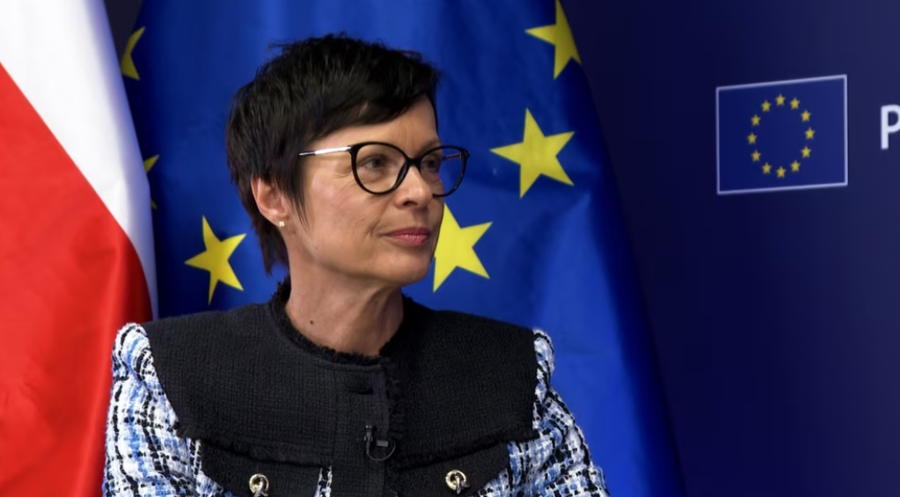
European Union Commissioner for Enlargement, Marta Kos, told Radio Free Europe that normalizing Kosovo's relations with Serbia is a prerequisite for Kosovo to be able to obtain candidate country status and begin the EU membership process.
Kosovo applied for EU membership on December 15, 2022, and now it remains the only country in the region that does not yet have candidate country status.
"We are waiting for the [formation of] the new government. I am in contact with the politicians there, and they claim that they are very much in favor of normalizing relations with Serbia, which is a prerequisite for the negotiation process to start or for candidate status to be granted," Kos said, in an interview given to Radio Free Europe.
She said that it is very important that the next government of Kosovo fulfills certain preconditions "that must be fulfilled," without mentioning what they are.
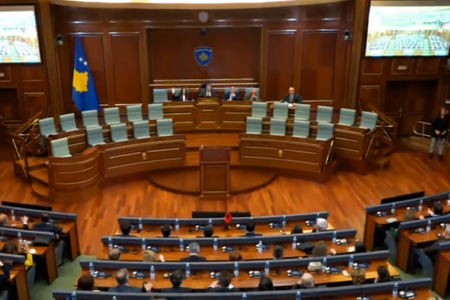
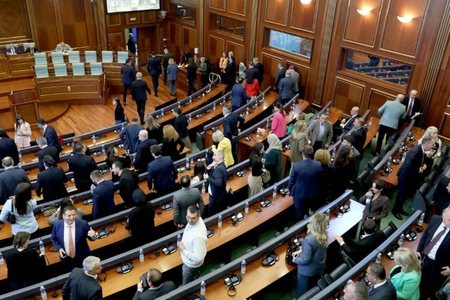
Kosovo is being led by an acting government as the new legislature has not yet been constituted, not even more than a month after the certification of the results of the parliamentary elections held on February 9.
The process of a country's accession to the EU takes time, as the candidate country must meet several criteria, adapt its laws to those of the EU, and await ratification of the accession treaty in the parliaments of each EU member state.
Kosovo is still in the initial stages of accession, as it has not yet received candidate country status. To do this, the European Commission must first give its consent to the application for membership and then the European Council must unanimously confirm the status as a candidate country.
"I have not received any signal from the member states or from the Danish presidency [of the European Council] that this [acquiring the status during the Danish presidency] could happen. But I think it would be very good to start," she said.
Earlier this month, the European bloc's foreign policy chief, Kaja Kallas, said that neither Kosovo nor Serbia could move forward on the path to the EU without normalizing relations.
Under EU mediation, Kosovo and Serbia reached an agreement in 2023 on a path toward normalizing relations. But since then, the bloc has criticized both countries for failing to implement the agreement, despite it being binding on them.
Due to the crises in northern Kosovo, which increased tensions between the two countries, no round of political dialogue has taken place in Brussels since September 2023, but there have only been talks at the level of chief negotiators.
It was precisely these tensions in northern Kosovo that led the EU, in 2023, to impose several punitive measures on Kosovo and continues to keep them in force with the justification that Kosovo has not yet done enough to de-escalate the situation in the north, which is inhabited by a Serb majority.
Despite requests from Kosovo leaders to lift these measures, Kos stressed that currently not all EU member states are ready to lift the measures at this stage.
"We don't know yet. We are discussing this. If the member states are in favor of lifting them, of course we will do so. But, at the moment, not all member states are in favor of lifting the measures," she said.
During the interview given to REL, Kos said that she would consider it a failure if there were no new members in the European Union during the current Commission's mandate.
However, she expressed optimism, emphasizing that from a technical point of view “we could end up with Montenegro [as a member] by the end of 2026” and “we could end up with Albania [as a member] by the end of 2027.”
Asked whether Montenegro and Albania will become the 28th and 29th members of the EU, she replied that there could also be new countries.
Speaking about Serbia, the country she will visit this week, Kos said that "Serbia really needs to deliver results."
"Words are not enough. I see my mission or my visit there as a great effort to bring Serbia back on the European path," Kos said.
She added that the demands of the protesters, who have been protesting for months in Serbia - following the death of 16 people from the collapse of a concrete shelter at the Novi Sad train station - are the same as those of the European Commission.
"It's the rule of law, it's the fight against corruption, it's public procurement, it's media legislation, it's election legislation. Serbia promised a lot in December in the so-called 'non-paper' [informal document]," Kos said, adding that now "we need to check whether they are implementing what they promised."
"And actually, I like to say that I am the biggest supporter of the protesters, because if Serbia is serious about the path to the EU — and they tell me they are — then they will have to deliver results," Kos said.
Meanwhile, the EU official said it is difficult to work with leaders like the president of the Republika Srpska (RS) entity of Bosnia and Herzegovina, Milorad Dodik.
She said that "it is difficult to deal with someone who does not act in the best interests of his country, Bosnia and Herzegovina" and who goes "against territorial integrity, sovereignty and constitutional order."
Kos further emphasized that this is one of the reasons why Bosnia and Herzegovina, despite having candidate status, has not yet opened negotiations with the EU.
Regarding potential sanctions against Dodik, she added that "member states are not united" to impose them.
Dodik, along with the Speaker of the RS Parliament, Nenad Stevandic, and Prime Minister Radovan Višković, are accused of attacking the constitutional order, and a central arrest warrant has been issued against them in Bosnia and Herzegovina, after they failed to respond to the Bosnian Prosecutor's Office's summons to appear for questioning./ REL


Lini një Përgjigje