


 Shkruar nga Pamfleti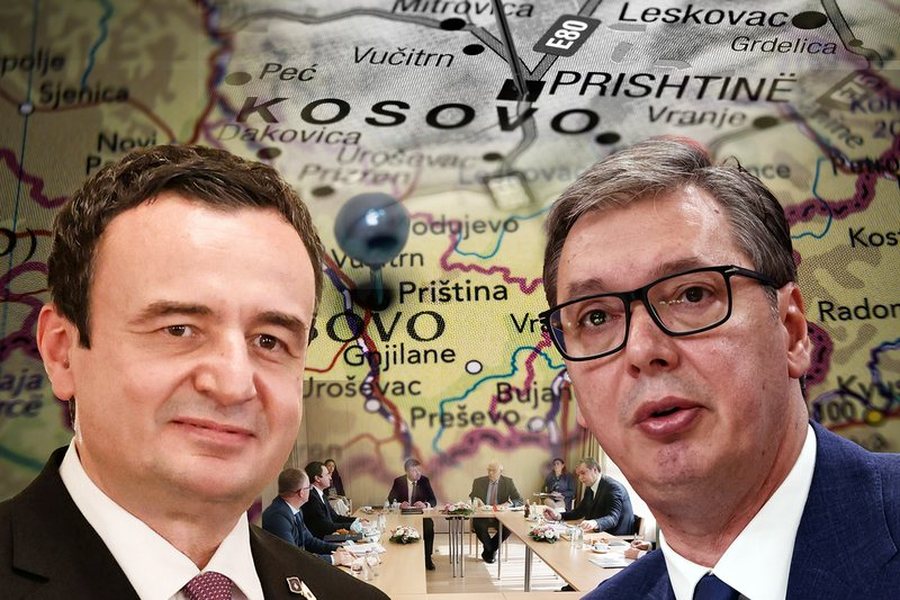
Robert Bosch qualifies this approach to Belgrade and criticism of Pristina as wrong policy as there is no reason why there should be neither Serbian currency nor parallel institutions in an independent state.
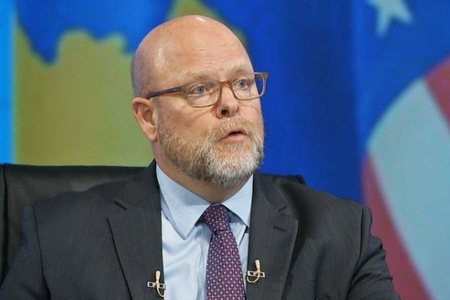
The former ambassador of the Netherlands in Kosovo, Robert Bosch, has criticized the attitude that the West is maintaining towards Kosovo and the government of Albin Kurti in relation to the decision to withdraw from the use of the Serbian dinar and to close the parallel Serbian structures in the North.
He qualifies this approach to Belgrade and criticism of Pristina as wrong policy as there is no reason why there should be neither Serbian currency nor parallel institutions in an independent state.
" I am following the case closely. I see all the criticisms that come about Kosovo. Personally, I am less critical than many apparently foreign colleagues, because of course at this moment we must all agree that Kosovo is an independent country. And of course an independent country cannot consist of all kinds of illegal structures. I did not know that there was a bank in the North of Kosovo that was not part of the banking system of Kosovo. This is obviously very strange. The same with the illegal structures in Peja and Istog. I know that it is not very nice for the Serbs, but nevertheless they have to accept that they do not live in Serbia but in Kosovo, and they have to accept the structures of Kosovo. The only thing we can ask is whether to give some time to implement it and not to do it immediately. Same thing with dinar, like I said, you can't have a foreign bank operating in your country and you can't have foreign currency in the country. It is completely abnormal.
I don't know if there was no prior warning. Of course they could delay it a bit by allowing people to prepare even better, but they could not delay it forever because that is what we have been doing since independence. Since independence we have pushed everything and anything to have a peaceful situation. But such an attitude led us to nothing. It leads to a frozen conflict. An example is the license plate issue. It was pushed and pushed and pushed several times, until a certain moment when it was realized that it could not be pushed anymore. You know what happened. Even now they are asking to push it a little. It's fine if they push it a little, but then you have to say 6 weeks and something else. And not 6 weeks and then another 6 weeks, and another 6 weeks. No! Something has to be said with the argument that it is preventing tensions, it creates tensions in my opinion. Bosch told A2CNN.
Referring to the armed attack in Banjska, where Belgrade remains unpunished even after 4 months despite the evidence that the West has in hand, while Kosovo suffers EU sanctions, Bosch said that it is totally incomprehensible.
The ex-ambassador expresses surprise with the internationals who, according to him, caress Serbia, but underlines that the soft approach towards Aleksandar Vučić comes as a result of the fear that Belgrade can get even closer to Moscow and this could lead to a clash with Russia.
" This is also completely inexplicable. Serbia is being seen by foreigners as the most important country in your region and they want to dilute it. Personally I think it's a bad policy, but it is what it is. They want not to be too tough on Serbia because they feel that if we are too tough on them, they could go even further towards a showdown with Russia. I think it is a very bad policy. I don't agree with that. But of course it is extremely strange that Kosovo has sanctions, while it is the only one that has a positive approach. Positive in relation to the Ohrid agreement. Kosovo has not attacked Serbia. Banjska was most likely supported by the government in Belgrade. It is not the opposite, so why should there be sanctions. It is completely incomprehensible to me. But also for many other people. Maybe not for some governments and not the European Union, but for some in the European Parliament it is. As I said, some EU countries think that if they are too tough with Serbia, they get closer to Russia. That's what they think, but that's wrong. They are already close to Russia, what can they get closer. - said Bosch.



Lini një Përgjigje